
If you have been exploring sculptural furniture and wondering how the ordering process works, timing is usually the first practical question. Petra Madalena designs each piece as a complete sculptural work – the form, proportion, and aesthetic are set by the designer and remain as designed. What you personalise is the material and, where needed, the dimensions. This guide explains what happens at each stage of the process, how long it takes, and what to expect from order confirmation through to the piece arriving in your home.
|
Key Takeaways |
|
All pieces start from a 9-week lead time, with most orders taking 9-14 weeks from confirmation to delivery. |
|
Larger structural pieces – such as a wood bookcase or a cabinet system – typically take 14-16 weeks or more. |
|
Each design is a finished sculptural work. You personalise the material and size – the form itself stays as designed. |
|
Every piece is made to order by hand. Nothing is held in stock. |
|
Material choice is the biggest single factor you can influence to adjust lead time. |
|
Ordering early is always advisable – especially when working to a specific interior deadline. |
This guide covers the full ordering and production process at Petra Madalena – from choosing a piece and confirming your personalisation, through to production and delivery. A typical custom furniture timeline runs from 9 weeks for all pieces. Larger structural pieces, such as a bookcase or cabinet system, typically take 14-16 weeks. A smaller commission, such as a side table or an accent chair, starts from 9 weeks.
The bespoke furniture process at Petra Madalena begins with a resolved design, not a blank brief. You choose a piece from the collection, confirm your material and any size requirements, and production begins from there. The table below maps out every stage.
|
Stage |
What Happens |
Typical Duration |
|
1. Piece Selection |
You choose a design from the collection. The sculptural form and proportions are the designer’s work and remain fixed. |
1 week |
|
2. Personalisation Brief |
You specify your material preference – veneer species, finish, colour – and confirm dimensions if a size variation is needed. |
3-5 days |
|
3. Material Sourcing |
The specified veneers, multilaminar sheets, and finishing materials are ordered and prepared. Lead time varies by material choice. |
1-2 weeks |
|
4. Production |
Each piece is made by hand in the studio. Layers are formed, bonded, shaped, and cured in sequence. Nothing comes from pre-made stock. |
6-10 weeks |
|
5. Finishing & QC |
Lacquering, surface detailing, and quality inspection against the original design specification and your brief. |
1-2 weeks |
|
6. Delivery |
White-glove delivery: the piece is transported and placed in your home with full protective packaging and careful placement. |
1 week |
|
Total |
From order confirmation to delivery. |
9-14 weeks (typical) / 14-16+ weeks (larger pieces) |
This is the fastest part of the process, and deliberately so. Because the designs are finished works, there is no collaborative design phase to navigate. You browse the collection, identify the piece that works for your space, and the conversation moves quickly to material and dimensions.
The brief stage typically takes 3-5 days and involves one short exchange: which veneer or finish you prefer, and whether you need a size adjustment. The studio will confirm what is possible within the design’s proportional logic and advise on any constraints before anything else moves forward.
Material samples can be requested before a brief is confirmed. This adds a small amount of time to the front end – typically 3-5 days for samples to arrive – but it is time well spent. Seeing a veneer in your own light conditions and against your existing interior is a reliable way to make a confident decision.
Once the brief is confirmed, material sourcing begins. For veneers and finishes held in the studio’s standard library, this phase is short – materials move straight to the production queue. For less common species or specialist lacquers, additional lead time is required depending on supplier availability.
All timber materials are procured to Forest Stewardship Council standards, with full chain-of-custody documentation. For most materials in the standard library, this adds nothing to the sourcing phase. Rarer FSC-certified species with limited stock occasionally require a few additional days – but responsible sourcing is standard practice rather than an optional extra.
Production is the longest phase – and the one that cannot be shortened. Every piece is made by hand in the studio, from raw material. The veneer and multilaminar forming techniques used across the collection require curing intervals between stages; these are not delays but essential parts of the process that determine the structural integrity and surface quality of the finished piece.
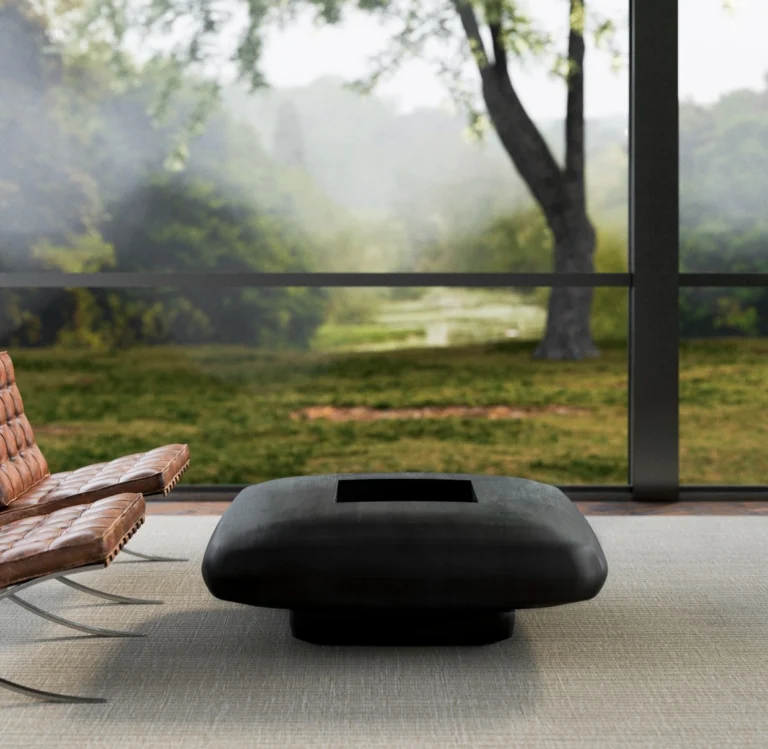
Depending on the complexity of the design and the material specified, a single piece may pass through 20-40 individual production steps. A coffee table with a sculptural curved surface, for instance, involves more lamination sessions and curing intervals than a simpler rectilinear form. Every step is done by hand and checked before the next begins.
Yes – and this is one of the less obvious qualities of working with natural wood veneer. Because every sheet of veneer carries its own grain pattern, formed by the specific growth conditions of that individual tree, no two pieces produced from the same design will ever look exactly alike. The form is consistent across the collection; the surface is always one of a kind. A piece made today and another made six months from now share the same proportions and the same design – and carry completely different grain characters. That is not a variation to manage around. It is precisely what makes each piece worth having.
Finishing is where the piece takes on its final character. Lacquering is applied in multiple coats with sanding between each, producing the surface depth that distinguishes a hand-finished piece from a factory-applied coating. Quality control follows: the finished piece is inspected against the original design and the client’s brief before it is cleared for delivery.
Delivery is white-glove: the piece is transported with full protective packaging, placed in the room, positioned, and unwrapped. Installation is coordinated with the client, and any site preparation – such as floor protection or access requirements – is discussed in advance.
Made to measure furniture – even where the design is fixed – is produced from raw materials, per order, by hand. No stock is held. Every piece begins its production life when the order is confirmed, which means material sourcing, forming, curing, and finishing all happen in sequence, from scratch, each time.
The production methods used across the collection are the source of both the visual quality and the lead time. Wood veneer – thin slices of real timber bonded over a structural core – requires careful preparation, precise cutting, and controlled application. Multilaminar work involves bonding multiple layers of material under pressure to produce structural or curved forms, with curing time between each layer.
Curing time is determined by the adhesive chemistry and the material behaviour – not by the studio’s schedule. Applying the next layer before the previous one has fully set compromises the bond, which in turn affects the structural integrity of the piece and the quality of the finished surface. The intervals are observed because the result depends on them.
Research by The Crafts Council consistently documents that skilled craft production operates on fundamentally different timescales to industrial manufacture – not because of inefficiency, but because the quality of the work is inseparable from the time it requires. For a direct comparison of what this means in practice, see our piece on custom furniture vs mass-produced.
|
Type |
Lead Time |
What You Choose |
Lifespan |
Made How |
|
Off-the-shelf |
1-10 days |
Nothing – fixed design and finish |
5-10 years |
Mass production |
|
Made-to-order sculptural |
9-16 weeks |
Material, finish, size within the design |
25-50+ years |
Hand-made per order from raw materials |
Yes – structural complexity is the primary factor. Larger pieces with more production layers and more demanding joinery take longer than smaller, simpler commissions.
A side table is typically the most straightforward commission in the collection – fewer laminate layers, a more compact material requirement, and a shorter finishing phase. For clients working to a specific move-in or renovation date, a side table or accent chair is often the most practical starting point. All pieces, including smaller commissions, start from a 9-week lead time.
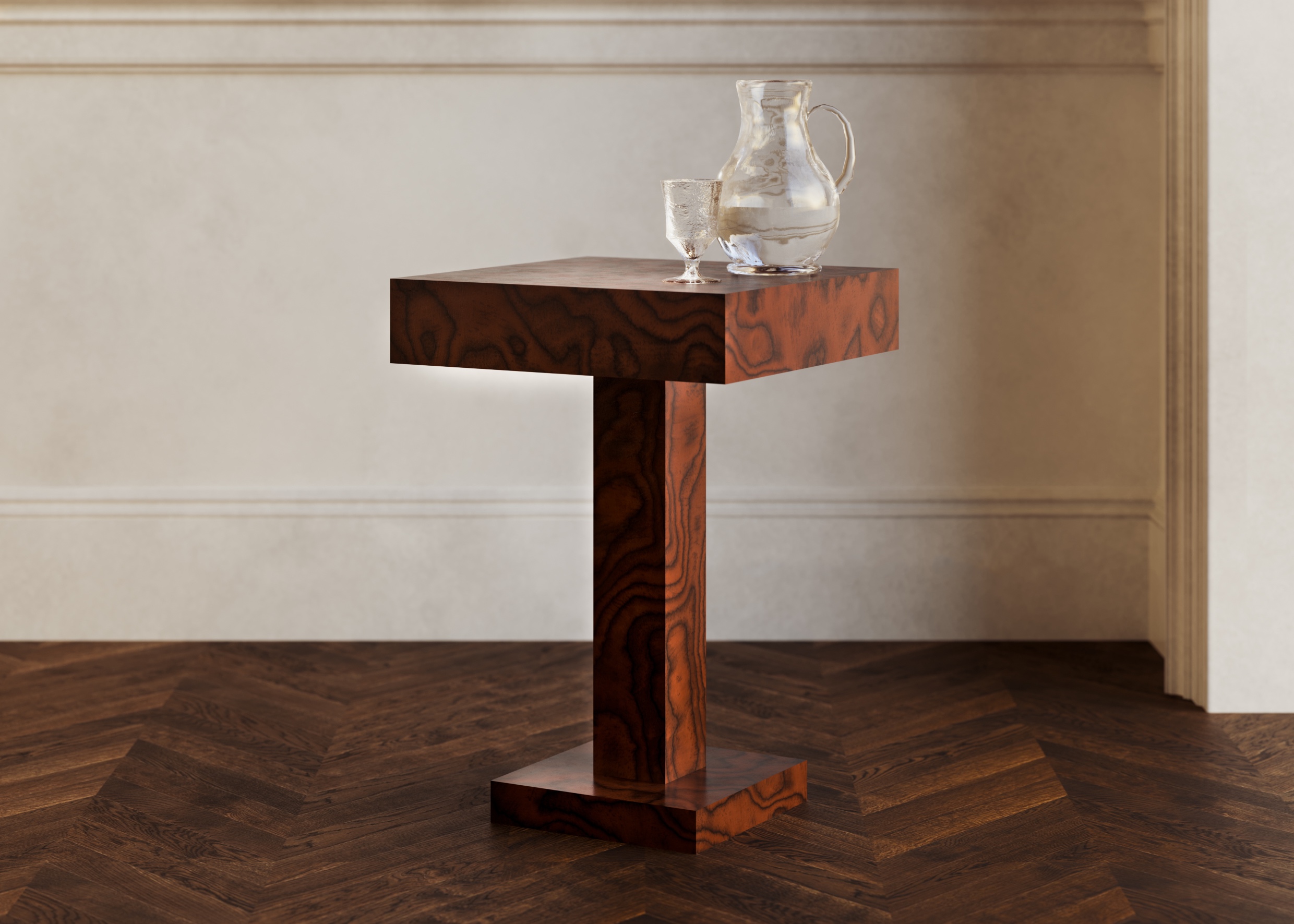
A good example is the Ettore Sottsass side table – a pedestal form in rich rosewood veneer that reads as sculpture first and furniture second. Its T-shaped silhouette is immediately architectural, and like all pieces in the collection it starts from a 9-week lead time. It is also a clear illustration of the one-of-a-kind principle: the rosewood grain on each production will differ, meaning no two Ettore Sottsass tables are ever identical, even though the design is fixed.
Yes – the production process is identical regardless of scale. The same veneer preparation, the same curing intervals, the same finishing standards apply to a side table as to a floor-to-ceiling bookcase. Smaller pieces are faster because they involve fewer stages, not because any stage is skipped or abbreviated.
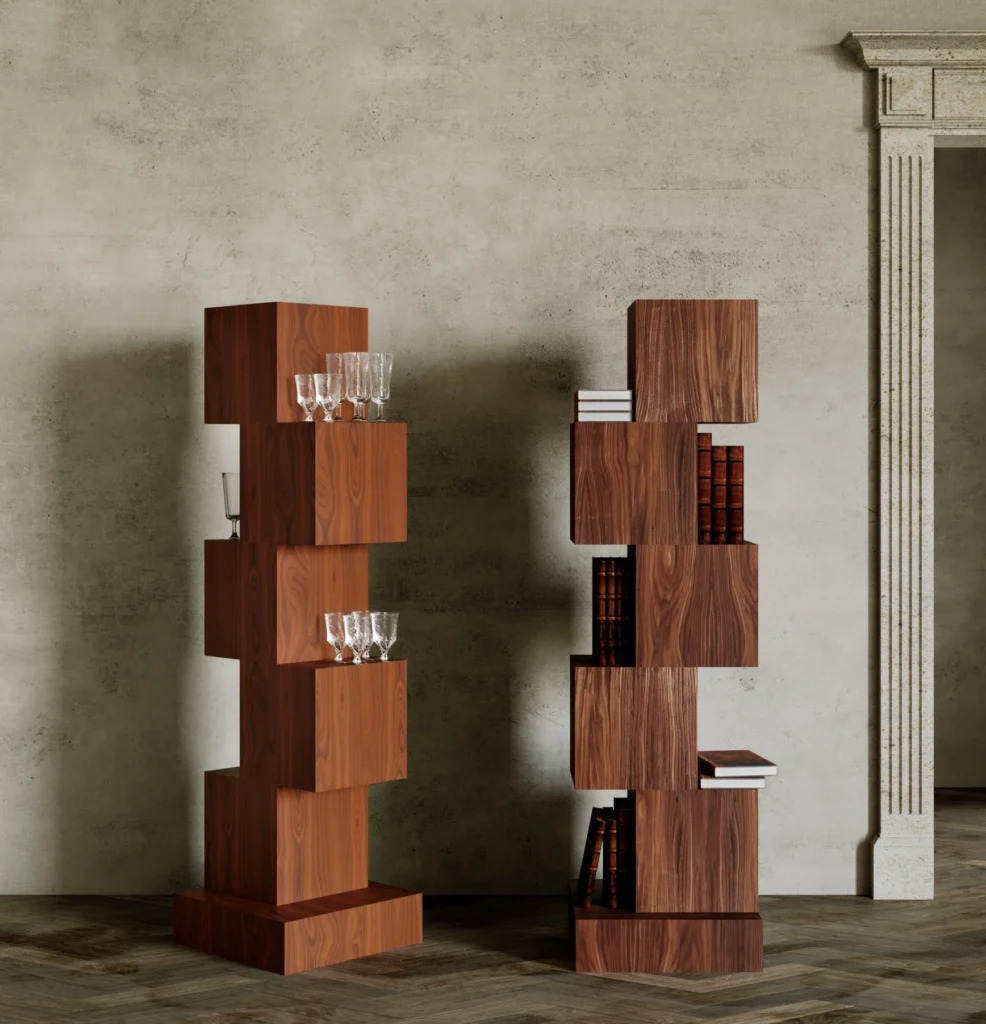
A wood bookcase or a multi-component custom cabinets system is among the most complex commissions in the collection. Production is phased across multiple sessions, structural elements require careful joinery, and site coordination – including wall-fixing and any built-in lighting – must be planned in advance. These commissions repay the lead time: a resolved architectural piece that fits a specific wall or alcove precisely is not something a standard retailer can offer.
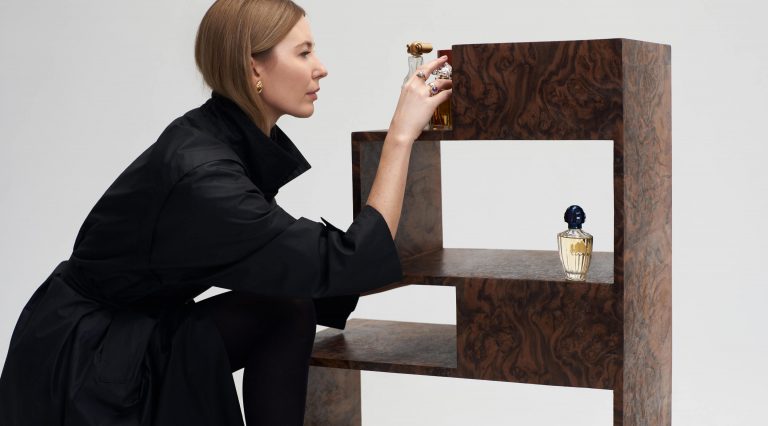
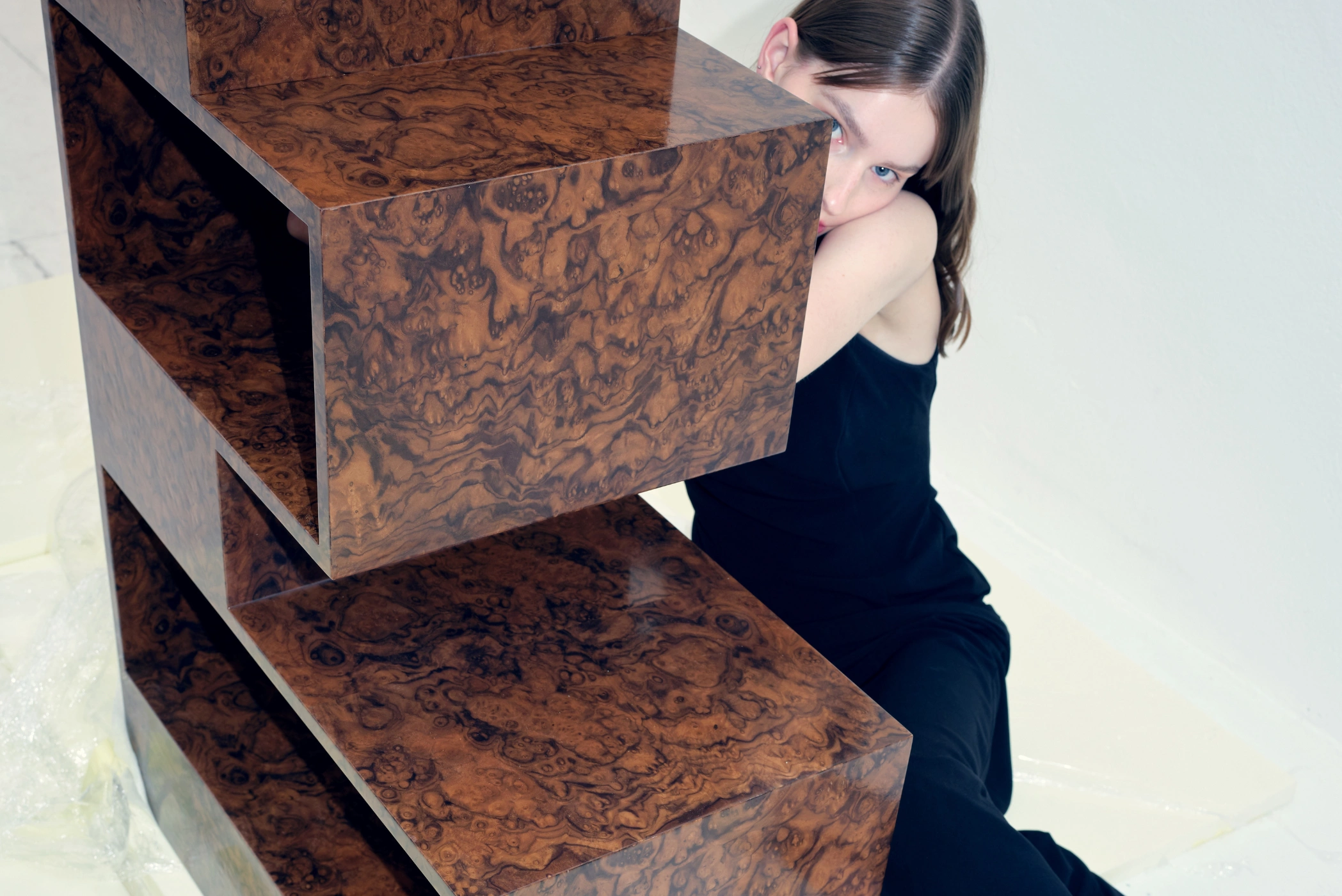
The Walnut Burl Storage Cabinet is a strong example of what this category looks like in practice. Its stepped, asymmetric shelving form is resolved as a complete sculptural object – the kind of piece that organises a wall without looking like storage. The walnut burl veneer is among the most characterful materials in the collection, with a dense, swirling grain that means every cabinet produced carries a surface pattern found nowhere else. Lead time for this piece is 9 weeks, which reflects a production process that is complex but well-established.
A bookcase is typically a single structural unit – shelving at height, with or without a base cabinet. A cabinet system involves multiple coordinated components that must be produced in sequence and installed together. The production complexity is higher, the site coordination more detailed, and the timeline correspondingly longer. Both are available in the collection; the team will advise on the distinction when discussing a specific brief.
Material choice is the variable most directly in your hands. Everything else – production time, finishing, delivery – is largely determined by the nature of the piece and the standard of work applied to it.
Veneers and finishes held in the studio’s standard library go straight to the production queue. Less common timber species, specialist lacquer colours, stone inlays, or resin surfaces require additional sourcing time. A custom coffee table ordered in a readily available oak or walnut veneer will typically complete faster than one specified in a rarer timber. Confirming material preferences at the brief stage allows availability to be checked before the order is placed, rather than discovered after it.
Standard materials are those the studio holds or can source within a few days: common European and American hardwood veneers (oak, walnut, ash, beech), a range of lacquer finishes in matte and satin, and the core multilaminar substrates used in most designs. Anything outside this range is considered specialist and will carry a longer sourcing window – typically an additional 1-3 weeks depending on supplier.
Modest size changes within the proportional logic of a design add little to no extra time. Larger departures – particularly in height or depth – may require additional material and occasionally a small adjustment to the production schedule. Discussing dimensions at the brief stage ensures this is confirmed before production begins rather than discovered during it.
Made-to-order production fills up during peak periods – typically September to November ahead of the holiday season, and the spring post-renovation surge from March to May. Ordering outside these windows generally means an earlier production start and a more relaxed timeline for both sides.
June, July, and January tend to be the quietest periods in the studio’s order book. Placing an order in these months usually results in a faster production start and, in some cases, a slightly shorter overall lead time. For clients with a specific installation deadline – a move, a renovation completion, or a seasonal event – working backwards from the target date and ordering with appropriate lead time is always the most reliable approach.
The honest answer is that you are not being asked to accept a limitation – you are being offered something more considered than a blank brief typically produces. The designs in this collection are finished works. Each one has been resolved as a sculptural object, with proportion, form, and material relationship considered as a whole.
Open-ended custom design sounds appealing in principle. In practice, most clients who have experienced both routes find that working from a resolved design – one where the proportions have already been tested and the form is known to work – produces a more satisfying result than one arrived at through iterative compromise.
Personalising the material or adjusting the scale does not compromise the integrity of the piece. It ensures the piece fits your space and your interior palette while the design itself retains the coherence the maker put into it. And because the surface is natural wood veneer – with grain formed by the growth of a real tree – the piece you receive will not look exactly like any photograph you saw of it, or any piece made before or after it. The design is the same. The object is yours alone.
The first step is a conversation. Dimensions can often be adjusted more than clients initially assume, and material choices have a significant effect on how a piece reads in a room – a lighter veneer in a darker space, or a matte finish rather than satin, can shift a piece considerably. The team will walk through what is possible for any specific design before an order is placed.
A mass-produced piece has an average lifespan of 5-10 years. A hand-made sculptural piece, built from quality materials with proper joinery and hand-finished surfaces, routinely lasts 25-50 years or more. The Cooper Hewitt, Smithsonian Design Museum has long recognised furniture as one of the primary carriers of decorative art – objects that define the rooms they inhabit rather than simply occupying them. Against that lifespan, a 9-14 week wait is a modest investment of patience.
For a fuller account of what a made-to-order piece offers over time, the guide on the benefits of bespoke furniture covers ten reasons clients return to order a second and third piece.
The process starts by browsing the collection and identifying the piece – or pieces – that suit your space. Once you have a design in mind, get in touch with your material preference and any dimension requirements. The team will confirm availability, advise on any size constraints, and give you an accurate lead time for your specific brief.
The conversation is most productive when you can share the dimensions of the space the piece will occupy, any materials or finishes already present in the room (flooring, wall colour, existing furniture), and a sense of whether you are drawn to lighter or darker veneers. Reference images are welcome but not required – the team is experienced at translating a description into a material recommendation.
Not necessarily. Most briefs are handled remotely – dimensions are shared in writing, material samples are sent by post, and decisions are confirmed by email. For larger commissions, such as a bookcase or cabinet system that will be wall-fixed, a site visit is recommended to confirm dimensions and any structural considerations before production begins.
The full range of available pieces – from smaller accent commissions to large architectural installations – can be explored in the catalogue. Each design is shown in its standard material, with notes on available size variations. The team is available to answer questions about any specific piece before a decision is made.
Nine weeks is the minimum – and for most commissions, the wait runs 9-14 weeks. That period is not administrative – it is production time. Every week represents veneer being laid, layers being cured, surfaces being finished by hand.
The designs in the Petra Madalena collection are finished works, made to order, built to last. If you are ready to choose a piece, the catalogue is the right place to begin.