 Menu
Menu
Menu
Menu
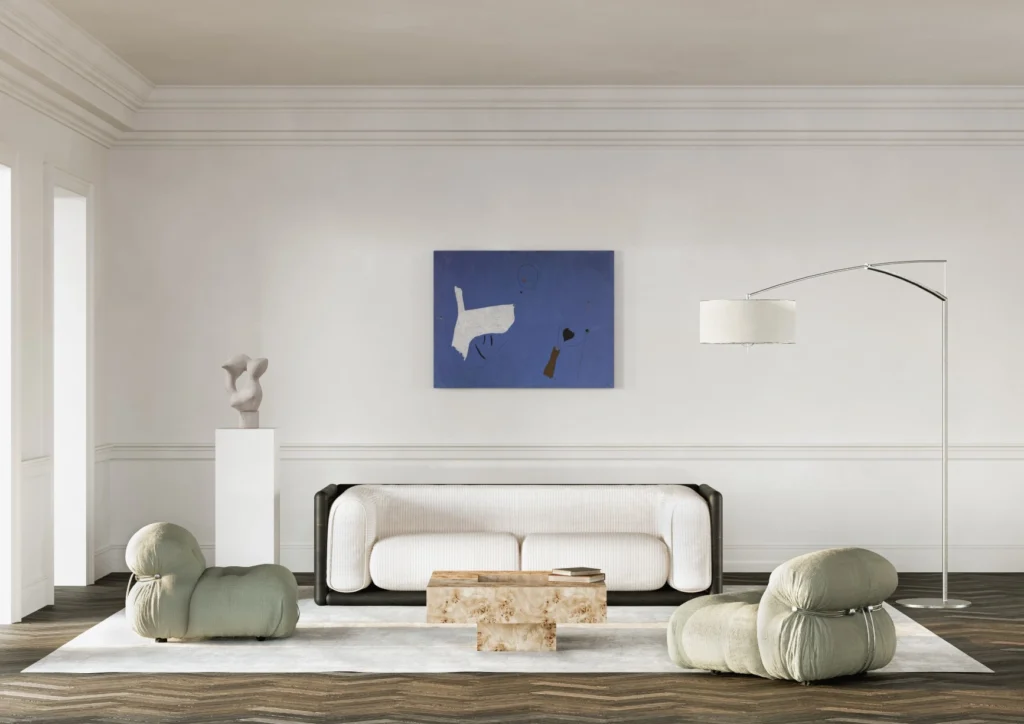

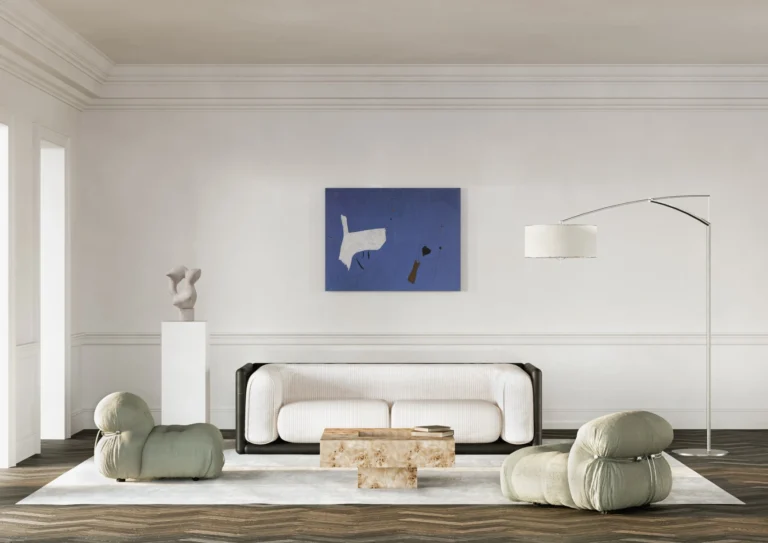
Furniture placement changes the feel of a room because the eye reads spatial relationships before it reads individual objects. A sofa floating in the middle of a room creates conversation; pushed against a wall, it creates a corridor. The best furniture placement treats the room as a composition where every piece has a role and a reason to be there.
Furniture placement matters because spatial relationships are the first thing the brain processes when you enter a room, long before you register colour, material, or style. According to research published in the Journal of Environmental Psychology, the arrangement of objects in a space measurably affects how people perceive its size, warmth, and welcomingness, with poorly arranged rooms reading as smaller and more stressful even when their actual dimensions are identical to better-arranged spaces.
The brain works in spatial shortcuts. It uses sightlines, proportions, and negative space to decide whether a room feels considered or chaotic, before any conscious thought happens. When pieces have room to breathe, the eye reads calm. When pieces crowd each other, the eye reads tension – even if every individual object is beautiful. This is the principle behind every well-designed gallery, museum, and considered home interior.
The best way to arrange furniture in a living room is to start with the sofa as the anchor, place the coffee table next, then add accent chairs to create a conversation triangle around them. Anchor the arrangement with a rug that fits underneath at least the front legs of every seat, and leave 60 to 90 cm of walking space around the main group.
A sofa should face whatever creates the room’s strongest focal point – usually a fireplace, a piece of art, or a window with a meaningful view. Avoid placing the sofa with its back to the entry door, which creates unconscious tension as people walk into the room. If the room has no obvious focal point, the sofa itself can create one by floating away from the wall and anchoring the arrangement around it.
A coffee table should sit between 35 and 45 cm from the sofa – close enough to reach a cup of tea without leaning, far enough to walk past without bumping a shin. The table should be roughly two-thirds the length of the sofa, and around 5 cm lower than the seat cushion height. Get these proportions right and the coffee table reads as part of the seating; get them wrong and it feels like a stranger in the room.
Accent chairs should be placed at a slight angle to the sofa, creating a conversation triangle rather than a straight line. A modern accent chair earns its place when it offers a counterpoint to the sofa in form, material, or scale – never a copy of it. Two accent chairs facing each other across a coffee table create the most dynamic seating arrangement in a living room, especially when the chairs themselves are sculptural enough to anchor the configuration visually.
Room layout affects mood and flow because the brain experiences a room as a sequence of spatial cues: where it can move, where it can rest, and where it has to navigate around obstacles. A well-laid-out room invites the body to enter, settle, and stay. A poorly laid-out room creates micro-resistances – the chair that blocks a sightline, the rug edge that catches feet, the side table just slightly too close to the sofa – and these accumulate into discomfort without anyone being able to name why.
The eye also reads layout as a question of weight and balance. According to the Cooper Hewitt, Smithsonian Design Museum, the principles of visual balance that govern fine art and sculpture apply equally to interior arrangement – the eye seeks symmetry where it expects it, and rewards considered asymmetry where it does not. Sculptural pieces from a studio like Petra Madalena carry more visual weight than ordinary furniture, which means they need more breathing room around them to balance the composition properly.
Smaller pieces like side tables and accent objects act as the connective tissue of a room – they bridge the gaps between larger pieces, provide functional surfaces, and add rhythm to the visual composition. Without them, a room reads as a collection of furniture islands; with them, the same room reads as a single coherent landscape.
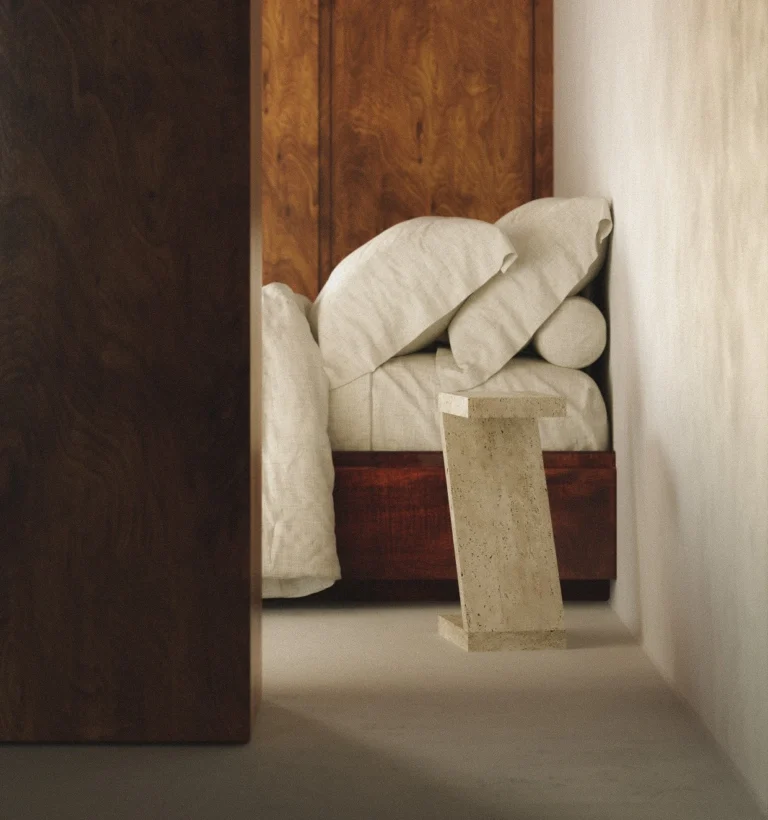
A travertine side table is a strong example of how a single sculptural side piece can shift the entire feel of a seating arrangement. Travertine has a quiet, geological quality that contrasts beautifully with wood, fabric, and metal, so a single travertine accent in a room of warm timber tones adds dimension without competing for attention.
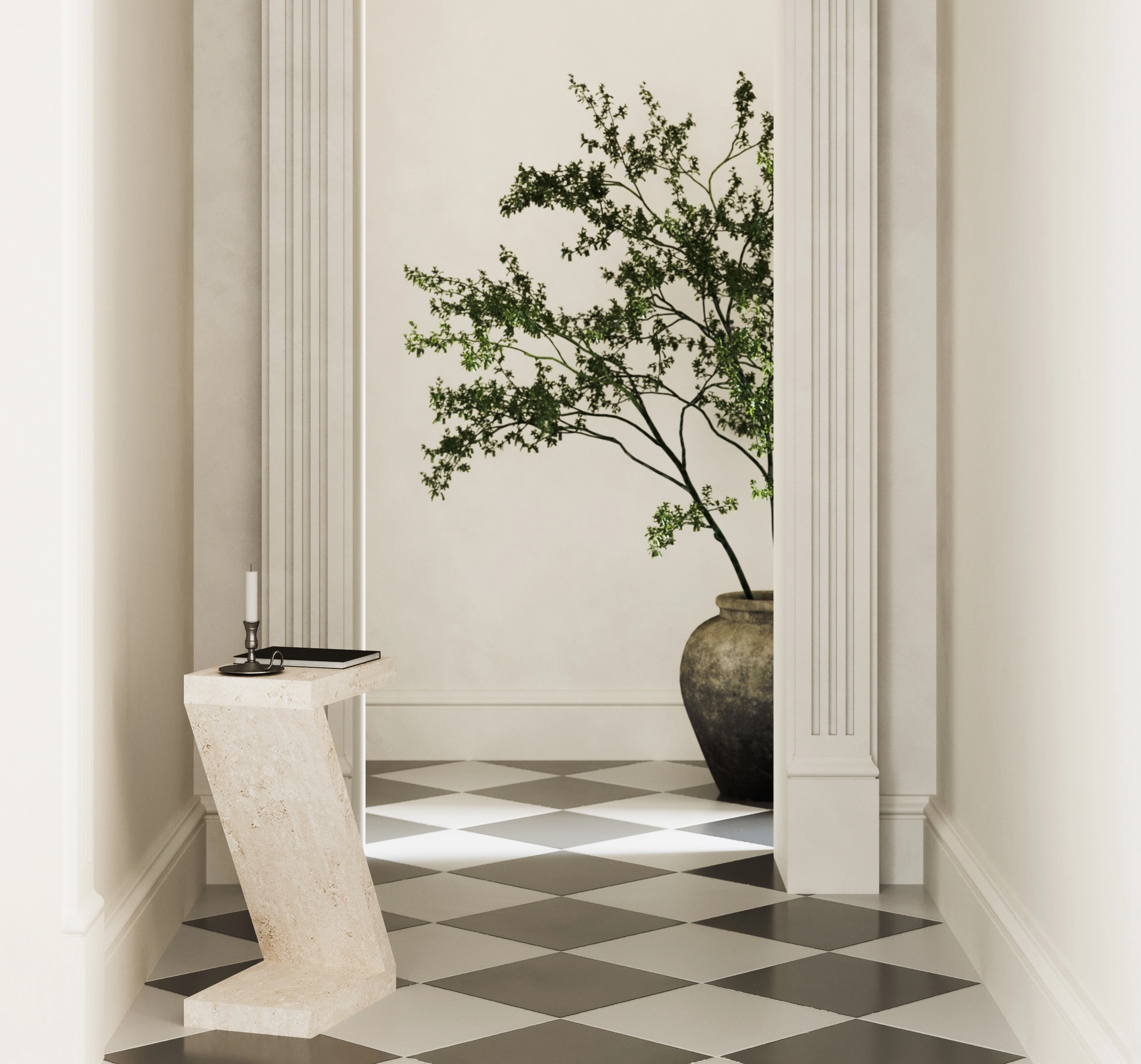
An asymmetric sculptural side table in solid travertine, designed to anchor a corner or sit beside a sofa as a quiet sculptural counterpoint rather than a strictly functional surface.
View pieceThe Travertine Side Table from Petra Madalena demonstrates this principle clearly. Its asymmetric Z-shaped silhouette in solid travertine reads as much like a small sculpture as a functional surface – the kind of piece that earns its place even when nothing is set on it. For a closer look at how small pieces shape the character of a modern interior, our guide to accent furniture and how small pieces make a big impact covers the strategy in depth.
You use interior proportions to anchor a room by choosing one or two pieces that carry significant visual weight, then sizing everything else in relation to them. The anchor doesn’t have to be the largest piece – it has to be the one the eye returns to. A sculptural coffee table, a tall bookcase, or a single dramatic accent chair can each play this anchoring role.
Proportions matter at every scale. A coffee table too small for the sofa looks lost. A bookcase too tall for the wall feels crammed. An accent chair too dainty next to a deep sofa looks like an afterthought. Get the proportions right and the room feels resolved; get them wrong and no amount of styling will fix it.
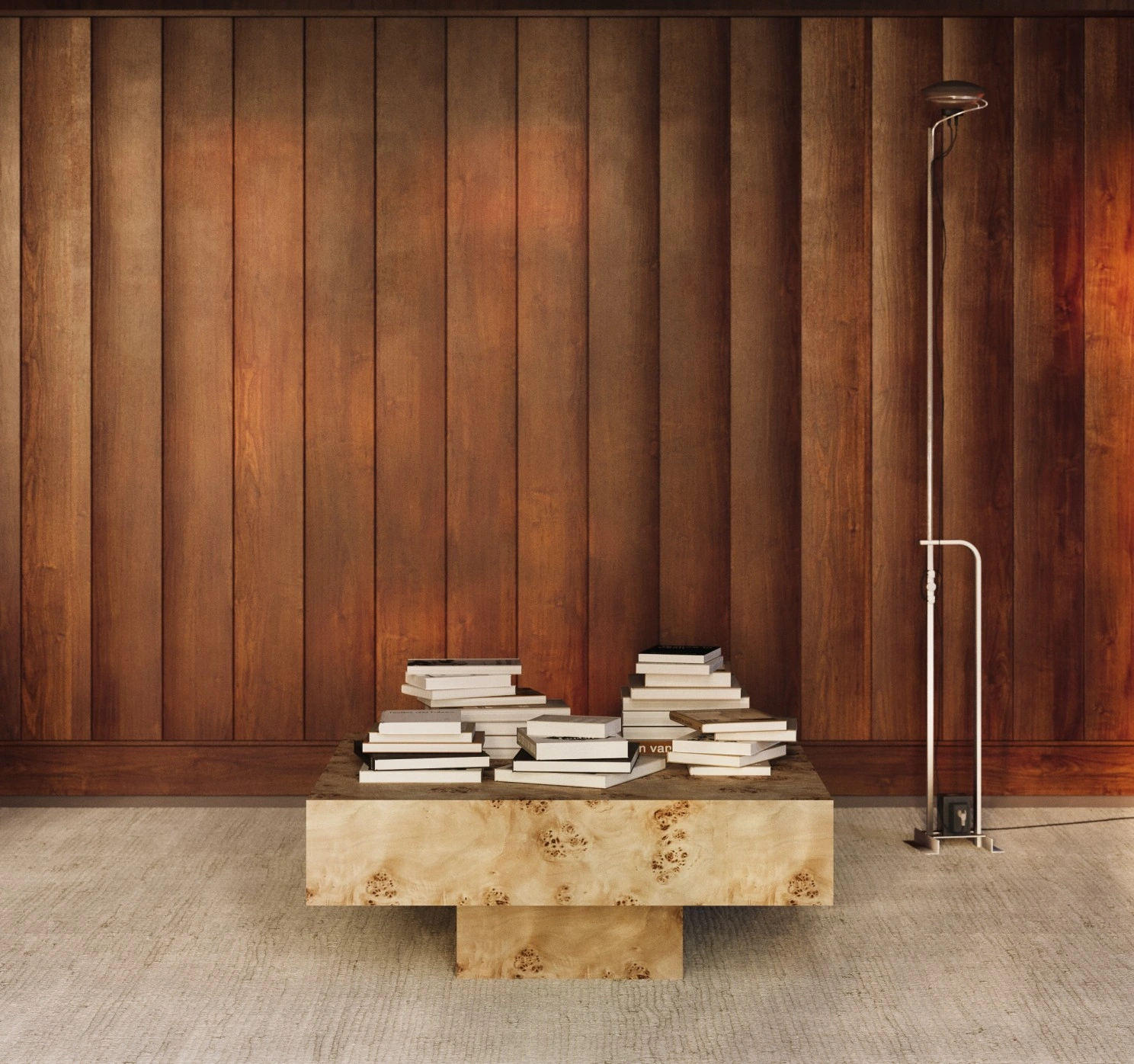
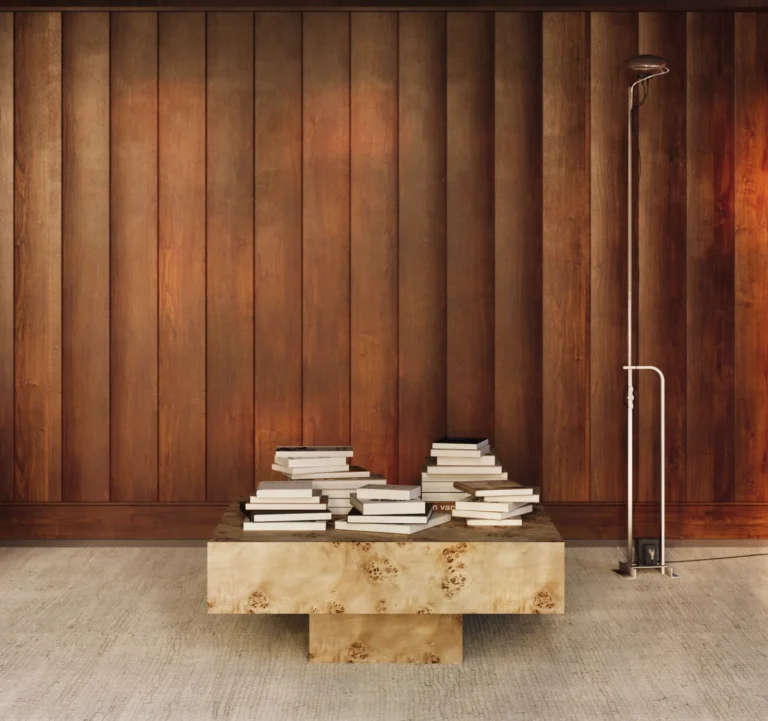
A rectangular sculptural coffee table on a central pedestal, finished in dramatic poplar burl veneer with patterns that read almost like natural stone. Custom dimensions available for the space it will live in.
View pieceA custom coffee table like the Poplar Burl from Petra Madalena is designed with this anchoring role in mind. Its rectangular form on a central pedestal, finished in dramatic poplar burl veneer, gives it the visual weight of a piece of sculpture – enough to anchor a seating arrangement without requiring other accents to compete for attention. Custom dimensions mean the table can be sized precisely to the sofa it accompanies.
Bookcases play a similar anchoring role on the vertical axis. A tall sculptural bookcase placed against a major wall pulls the eye upward, balances the horizontal weight of a sofa, and gives the room a sense of architecture. This is why considered interiors so often pair a low, dense seating arrangement with a single tall vertical piece.
The measurements that make a room feel resolved rather than assembled.
Save this – they apply from a 12 m² apartment to a 50 m² loft.
| Element | Distance | Why It Works |
|---|---|---|
| Coffee table to sofa | 35-45 cm | Reachable without leaning forward |
| Walkway between large pieces | 60-90 cm | Comfortable foot traffic flow |
| Rug overhang past sofa front | 20+ cm each side | Anchors the seating zone visually |
| Sofa from wall (floating) | 20-40 cm | Creates depth, room reads larger |
| TV-to-seating distance | 1.5-2× screen width | Comfortable viewing angle |
| Side table to sofa arm | 5-10 cm, same height | Accessible without strain |
| Pendant light above coffee table | 75-90 cm | Lights the surface without blocking sightlines |
| Bookcase top to ceiling | Min. 30 cm | Lets the piece breathe vertically |
| Art above sofa back | 15-25 cm | Reads as one composition with the seating |
These are starting points, not rigid rules. Pieces with more sculptural presence often need slightly more breathing room on every side.
The most common furniture placement mistakes are pushing every piece against the walls, choosing rugs too small for the seating arrangement, ignoring sightlines from the entry, and treating accent pieces as afterthoughts rather than integral parts of the composition. A few of these combined can make even expensive furniture feel awkward.
Pushing every piece against the walls is the single most common mistake in living room arrangement, and it makes the room feel both larger and emptier than it should. Pulling the sofa even 20 to 40 cm away from the wall changes the entire feel of the space. The room reads as more intentional, the seating area becomes its own zone, and the wall behind the sofa starts to feel like a backdrop rather than a constraint.
Rugs anchor a seating arrangement, but only if they are large enough to fit underneath at least the front legs of every piece around them. A rug floating in the middle of a room with the furniture marooned around it is the visual equivalent of a missing punctuation mark – the eye knows something is wrong but can’t name what. A rug should extend at least 20 cm beyond the front of the sofa on each side, and sit underneath the front legs of any accent chairs.
The first view of a room – the angle from which a guest walks in – determines the first impression more than any single piece of furniture. A sofa back facing the entry, a tall bookcase blocking the natural sightline, or a coffee table positioned in the walking path all create unconscious resistance. Resolving sightlines is often as simple as rotating the main seating piece 45 degrees and seeing what changes. Our guide to choosing the perfect living room furniture walks through the selection process in more detail.
You should break placement rules when the rules conflict with how you actually live, when a piece is sculptural enough to demand its own logic, or when the architecture of the room creates a stronger gravitational pull than any conventional arrangement would. The best interiors all break rules – they just break them deliberately. Rules exist as starting points, not endpoints.
A piece with strong sculptural presence often demands placement that conventional rules would advise against. A travertine side table tucked into a corner away from the sofa can act as a small sculpture in its own right. A coffee table placed off-centre against a sectional can create dynamic asymmetry instead of dead symmetry. The skill is in knowing why you’re breaking the rule, not whether you’re allowed to.
Furniture placement is the quiet architect of how a room feels – more powerful than any single piece, and more affordable to change than any wall, window, or floor. A good arrangement can lift even modest furniture into something considered. A poor arrangement can flatten the most beautiful pieces into something inert.
At Petra Madalena, every piece is designed as a sculptural object first, which means it carries its own visual logic into a room and behaves differently than ordinary furniture does. Learn more about the studio and approach on the about page, or explore the full collection of coffee tables, side tables, accent chairs, and bookcases designed to anchor the spaces they live in.
Browse the Petra Madalena collection of coffee tables, side tables, accent chairs, and bookcases – each piece designed as a sculptural object first and made to order in Lithuania.