 Menu
Menu
Menu
Menu
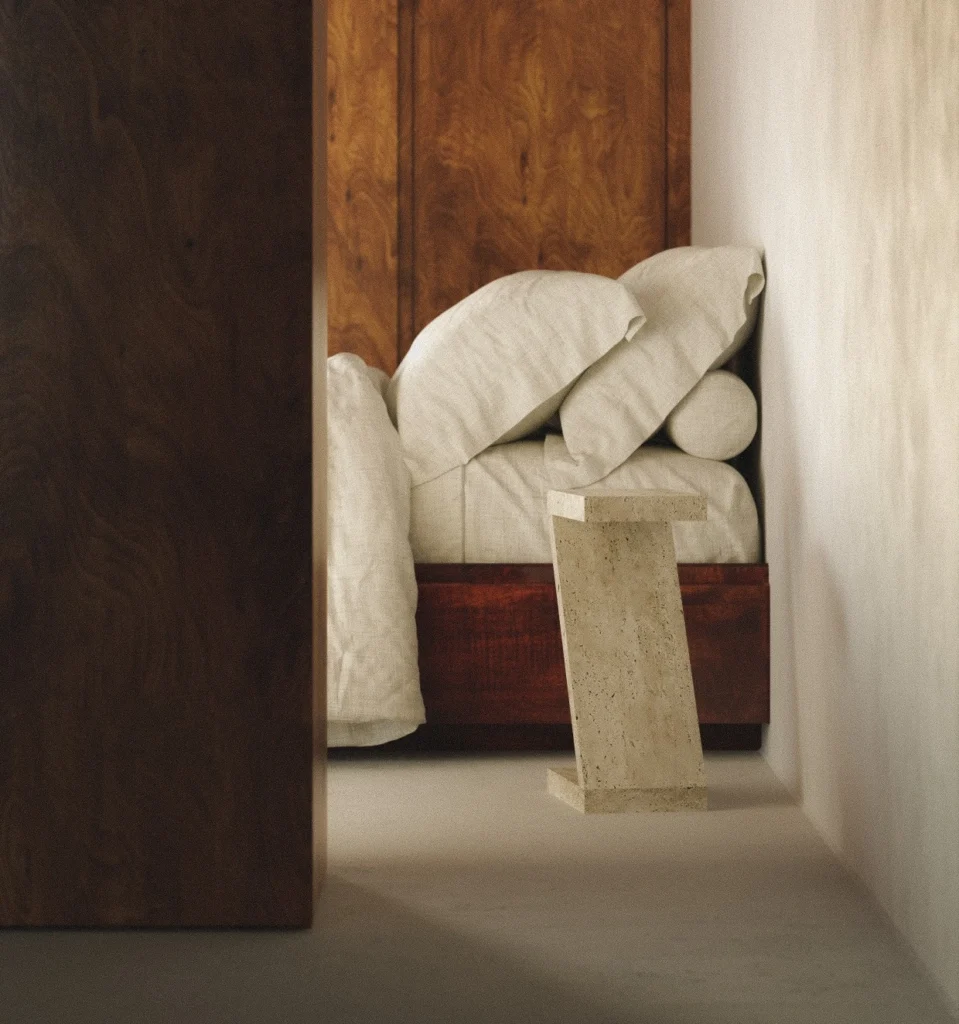

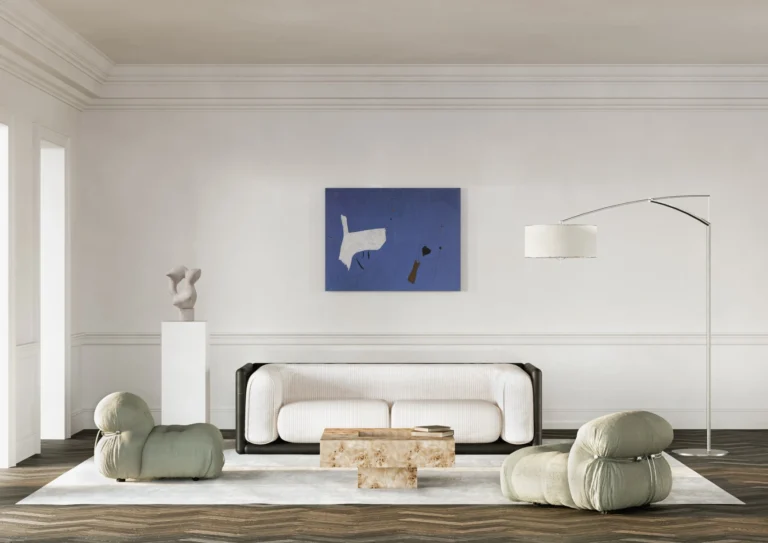
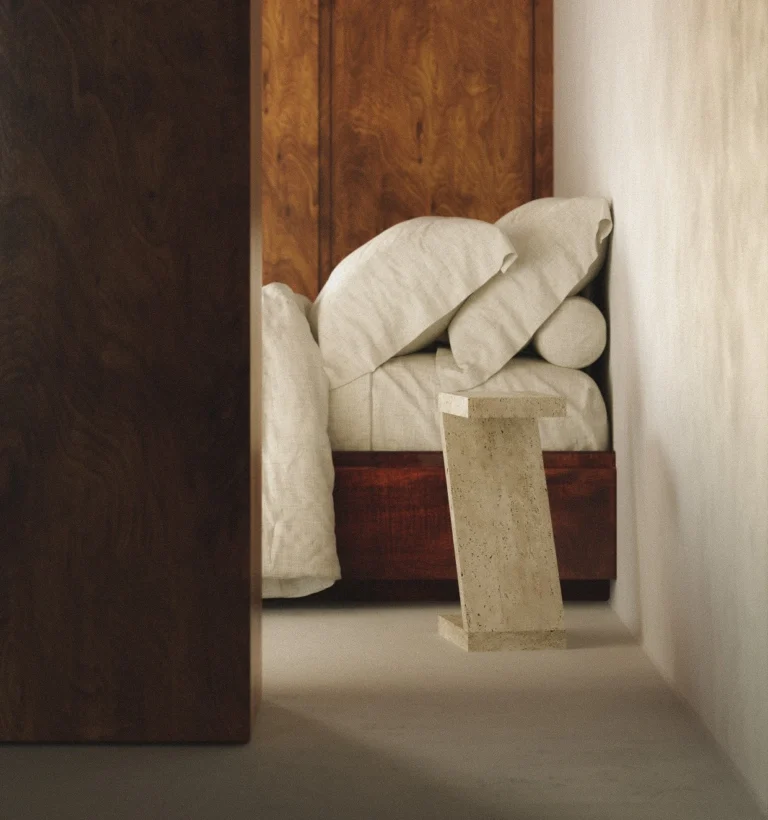
Accent furniture works because small pieces carry disproportionate visual weight. A travertine side table placed beside a quiet linen sofa does more to define a room than the sofa itself – it introduces material contrast, sculptural silhouette, and a moment of slowness in the eye. In 2026, as modern interiors shift away from spectacle toward what designers are calling “curated calm,” the role of accent pieces has expanded. These are no longer afterthoughts. They are the pieces that anchor mood, hold texture, and signal taste – the smallest decisions with the largest returns.
Accent pieces are small or sculptural items chosen primarily for their visual character rather than their core utility – side tables, accent tables, stools, pedestals, and consoles that introduce contrast, texture, or movement into a room. They carry more of the design narrative than larger items because they are seen up close, touched daily, and rotated more often than core furniture.
The eye reads contrast before it reads scale. A 45-cm-wide travertine pedestal in a 30-square-metre living room will draw attention long before the four-metre sofa does, because the pedestal introduces a different material, a different geometry, and a different relationship to light. This is the quiet logic behind statement furniture: it is rarely the largest object in a room. It is usually the most distinct one. Designers have understood this for decades, which is why an Eames chair or a Noguchi lamp can anchor a space that contains no other “statement” pieces at all.
The category has broadened over the past decade. Side tables, end tables, and accent tables remain the core of accent furniture, but the term now includes sculptural stools, low pedestals, plinths used as side surfaces, single decorative chairs, console tables, and oversized vessels used as floor pieces. According to Dezeen’s 2026 interior design trend report, designers are predicting a year defined by “quietly expressive” spaces – calm, tactile, and personal rather than visually loud. In this context, the right small piece does the work an entire wall of decor used to.
Accent pieces fall into two broad camps. Sculptural pieces – a travertine block, a hand-carved stone pedestal, a single chair displayed almost like art – prioritise silhouette and material. Functional pieces – the classic end table beside a sofa, a console behind it, a stool that serves as occasional seating – earn their place by being used daily. A well-balanced room contains both. The mistake most people make is choosing only functional pieces, which leaves the room feeling complete but uninteresting.
An end table is a side table specifically placed at the end of a sofa or beside a chair, typically standing at armrest height. A side table is the broader category and can sit anywhere – next to seating, beside a bed, against an empty wall. An accent table is the most decorative subcategory, chosen first for its sculptural quality and second for its function. The terms overlap in everyday use, but each carries a slightly different design intent.
End tables are defined by placement and proportion – they must sit at sofa-arm height, usually 55 to 65 cm, so a drink or a book can be set down without reaching. Side tables loosen the placement rule but keep the proportional logic. Accent tables loosen both rules and prioritise visual character. A heavy travertine block at 35 cm tall, used beside a low lounge chair, is unmistakably an accent table even though it functions like a side table.
| Type | Typical Height | Primary Function | Best Placement | Style Personality |
|---|---|---|---|---|
| End Table | 55-65 cm (armrest height) | Practical surface for drinks, lamps, books | At the end of a sofa or beside an armchair | Functional, often paired symmetrically |
| Side Table | 40-65 cm (varies widely) | Flexible utility – drinks, decor, plants | Anywhere – beside seating, beds, in hallways | Balanced between function and visual interest |
| Accent Table | 30-75 cm (intentionally varied) | Visual statement first, function second | Featured positions where it can be seen | Sculptural, distinct, often stone or carved wood |
Place it where two things meet: a seating position and an empty wall, corner, or open space that needs anchoring. The most common placements are at the end of a sofa (where it becomes an end table), beside a single lounge chair, in the gap between two chairs, or against a wall as a low console. Avoid the centre of an open floor unless the piece is genuinely sculptural enough to function on its own. Statement furniture needs visual context – it should anchor a relationship, not float in a vacuum.
Choose by reading what your room already has and deciding what it needs more of – more weight, more lightness, more texture, more contrast, or more warmth. The right piece adds the missing dimension. The wrong piece adds a competing one. This framework works regardless of style, budget, or room size.
Contrast in one dimension, harmony in another. If your sofa is upholstered and soft, your accent table should be hard, sculptural, and made of stone, wood, or metal. If your palette is cool and grey, introduce warmth through cream travertine, honey-toned oak, or terracotta ceramic. The classic mistake is contrasting in both material and tone at the same time – a glossy black metal table against an already-dark sofa, for example, which creates visual noise instead of contrast. Aim for one strong dimension of difference, not two.
The top should sit roughly level with the top of the sofa cushion or the mattress – typically 55 to 65 cm. Going lower creates a deliberately relaxed, lounge-like feel. Going higher introduces practical strain when reaching for a glass or a book. For width, aim for around two-thirds the depth of the sofa arm. A piece that is too small reads as accidental. A piece that is too large competes for attention with the seating itself.
Scale governs whether a piece feels right; proportion governs whether the room feels right. The fastest way to test scale before buying is to measure the floor space, mark it out with tape or stacked books at the intended height, then sit beside it, walk past it, and look at it from across the room. If it disappears from any of those three viewpoints, it is too small. If it dominates from any one of them, it is too large. Modern interiors reward proportional restraint – one well-scaled piece does more than three competing ones.
Travertine and natural stone are dominating the category in 2026 because the broader cultural shift in interior design is moving toward tactile, slow, materially honest pieces – away from the cooler, glossier minimalism of the previous decade. Travertine in particular hits a sweet spot: warm in tone, textured on the surface, sculptural in form, and grounded in 2,000 years of architectural history.
Travertine is a dense, banded form of limestone formed by the evaporation of mineral-rich spring waters, often around hot springs and geothermal regions. According to Encyclopaedia Britannica, it is a light-coloured, porous stone that takes polish well and has been quarried since Roman antiquity – the Colosseum is built largely of it. Its characteristic warm cream, beige, and walnut tones, combined with its visible banding and natural pores, give travertine a tactile quality few other materials can match. Travertino Romano Classico – the same stone variety used in classical Roman architecture – remains the benchmark for furniture-grade travertine today, and is the material used in Petra Madalena’s travertine side table.
The shift toward natural materials is not only aesthetic. A growing body of research on biophilic design – the practice of incorporating natural materials, light, and forms into built environments – shows measurable benefits for occupants. A 2024 study published in PMC found that exposure to biophilic interior environments significantly improved participants’ wellbeing across three measured dimensions: cognitive restoration, stress recovery, and a sense of refuge. Stone surfaces in particular contribute to this effect through tactile contact and visual variation – each piece of travertine carries a different pattern, so the eye registers it as something natural rather than manufactured. A stone table is not just a design choice. It is a small, sustained sensory intervention.
| Material | Best For | Maintenance | Style Mood | Longevity |
|---|---|---|---|---|
| Travertine | Warm, tactile, sculptural pieces | Medium – seal occasionally, wipe spills | Warm modern, Mediterranean, considered | Decades to centuries |
| Marble | Cool, polished, formal pieces | Higher – sensitive to acids and stains | Classical, refined, dressed-up modern | Decades to centuries |
| Solid Wood | Warm, grounding, character-rich pieces | Low to medium – oil or wax periodically | Mid-century, Scandinavian, organic modern | Decades (improves with age) |
| Stainless Steel | Architectural, minimalist, light-catching pieces | Very low – wipe clean, no sealing required | Contemporary, industrial, gallery-modern | Decades (highly durable) |
| Glass | Visually light, space-saving pieces | Low – wipe regularly | Minimalist, mid-century, contemporary | Years (fragile to impact) |
| Lacquered MDF | Colourful, on-trend pieces | Low – but prone to chipping | Postmodern, eclectic, statement-led | Years (depends on finish) |
For a closer look at how travertine performs against marble in real-world projects, see our guide on travertine vs marble in 2026. The short answer: travertine wins on warmth and forgiveness, marble wins on formality and polish.
A single well-chosen piece can shift the mood of an entire room because it changes the visual centre of gravity. Replace a generic glass table with a sculptural travertine side table, and the eye now anchors on stone instead of air – which in turn changes how every other element in the room reads. This is the quiet power of statement furniture: it edits a space without requiring you to repaint, reupholster, or replace anything else.
Yes – more often than people expect. Designers regularly use this principle when restyling client spaces on tight budgets. Rooms are read in terms of dominant materials and dominant colours. Introduce one piece that shifts the material mix – say, a stone piece in a previously all-textile room, or a brushed steel form in a room dominated by warm wood – and the room’s whole identity changes. The same applies to silhouette: a softly curved travertine piece in a room full of rectangular furniture rewires how the room reads, drawing the eye to flow rather than corners. Petra Madalena’s brushed stainless steel side table works the same way in reverse, introducing architectural sharpness into softer spaces.
Firmly in – but the definition has narrowed. The accent table of 2018 (a small, brightly coloured pop of “fun”) has been replaced by the accent table of 2026: more material, more weight, more silhouette, less novelty. The year’s mood is “curated calm,” which favours pieces with permanence over seasonal statements. A travertine or stone accent furniture piece reads as current today and will continue to read as current in ten years’ time – the most honest test of any furniture trend. For buyers thinking long-term, our sustainable bespoke furniture guide for 2026 explains why one considered piece outlives a dozen mass-market alternatives.
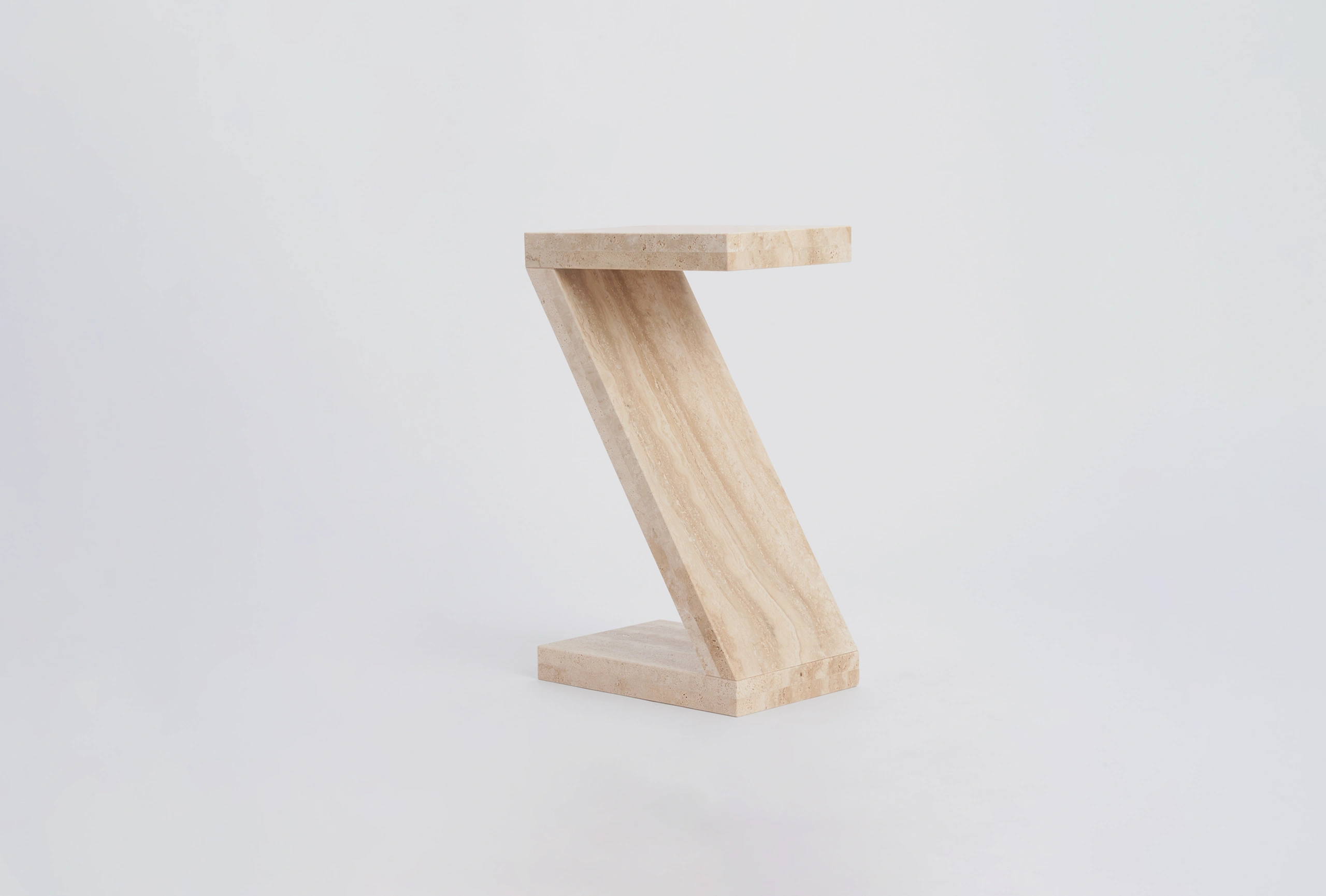
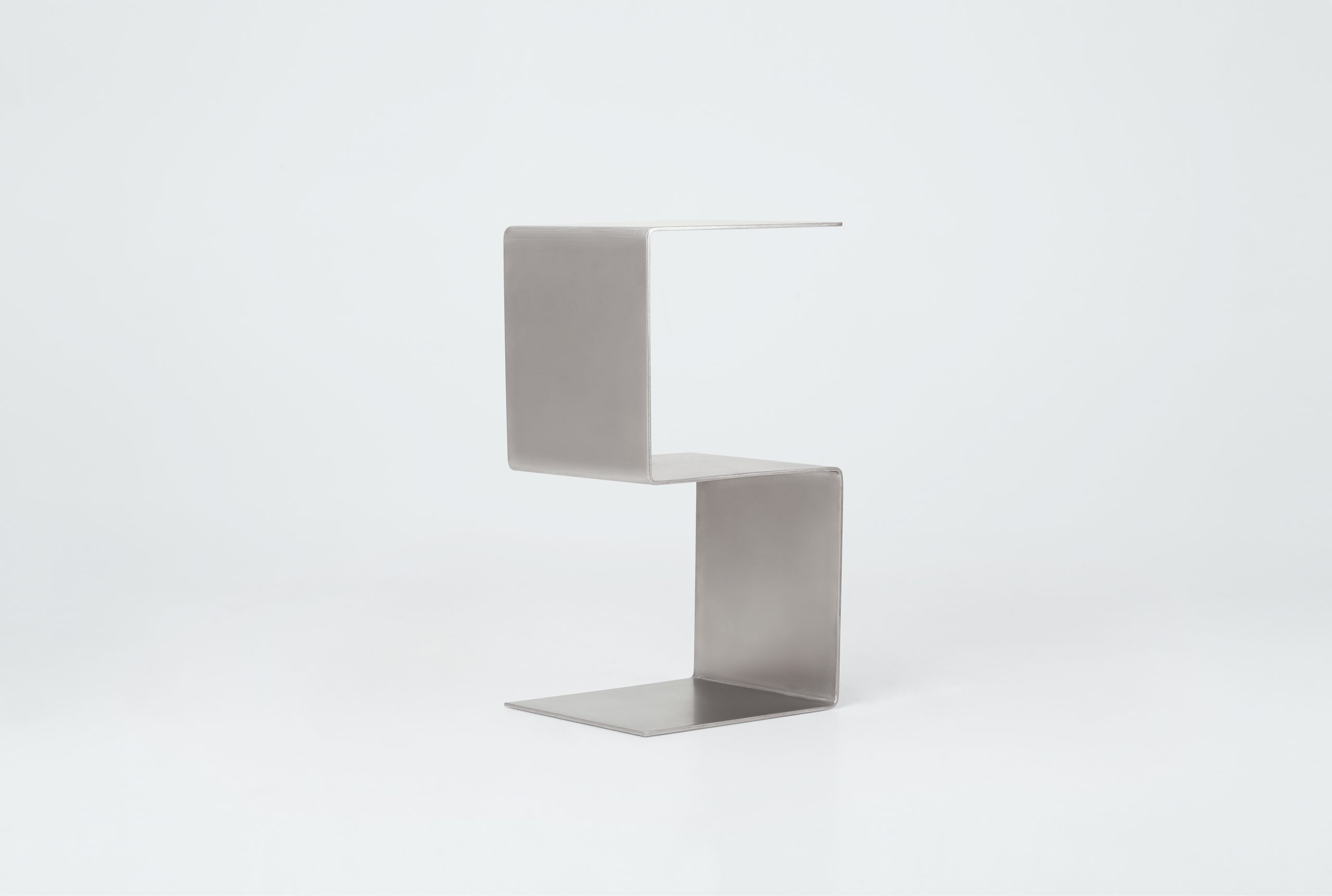
Of all the choices that shape an interior, accent furniture is the one with the highest visual return per euro spent. The right piece reorganises how a room reads. The wrong piece, or no piece at all, leaves a room feeling unresolved no matter how considered the rest of the design. In 2026, with modern interiors moving toward tactile materials, sculptural silhouettes, and a quieter sense of luxury, the case for one strong piece – rather than several forgettable ones – has rarely been clearer. At Petra Madalena, our travertine and stainless steel pieces are designed for exactly this brief: small in footprint, large in presence, made to last decades rather than seasons.
Explore Petra Madalena’s collection of sculptural side tables – made to anchor modern interiors with quiet presence.
Shop Side Tables