 Menu
Menu
Menu
Menu

A coffee table is the single most important piece of furniture in any modern living room. It anchors the seating area, defines the design language of the space, and serves as both a functional surface and a sculptural centrepiece. Whether you are furnishing your first apartment or rethinking a room you have lived in for years, the coffee table is where every design decision comes together – material, proportion, style, and personality. This comprehensive guide covers everything you need to know about choosing, sizing, and styling the perfect living room table, from materials and dimensions to storage solutions, decorating techniques, and the practical details of buying one that will last.
Key Takeaways
✔ The ideal coffee table height is 40-50 cm (16-20 inches) – roughly level with your sofa seat cushions or 2-5 cm below.
✔ Your coffee table length should be one-half to two-thirds of your sofa length, with 35-45 cm clearance between table and sofa.
✔ Wood (solid birch, burl veneers), travertine, and stainless steel are the most versatile and durable materials for modern living rooms.
✔ Both of Petra Madalena’s coffee tables – the Solid Birch (100 x 100 x 40 cm, from €4,826) and the Poplar Burl (100 x 100 x 42 cm, from €2,970) – feature original sculptural designs with modifiable heights and material choices.
✔ Storage options range from hidden drawers and open shelves to integrated recessed openings – choose based on room size and lifestyle.
✔ Style your coffee table using the four-element formula: books, something organic, a decorative object, and a tray – keeping at least 50% of the surface clear.
✔ In 2026, sculptural forms, burl veneers, travertine, geometric silhouettes, and authentic artisan-made pieces are the defining trends.
Choosing the right coffee table for a modern living room comes down to five key decisions: design style that complements your interior, material that suits your lifestyle, dimensions that work with your sofa and room proportions, storage that meets your practical needs, and a styling approach that brings the whole room together. An authentic, one-of-a-kind designer coffee table – like the sculptural pieces from Petra Madalena – lets you address all five in a single piece rather than settling for a mass-produced compromise.
The coffee table is the centrepiece of a modern living room because it sits at the visual and physical heart of the seating area, drawing every eye and anchoring the entire layout around a single focal point.
Think about the way a living room works. The sofa faces inward, the armchairs angle toward the middle, and everything converges on one point – the coffee table. No other piece of furniture occupies such a central position in daily life. It holds your morning coffee, your evening books, your weekend flowers. Guests notice it before they notice your curtains, your shelving, or even your sofa.
Design institutions like the Cooper Hewitt, Smithsonian Design Museum have long positioned furniture as designed art objects – pieces that carry meaning beyond their practical function. A modern coffee table embodies this idea perfectly. When chosen well, it communicates your design sensibility, ties together disparate elements in a room, and creates a focal point that elevates everything around it.
The difference between a mass-produced table and an authentic coffee table is the difference between decoration and design. Mass-produced pieces are designed for the greatest number of people, which means they please no one deeply. A custom coffee table – one born from an original artistic vision – becomes the room’s signature.
Take Petra Madalena’s approach: each piece is conceived as a sculptural object first and a functional surface second. Their Solid Birch Coffee Table, for instance, features an organic, pillow-like form in high-gloss black that demands attention the moment you enter the room. It is furniture, certainly, but it functions as art.
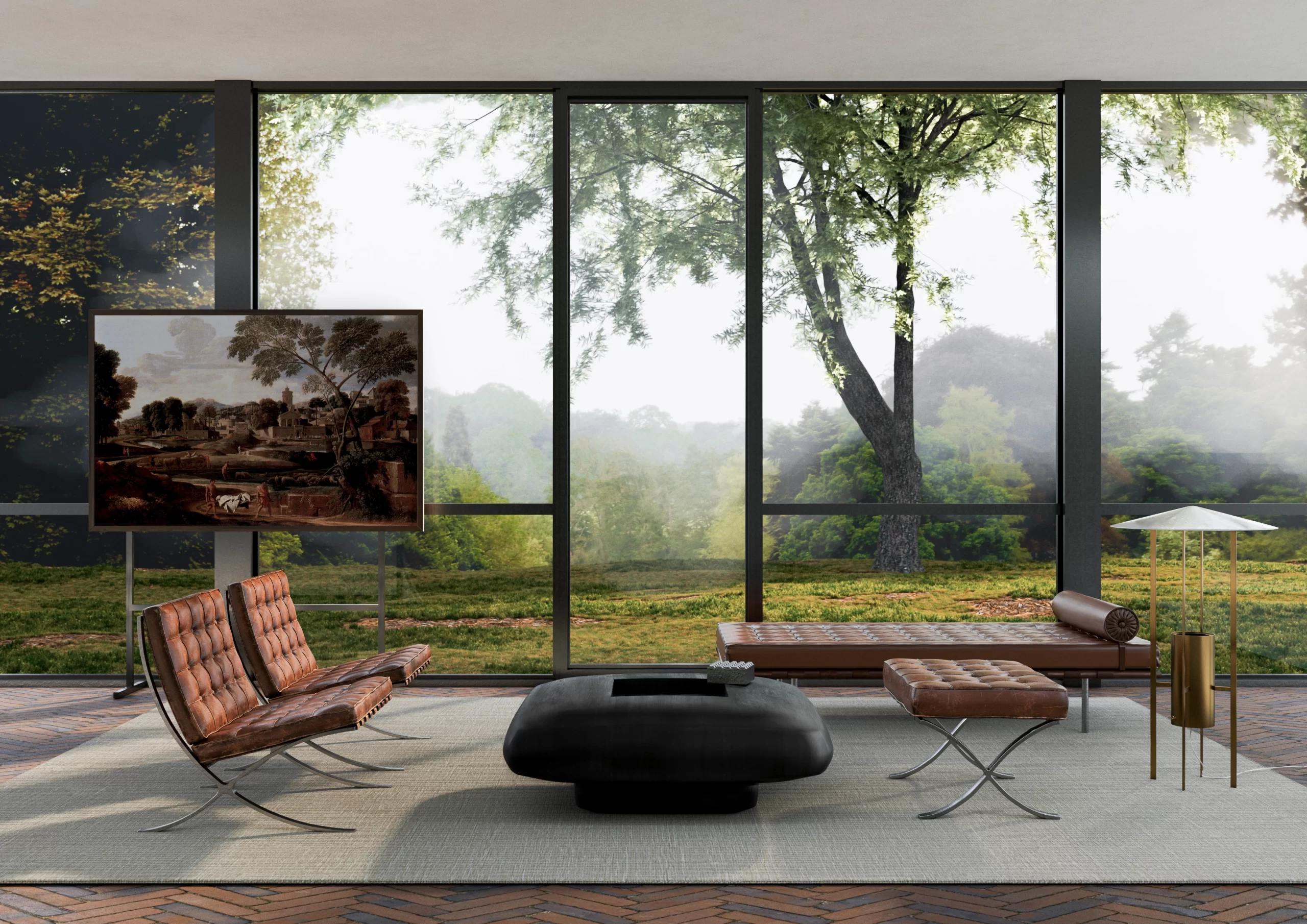
Understanding what makes your living room tick – and what kind of statement you want to make – is the first step in choosing the right piece. For a deeper look at what is shaping coffee table design right now, explore the 2026 coffee table trends that are defining contemporary interiors.
Choose a design style that reflects the personality of your living room – whether that is clean minimalism, warm organic shapes, or bold sculptural statements – and let your coffee table set the tone for the entire space.
Every living room has a character, and your coffee table should sharpen it rather than blur it. A low-profile slab in pale oak whispers minimalism. A curved form in glossy black birch announces organic modernism with confidence. A sharp, geometric block wrapped in poplar burl veneer speaks the language of architectural precision while letting nature do the decorating.
Organic modern design prioritises soft edges, natural materials, and forms inspired by nature. Petra Madalena’s Solid Birch Coffee Table is a striking example – its rounded, pillow-like silhouette in high-gloss black feels almost biomorphic. Available in any stain colour, the same form takes on completely different moods depending on the finish: meditative in pale birch, dramatic in jet black, warm in rich walnut tones. A piece like this channels the kind of bold energy explored in our guide to 2026 interior design inspired by the Fire Horse – fearless, expressive, and unapologetically statement-making.
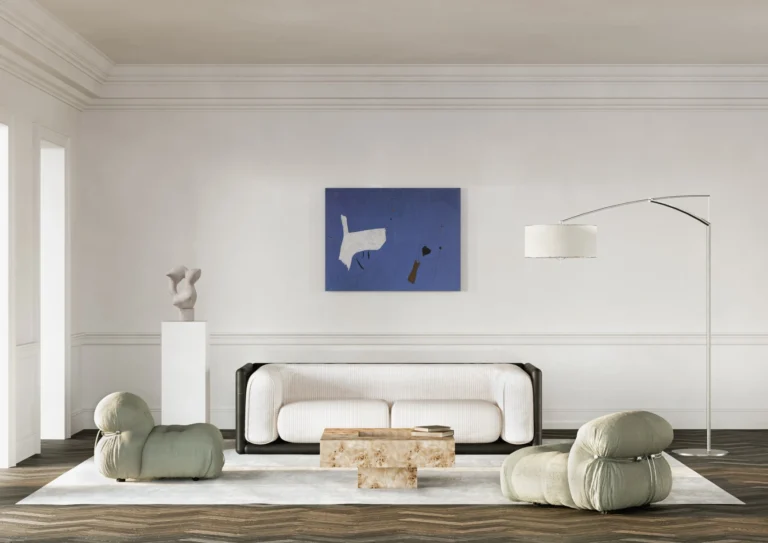
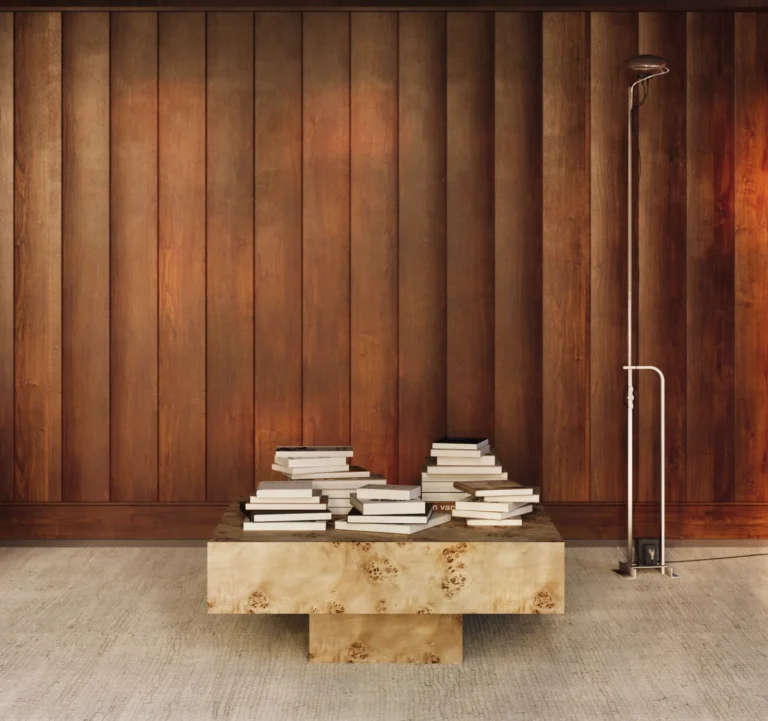
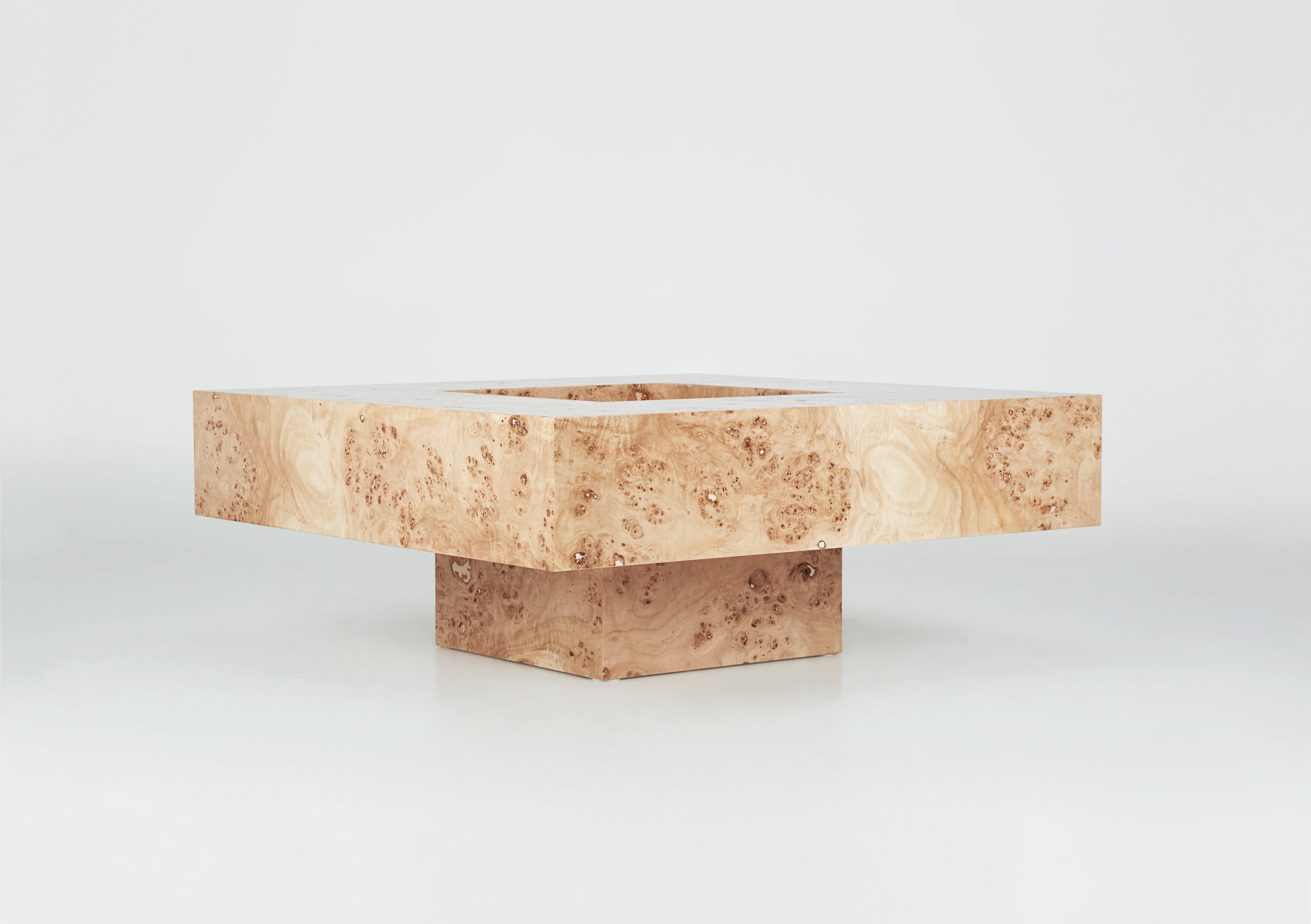
Geometric design favours sharp edges, clean planes, and architectural presence. The Poplar Burl Coffee Table captures this perfectly – a rectangular block with precise 90-degree corners, where the strict silhouette creates deliberate tension with the wild, unpredictable grain of the burl veneer underneath. It is nature contained within geometry.
|
Style |
Key Characteristics |
Best Room Type |
Ideal Material |
PM Example |
|
Minimalist |
Clean lines, monochrome palette, no visible storage |
Open-plan lofts, Scandinavian interiors |
Pale oak veneer, white stone |
|
|
Organic Modern |
Curved edges, soft forms, warm tones, tactile surfaces |
Warm contemporary, mid-century inspired |
Solid birch, walnut veneer |
|
|
Sculptural/Artistic |
Bold silhouettes, furniture as art, conversation starters |
Eclectic, gallery-style living rooms |
Mixed materials, high-gloss finishes |
|
|
Geometric Modern |
Sharp lines, block forms, architectural presence |
Modern apartments, design-forward homes |
Burl veneer, travertine |
|
|
Mid-Century Modern |
Tapered legs, warm woods, retro geometry |
Vintage-inspired, cosy modern spaces |
Walnut, teak, brass accents |
|
|
Contemporary Luxury |
Mixed materials, distinctive finishes, statement scale |
High-end residences, formal living rooms |
Stainless steel + wood, stone + metal |
A designer coffee table or unique coffee table often blends elements from multiple styles – one of the advantages of choosing a piece from an artisan maker rather than a catalogue. For more on what is driving design choices this year, read our guide to 2026 coffee table trends and contemporary designs.
The best material for your modern coffee table depends on how you live – wood brings warmth and character, stone adds weight and luxury, metal introduces industrial edge, and mixing materials creates a depth that no single material can achieve alone.
Wood remains the most versatile and emotionally resonant material for a wood coffee table. It can be warm or dramatic, subtle or bold, depending on the species and finish. Petra Madalena works with both solid wood and wood veneers, and understanding the difference matters.
The Solid Birch Coffee Table (100 x 100 x 40 cm, €4,826) is crafted from solid birch – a fine-grained hardwood that takes stain beautifully. Available in any stain colour, this piece can be jet black, natural blonde, deep espresso, or any tone the client chooses. Solid construction gives it significant weight and presence, which suits its bold, rounded sculptural form. The 9-week lead time reflects the handcrafted process behind every piece.
The Poplar Burl Coffee Table (100 x 100 x 42 cm, from €2,970) takes a different approach. Burl veneer – thin sheets cut from the gnarled, knotted growths on tree trunks – displays extraordinary natural figuring: swirling eyes, waves, and unpredictable patterns that no two sheets share. Veneer allows these dramatic patterns to wrap large, uninterrupted surfaces in ways solid burl timber simply cannot. Available in any burl veneer type (poplar, walnut, elm, and more) with matte, semi-matte, or glossy finishing, each piece becomes genuinely one of a kind.
Responsibly sourced wood matters. The Forest Stewardship Council (FSC) certifies forests managed with environmental and social responsibility, and choosing FSC-certified timber or veneer is one of the most straightforward ways to ensure your furniture has a lighter footprint. For a deeper exploration of wood choices, read our coffee table materials guide.
Natural stone transforms a coffee table into something monumental.
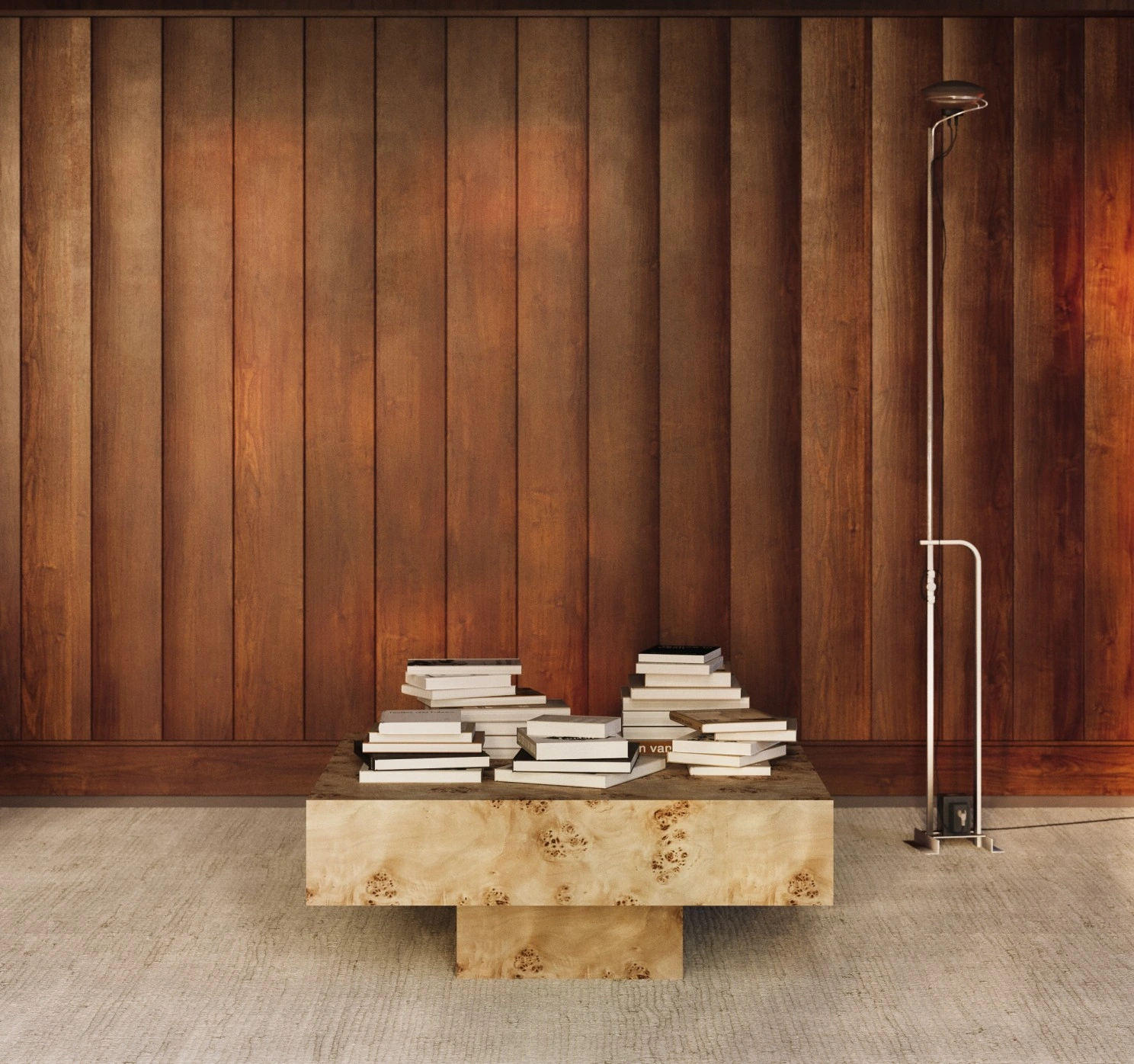
A travertine coffee table – travertine being a form of limestone with distinctive pitted surfaces and warm veining – brings geological drama to a living room. Tones range from creamy ivory to golden honey, and because each slab is cut from a unique section of stone, no two tables are identical.
A stone coffee table is exceptionally durable, handling heat, moisture, and daily use with grace. Sealed travertine requires little more than a wipe-down, though acidic spills should be cleaned quickly to avoid etching. The weight of stone – both visual and physical – makes these pieces feel permanent and grounding. Discover more in our guide to travertine coffee tables as natural stone centrepieces.
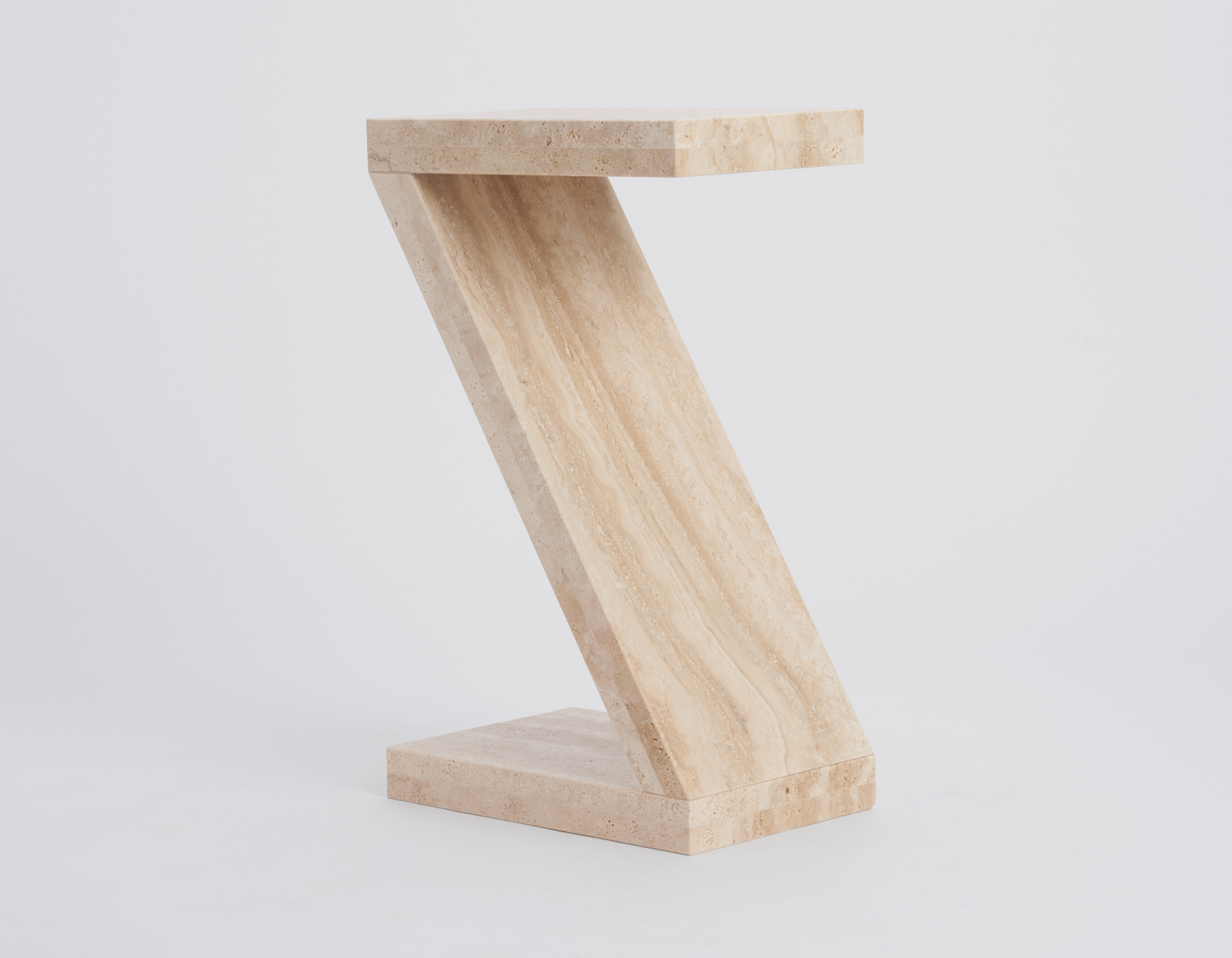
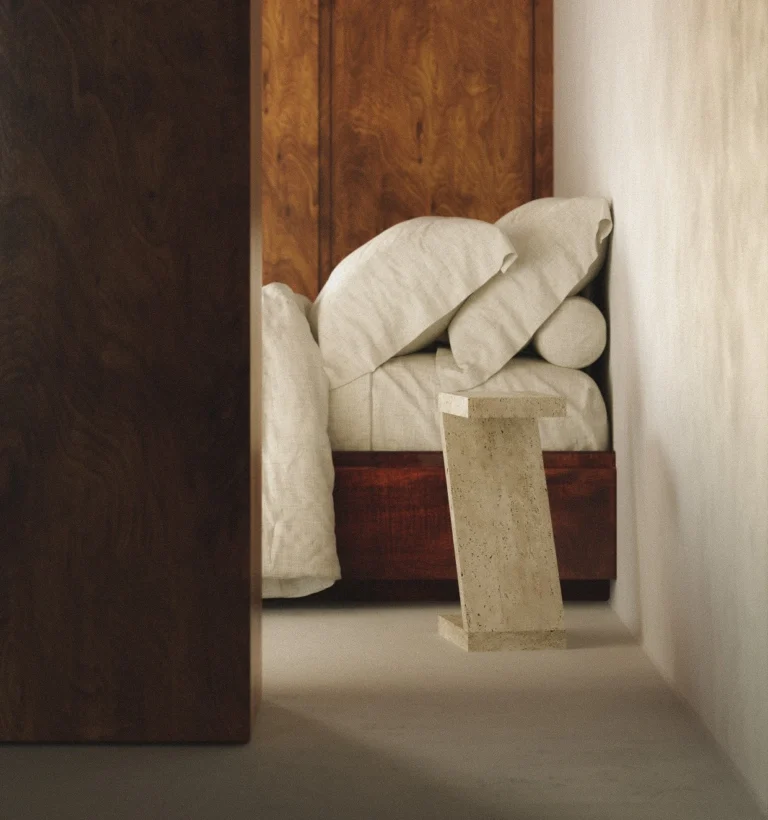
One of the most effective ways to create a cohesive living room is to pair your travertine coffee table with a matching Travertine Side Table. Side tables complement coffee tables by extending the material language to the edges of your seating area – flanking a sofa or sitting beside an armchair. When both pieces share the same stone, the room gains a sense of visual continuity that feels considered and complete without being overly uniform, since natural veining ensures each travertine piece remains distinct.
A metal coffee table introduces a cooler, more industrial character to a modern living room. Stainless steel coffee tables in particular offer remarkable durability, corrosion resistance, and a sleek reflective surface that bounces light around the room.
Finish matters enormously with metal. Brushed stainless steel reads quieter and warmer than polished, which can feel clinical if overdone. Powder-coated steel in matte black or charcoal adds depth without shine. Brass and blackened steel bring vintage warmth that pairs beautifully with wood and fabric. For a complete breakdown, explore our guide to metal and stainless steel coffee tables in contemporary interiors.
Some of the most compelling coffee tables combine two or more materials – a wood veneer top on a steel base, a stone slab framed in timber, or glass paired with brass. Mixed-material designs create visual tension and depth that single-material pieces cannot achieve. Petra Madalena’s Ettore Sottsass Side Table is a striking example of how different materials can work in dialogue, each amplifying the other’s character.
|
Material |
Durability |
Aesthetic |
Maintenance |
Best Paired With |
|
Solid Birch |
High – dense hardwood |
Warm, smooth, takes any stain colour |
Low – occasional polish |
Fabric sofas, wool rugs |
|
Poplar Burl Veneer |
High – sealed surface |
Dramatic swirling grain, honey tones |
Low – wipe clean |
Earth-toned interiors, linen |
|
Walnut Burl Veneer |
High – sealed surface |
Rich, dark, complex figuring |
Low – wipe clean |
Leather, deep jewel tones |
|
Oak Veneer |
Very high |
Clean grain, light to mid tones |
Very low |
Scandinavian, minimalist rooms |
|
Travertine |
Very high |
Warm veining, pitted character |
Medium – seal annually |
Velvet, warm metals |
|
Stainless Steel |
Exceptional |
Sleek, reflective, modern |
Low – fingerprint wiping |
Marble, glass, leather |
|
Mixed Materials |
Varies |
Layered, textural, dynamic |
Varies by component |
Eclectic, maximalist rooms |
A coffee table height of 40-50 cm (16-20 inches) works for most modern sofas, with the table surface sitting roughly level with or just below the sofa seat cushions, and the table length measuring between half and two-thirds the length of your sofa.
Coffee table dimensions are not just a practical concern – they shape how a room feels. A table that is too small looks lost; one that is too large dominates and restricts movement. The relationship between your sofa and your coffee table is one of the most important proportional decisions in any living room.
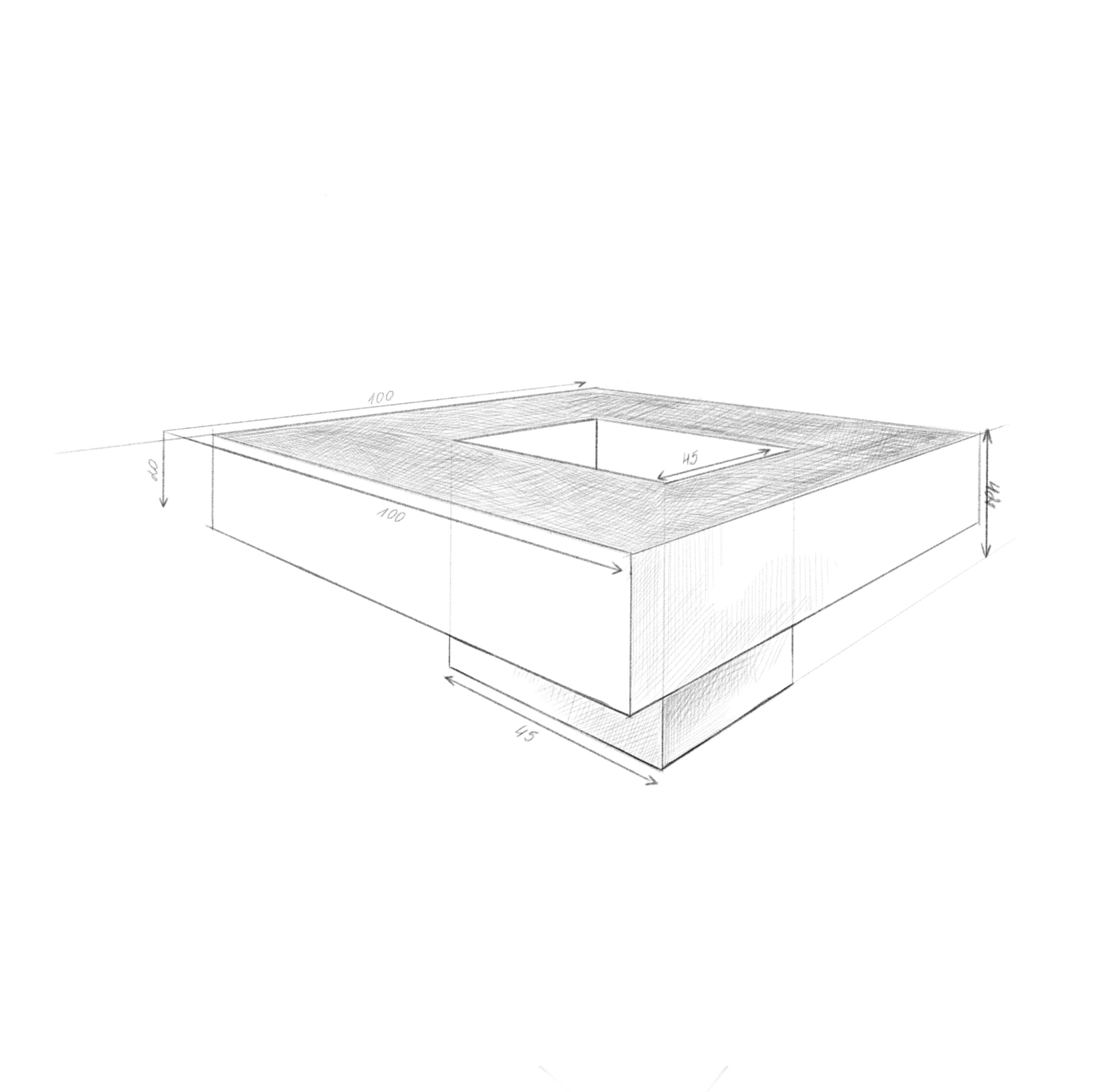
Both of Petra Madalena’s coffee tables measure 100 x 100 cm in a square format. The Solid Birch stands 40 cm tall – ideal for lower-profile sofas and floor-sitting households. The Poplar Burl sits at 42 cm, hitting the sweet spot for most standard sofas. Both heights can be modified to suit your specific seating, which is one of the advantages of working with an artisan maker.
Aim for your table to be roughly one-half to two-thirds the length of your sofa. Keep a clearance of 35-45 cm (14-18 inches) between the sofa edge and the table for comfortable legroom and easy movement. For a detailed breakdown of height ratios relative to different sofa types, read our guide to the perfect coffee table height for your sofa.
|
Sofa Length |
Recommended Table Length |
Recommended Height |
Ideal Clearance |
|
Small: 150-180 cm |
75-120 cm |
38-42 cm |
35-40 cm |
|
Medium: 200-230 cm |
100-150 cm (PM tables: 100 cm) |
40-45 cm |
35-45 cm |
|
Large: 250-300 cm |
125-200 cm |
42-50 cm |
40-45 cm |
|
Sectional / L-shape |
Square or round, 90-120 cm |
40-45 cm |
40-45 cm all sides |
A coffee table with storage makes sense if you want clean surfaces in a smaller living room or a busy family home, but it is not essential if your room already has ample storage and the table serves primarily as a design statement.
Storage takes many forms, and the best solutions are the ones you barely notice. Hidden drawers keep remotes, coasters, and magazines out of sight. Open shelving adds a display layer below the tabletop, creating visual depth while holding books and objects. Lift-top mechanisms turn a coffee table into a temporary desk or dining surface – practical for compact living. Nesting tables offer flexible additional surface area when entertaining.
Both of Petra Madalena’s coffee tables feature a central recessed opening – a square compartment built into the tabletop surface. This is a design-led approach to storage: the recess can hold a small plant, candles, or everyday items without disrupting the sculptural silhouette of the piece. It is discreet, integrated, and intentional rather than an afterthought. The same recess invites more playful uses too: fill it with books or magazines, drop in a vase of fresh-cut flowers, or have a custom metal tray cast to fit and turn it into a wine and champagne cooler for guests – storage as functional art rather than a hidden box.
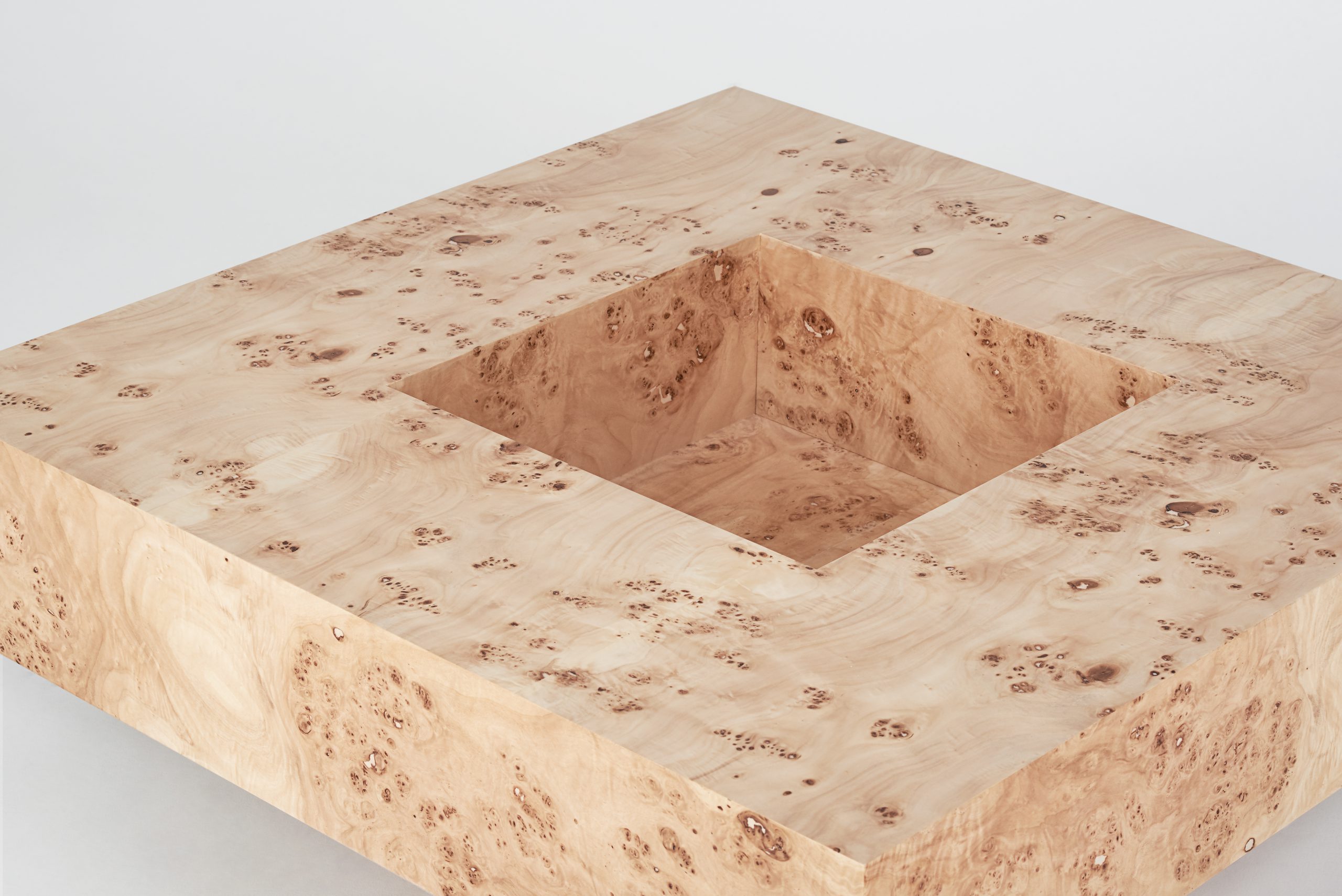
In larger living rooms where the coffee table sits as the room’s centrepiece, a pure sculptural form without visible storage can make a stronger artistic statement. The table becomes an object to admire rather than a box to fill. For a full exploration of storage options, read our guide to coffee tables with storage, drawers, shelves and hidden space.
|
Storage Type |
Best For |
Aesthetic Impact |
Typical Capacity |
|
Hidden Drawers |
Families, small rooms, minimalists |
Clean – invisible when closed |
Remote controls, coasters, small items |
|
Open Shelves |
Book lovers, display-focused interiors |
Medium – adds visual layer |
Books, magazines, decorative objects |
|
Recessed Opening |
Design-led homes, sculptural pieces |
Minimal – integrated into form |
Small objects, plants, candles |
|
Lift-Top |
Home workers, compact living |
Variable – depends on mechanism |
Laptop, dining items, board games |
|
Nesting Tables |
Flexible entertaining, small spaces |
Minimal when nested |
Additional surface area on demand |
|
No Storage (sculptural) |
Large rooms, gallery-style interiors |
Maximum – pure design statement |
None – the table is the statement |
Style a coffee table using the four-element formula – books, something organic, a decorative object, and a tray – while leaving at least half the surface clear for daily use, and let the table’s material and form guide every styling choice you make.
The four-element formula works because it creates variety in texture, height, and purpose without cluttering the surface. Start with a stack of two or three books as a base layer. Add something organic – a small plant, a branch, or fresh flowers – to bring life to the arrangement. Place a decorative object (a sculptural piece, a ceramic bowl, a candle) for visual interest. Group smaller items on a tray to contain visual noise and make the whole arrangement easy to move when needed.
If the four-element formula is the starting point, the styling compass below is the finer-grained version – six roles an object can play on a coffee table, with a pro tip for each. A practical shortcut many stylists use is the rule of three to five: choose three to five key pieces and vary their shapes, materials, and heights, pairing something tall (a vase), something wide (a stack of books), and something with personality (a candle, sculpture, or collectible). Skip generic decor in favour of items that tell a story – a ceramic bowl from your travels, a local artisan’s sculpture, a dried arrangement from your own garden. One meaningful piece outweighs five generic ones.
| Element | Purpose | Example | Pro Tip |
|---|---|---|---|
| The Vertical | Adds height and draws the eye upward | Sculptural vase, tall candle, dried pampas grass | Should be 1/3 to 1/2 the table’s length |
| The Stack | Creates layers and depth | 2-3 art books, vintage magazines, wooden boxes | Display spines outward; top with a small object |
| The Living Touch | Brings life and texture | Fresh flowers, potted succulents, moss in a bowl | Change weekly to keep energy fresh |
| The Conversation Starter | Reflects personality and invites questions | Vintage camera, hand-carved sculpture, travel keepsake | One meaningful piece outweighs five generic ones |
| The Practical Beauty | Serves a purpose while looking refined | Handmade ceramic tray, marble coaster set, decorative box | Keeps remotes hidden but accessible |
| The Negative Space | Gives the eye a place to rest | 30-40% of surface left clear | This is where your coffee cup actually goes |
Material and form should guide your styling decisions. The Solid Birch Coffee Table in black demands restraint – its bold sculptural form speaks loudly, so minimal, curated objects in lighter tones create contrast without competition. The Poplar Burl Coffee Table‘s rich honey-toned grain pairs beautifully with organic elements: dried grasses, ceramic vessels in earth tones, and natural linen runners. A walnut coffee table with dark, complex figuring calls for metallic accents and warm lighting to bring out its depth.
Research published in Frontiers in Psychology suggests that curated, intentionally arranged spaces can positively affect mood and wellbeing. Your coffee table is one of the most visible surfaces in your home, so how you style it matters more than you might expect. Seasonal rotation keeps your table feeling fresh – lighter objects and greenery in spring, richer textures and candles in autumn. Design publications such as Architectural Digest are a good source of seasonal inspiration that stays current without tipping into cliche.
For specific styling ideas and arrangements, explore our guide on how to decorate a coffee table.
An authentic coffee table made by artisan hands from natural materials will outlast, outperform, and outshine any mass-produced equivalent – because it was designed with intention, built with care, and finished with materials that no factory can replicate.
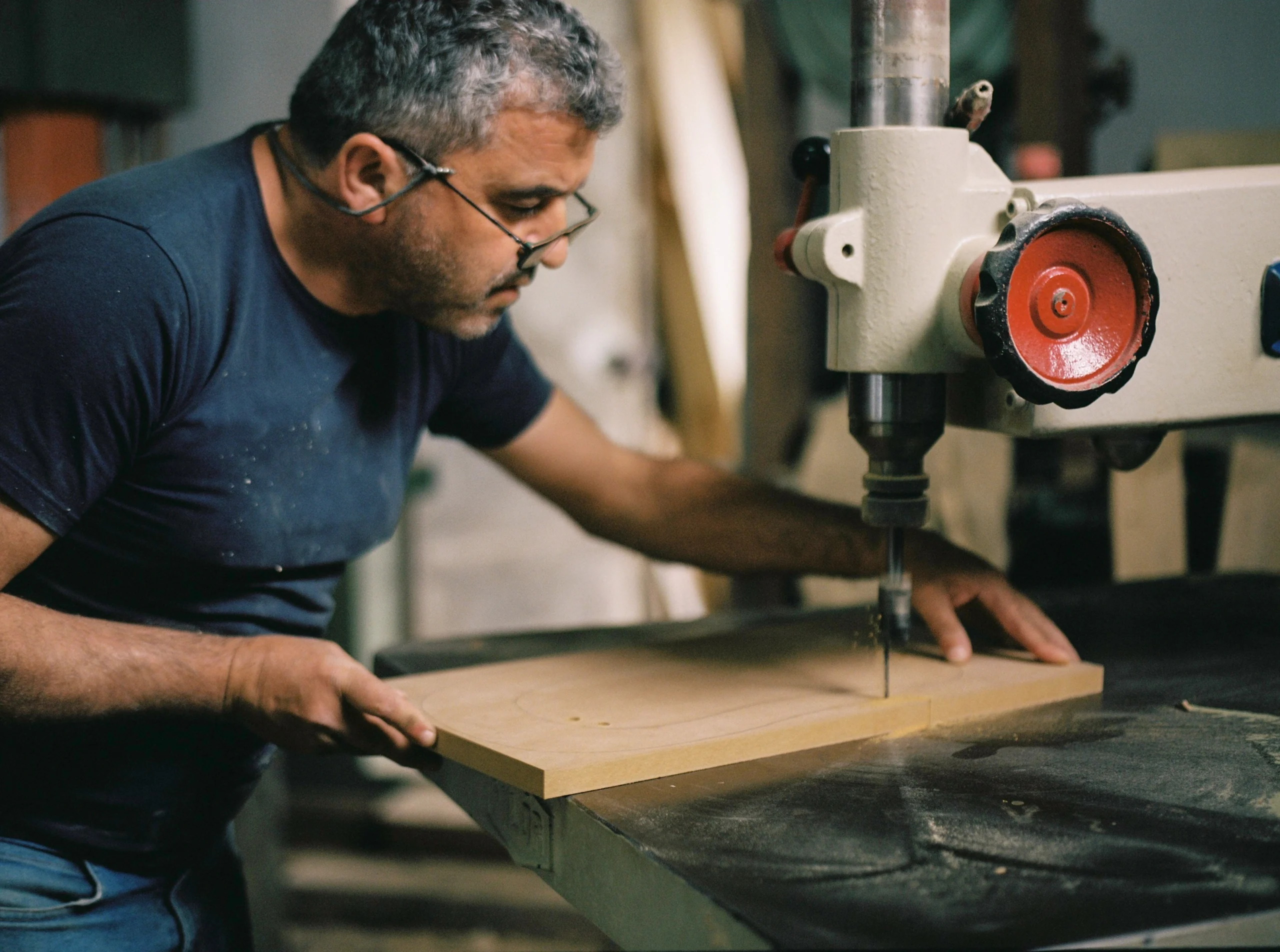
Mass production is built on uniformity. Every unit identical, every finish predictable, every dimension locked to a single template. That uniformity is efficient, but it comes at the cost of character. When you choose a limited-edition coffee table from a maker like Petra Madalena, you are choosing the opposite: a piece where natural variation is the point.
Consider the two coffee tables in Petra Madalena’s collection. The Solid Birch Coffee Table is available in any stain colour – the same sculptural form can become midnight black, warm walnut, cool ash grey, or vivid colour depending on the client’s preference. The Poplar Burl Coffee Table is available in any burl veneer with three finish levels (matte, semi-matte, or glossy). Because burl grain is formed by the tree’s own growth irregularities, every sheet is genuinely unrepeatable. The same design, built twice, will never look the same.
Height can also be adjusted on existing designs, meaning you get a piece tailored to your sofa and room proportions without the uncertainty of starting from scratch. For guidance on making the right choice, explore our step-by-step guide to choosing your perfect coffee table.
|
Feature |
Solid Birch Coffee Table |
Poplar Burl Coffee Table |
|
Material |
Solid birch wood |
Burl veneer (any burl type) |
|
Finishing Options |
Any stain colour |
Matte, semi-matte, or glossy |
|
Dimensions |
100 x 100 x 40 cm |
100 x 100 x 42 cm |
|
Height Modifiable |
Yes |
Yes |
|
Price |
€4,826 |
from €2,970 |
|
Lead Time |
9 weeks |
9 weeks |
|
Design Character |
Organic, rounded, pillow-like form |
Geometric, sharp, architectural block |
|
Best For |
Bold statements, dark/moody interiors |
Warm natural interiors, texture-focused design |
The right size and shape depends on your sofa configuration, room proportions, and how you move through the space – a square table like Petra Madalena’s 100 x 100 cm designs works for most standard and L-shaped seating arrangements, while rectangular tables suit longer sofas and narrower rooms.
Square coffee tables are among the most versatile shapes. They provide equal reach from all four sides, making them ideal for sectional sofas and L-shaped configurations where people sit at different angles. Both of Petra Madalena’s coffee tables use this 100 cm square format, and it pairs comfortably with sofas from 180 to 250 cm in length.
Rectangular tables work best with traditional three-seater sofas and narrower rooms where a square might feel too imposing. Round and oval tables are excellent choices for smaller living rooms because their lack of corners improves traffic flow and makes the space feel more open.
Always prioritise movement. You need at least 35-45 cm of clearance on all sides of the table for comfortable passage, and ideally 60 cm along main walking routes. If your room is open-plan, the coffee table should help define the seating zone without blocking sightlines to other areas. For more on proportions, read our coffee table height guide.
Wood and natural stone remain the most popular and versatile coffee table materials for modern homes – wood brings warmth and character, stone adds permanence and luxury, metal introduces industrial edge, and glass creates visual lightness but comes with practical trade-offs.
Your lifestyle should drive the material decision. Families with young children need durability and rounded edges – solid birch or sealed veneer handles daily life without anxiety. Entertainers want easy-clean surfaces like stainless steel or sealed travertine. Design enthusiasts gravitate toward materials with natural character – burl veneers, raw stone, patinated brass – where imperfections are the whole point.
Glass is often recommended for small rooms because it creates visual openness, but it comes with practical drawbacks: fingerprints, fragility, and a clinical feel that is difficult to warm up. Marble and travertine are frequently confused – marble is harder and cooler with dramatic veining, while travertine is warmer, softer, and features the distinctive pitted texture that gives it organic depth.
The Solid Birch Coffee Table demonstrates how solid wood’s versatility makes it the ultimate chameleon – the same form can feel completely different in natural blonde versus deep black stain. The Poplar Burl Coffee Table shows how veneer delivers dramatic grain at a scale that solid wood cannot match. Explore more in our coffee table materials guide, travertine coffee table guide, and metal coffee table guide.
In 2026, the biggest coffee table trends centre on sculptural forms, natural and organic materials, bold geometric silhouettes, and the growing preference for authentic, artisan-made pieces over mass-produced furniture.
Rounded edges, asymmetric silhouettes, and pillow-like forms – as seen in Petra Madalena’s Solid Birch Coffee Table – reflect a broader desire for softer, more inviting interiors that move away from the sharp minimalism of previous years. These organic shapes make living rooms feel warmer and more approachable.
2026 is also the year of the Fire Horse in the Chinese zodiac, and its influence on interiors is unmistakable. Bold colours, fearless material choices, and high-impact centrepieces are all part of the Fire Horse approach to transforming your home with bold energy – and a sculptural coffee table is one of the most effective ways to bring that confident, expressive spirit into a living room.
At the same time, bold geometric block shapes are having a moment. The Poplar Burl Coffee Table’s sharp-edged rectangular silhouette paired with untamed burl grain captures this trend perfectly – strict architectural form meeting wild natural beauty.
Material-wise, burl wood veneers and natural stone (especially travertine) are the standout choices for 2026. Homeowners are moving away from generic high-street furniture toward limited-edition coffee tables and artisan-made pieces that carry story and character. Maximalist styling is replacing bare surfaces, with curated displays of books, ceramics, and organic objects. For a comprehensive look, read our full guide to 2026 coffee table trends and contemporary designs.
Matching a coffee table to your existing furniture starts with material harmony and deliberate contrast – pair a warm wood or burl veneer table with cooler-toned sofas for balance, or let a bold sculptural piece like a black-stained birch table anchor a neutral room.
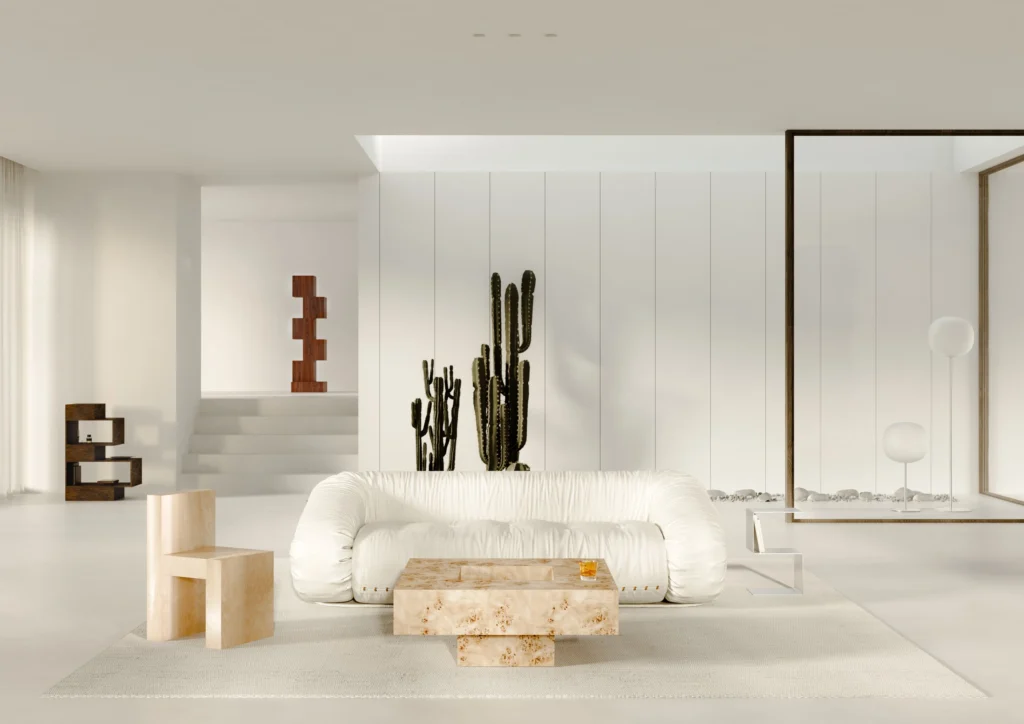
Colour coordination follows a simple principle: complement or contrast, but never match exactly. A honey-toned Poplar Burl Coffee Table placed on a cream rug with a grey linen sofa creates a warm-cool balance that feels natural and considered. The black Solid Birch Coffee Table on a pale oak floor with a white sofa creates high contrast that feels dramatic and gallery-like.
Material pairing rules are straightforward: wood coffee tables pair well with fabric and leather sofas. Stone tables sit beautifully with velvet upholstery and metallic accents. Metal tables complement linen, cotton, and raw textures. The goal is variety – if everything in the room is the same material, the space feels flat.
Your rug relationship matters too. Ideally, your living room table should sit fully on the rug, with all legs or the entire base resting on the rug surface. A half-on, half-off placement looks accidental and unresolved. Pairing a Petra Madalena coffee table with a matching Birch Chair creates a cohesive material language that ties the room together without being overly uniform.
Both online and in-store purchasing work well for a modern coffee table, but the key is knowing exactly what to check before committing – dimensions, material quality, construction method, finish options, and lead times matter more than the sales channel itself.
Online buying gives you access to artisan makers like Petra Madalena regardless of your location. You can browse full collections, compare specifications, and order a custom coffee table that would never appear in a local furniture shop. The trade-off is that you cannot touch the materials beforehand – which is why detailed product specifications, clear photography, and transparent pricing matter so much.
Look for these indicators of quality: exact dimensions in centimetres (not vague “standard size” descriptions), clearly stated materials (“solid birch” or “poplar burl veneer” rather than “wood effect”), specific finish options, transparent pricing, and a stated lead time. Petra Madalena’s product pages are a good benchmark: the Poplar Burl Coffee Table lists dimensions (100 x 100 x 42 cm), material (any burl veneer), finish options (matte, semi-matte, glossy), price range (from €2,970), and lead time (9 weeks). That level of detail signals confidence and transparency.
In-store buying works best for touching materials and testing finishes, but the selection is limited to what the retailer stocks. For the widest choice and access to authentic, artisan-made pieces, online is increasingly the stronger option. To explore the full decision-making process, read our step-by-step guide to choosing your perfect coffee table.
Everything in this guide points to a single idea: your coffee table is not just a surface to put things on. It is the sculptural heart of your living room – the piece that ties together your sofa, your rug, your lighting, and your personal style into something that feels intentional and alive.
The five decisions – design style, material, size and height, storage, and styling – are all interconnected. A warm poplar burl veneer in a geometric form suits a different room than a glossy black birch in an organic silhouette. The right coffee table dimensions make a room breathe; the wrong ones make it feel cramped. Thoughtful styling turns a beautiful object into a living experience.
Petra Madalena’s coffee table collection brings these decisions together. From the sculptural drama of the Solid Birch Coffee Table to the natural beauty of the Poplar Burl Coffee Table, each piece is designed to be the centrepiece your living room deserves – unique, authentic, and impossible to replicate. Heights and materials can be adjusted to suit your space, and with a 9-week lead time, the wait is shorter than you might expect.
Ready to find the piece that transforms your living room? Browse the full coffee table collection or read our step-by-step guide to choosing your perfect coffee table to begin.