 Menu
Menu
Menu
Menu

Walnut, veneer and solid wood each play distinct roles in fine cabinetmaking. Solid wood offers the warmth of a single piece of timber and the integrity of traditional joinery, while real wood veneer allows large sculptural forms to remain dimensionally stable across seasons. A premium walnut cabinet typically combines a stable engineered core with a walnut veneer face for visual richness, and uses solid walnut where structure and visible edges call for it. This is not a compromise. It is the construction method that allows expressive forms to hold their shape for decades while showcasing the most beautiful walnut figures available.
Walnut has been the wood of choice for fine furniture for centuries, valued for its dark chocolate tones, expressive grain patterns and a density that takes carving and finishing beautifully. Among hardwoods used in modern cabinetmaking, walnut sits in a category of its own.
European walnut (Juglans regia) and American black walnut (Juglans nigra) share the qualities that make this species so desirable. The heartwood ranges from rich chocolate brown to a darker purple-tinged tone, often with streaks of cream-coloured sapwood that add visual depth. The grain is typically straight, but the tree also produces some of the most figured wood available, with patterns ranging from gentle curls to dramatic swirls. According to Britannica, the dark, fine-grained wood of European and black walnuts has been used for fine furniture, panelling and gunstocks for centuries, a heritage that explains why it remains a default choice for the very best cabinetmakers today. Walnut’s density is hard enough to resist denting and everyday wear, but not so hard that it becomes brittle, which makes it ideal for cabinets that handle daily use across decades.
Sculptural furniture asks more of a wood than ordinary cabinetmaking does. Curved surfaces, asymmetric forms and unusual proportions all push the material in ways that simple boxes do not. Walnut responds gracefully because its grain stays visually coherent even when shaped into unconventional forms. According to the Smithsonian American Art Museum, this is the territory of studio furniture: small-scale, one-of-a-kind work created in artisan shops, including both functional pieces and purely sculptural ones. Petra Madalena’s storage pieces are designed in this tradition, where the cabinet is treated as a freestanding sculpture that happens to offer storage.
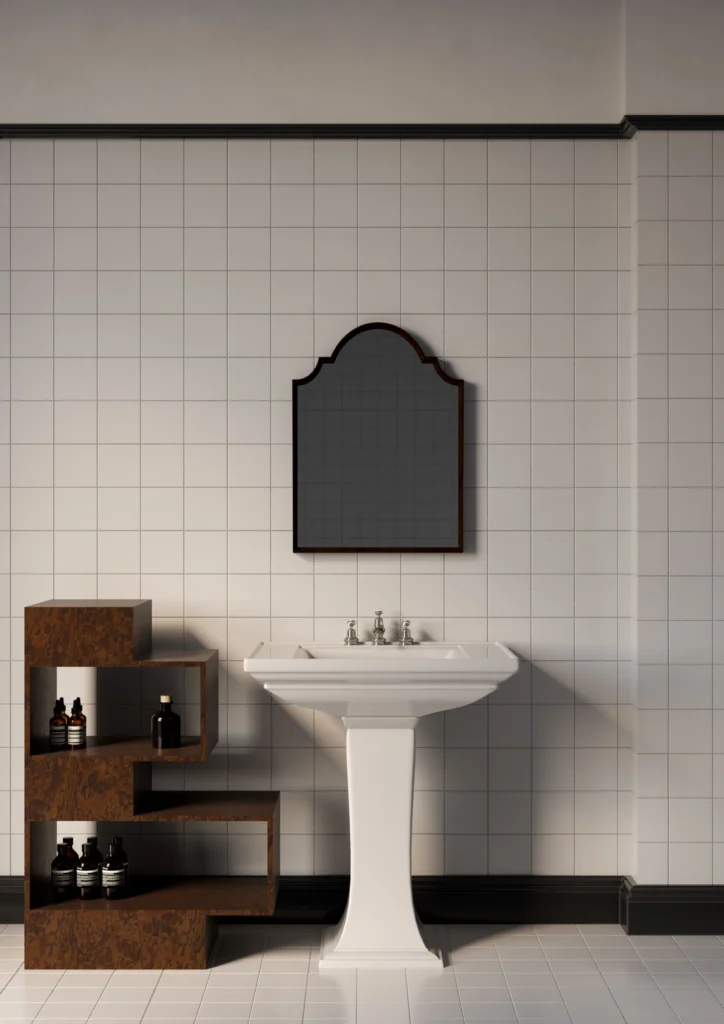
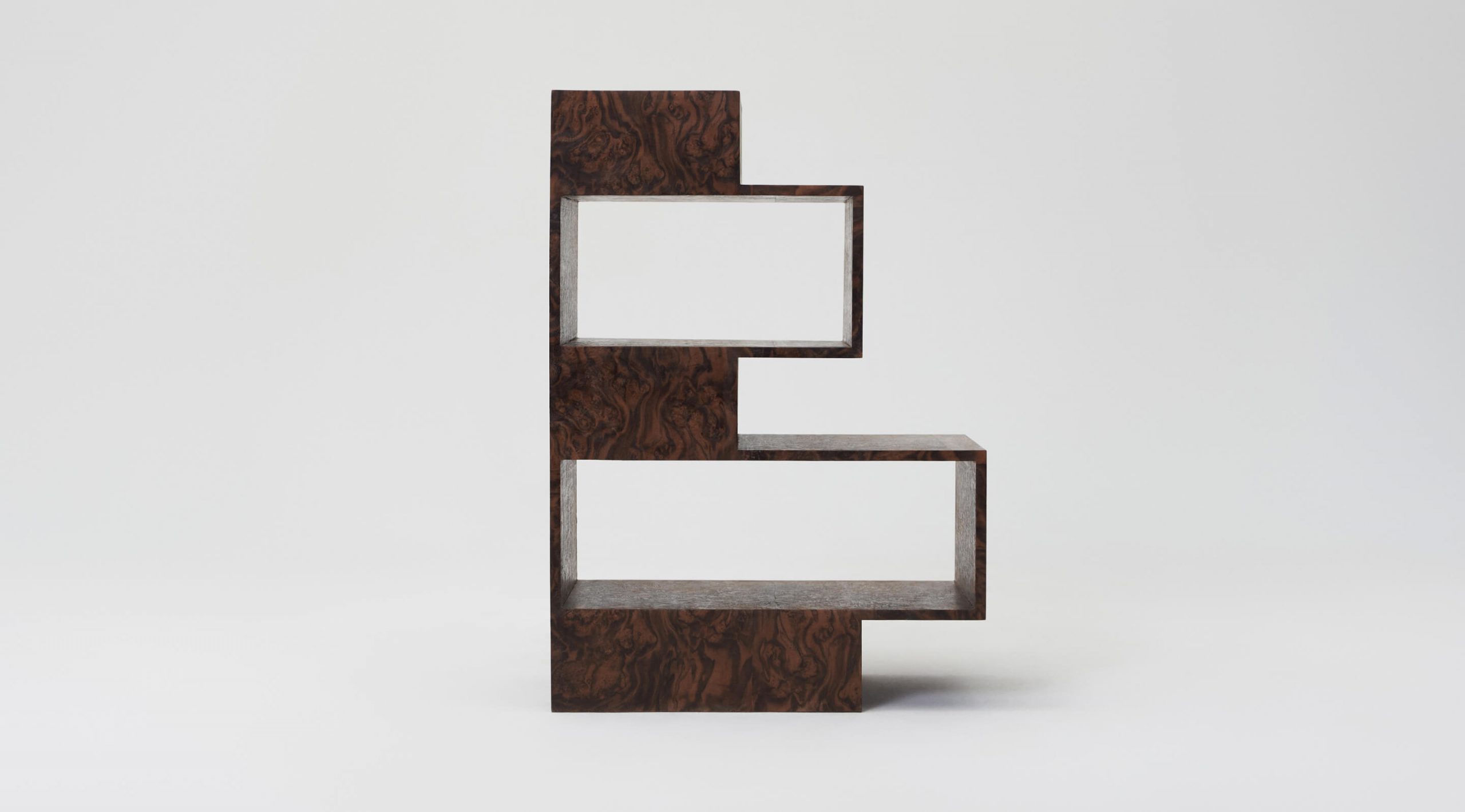
Walnut burl is among the rarest and most decorative materials in cabinetmaking. A burl forms when a walnut tree experiences stress, injury or a viral infection that causes irregular grain growth. The result is a swirling, often asymmetric pattern that no two trees produce in the same way.
Because burl is rare and difficult to harvest cleanly, it is typically used as veneer rather than solid lumber. This is not a limitation. It is the only practical way to spread the beauty of a single burl across multiple pieces. The Petra Madalena Walnut Burl Storage Cabinet, available in any burl veneer with matte, semi-matte or glossy finishing, is a sculptural example of this tradition. Its asymmetric volumes and 9-week lead time reflect the careful sourcing and craftsmanship that burl furniture requires.
The finest cabinets are not made from a single material. They use solid wood, real wood veneer and engineered cores in combination, with each material chosen for the role it performs best.
A solid wood cabinet is built primarily from boards of timber, joined together to form panels, doors and structural elements. Solid construction has clear advantages: the wood can be sanded and refinished multiple times, every visible surface is genuine timber, and traditional joinery techniques like dovetails and mortise-and-tenon hold the piece together for generations. This is where traditional craft meets modern design, and where the difference between a handmade cabinet and a mass-produced one becomes obvious to anyone who looks at the joinery up close. Solid construction also has practical limitations. Solid wood expands and contracts with humidity, which means large flat panels can cup, crack or split if not carefully designed. Solid hardwood is also heavy and expensive, which can make it impractical for tall pieces or large flat surfaces.
A veneer cabinet uses a thin layer of real wood, typically between 0.6 and 3 millimetres thick, bonded to a stable substrate. The substrate is a high-quality engineered panel chosen because it does not move with humidity changes the way solid wood does.
Crucially, veneer is genuine wood. It is not plastic laminate, not printed paper, and not a synthetic finish. A walnut veneer panel is a slice of an actual walnut tree, applied to a stable core that prevents warping. This combination delivers the visual quality of solid walnut on a surface that stays flat and true across seasons. Veneer also allows the most figured woods, including burls and crotch cuts that are too small or unstable to use as solid lumber, to be applied to large surfaces, and it lets a single rare log face many pieces of furniture rather than just one.
| Property | Solid Wood | Real Wood Veneer over Stable Core | Engineered (No Real Wood Face) |
|---|---|---|---|
| Visible Surface | Single piece of timber | Real wood, 0.6 to 3mm thick | Printed or synthetic finish |
| Stability | Moves with humidity | Excellent across seasons | Stable but visually flat |
| Best For | Small pieces, edges, structure | Large surfaces, curves, rare figures | Budget cabinetry only |
| Refinishing | Multiple times | Once or twice if done carefully | Not possible |
| Typical Lifespan | 50 years or more | 50 years or more | 5 to 15 years |
The very best mid-century, contemporary and luxury furniture has used veneer over a stable core for over a century, precisely because this method outperforms solid wood on large flat panels. Petra Madalena’s approach reflects this tradition. Custom cabinets in the studio’s catalogue use signature designs that can be modified to your space, with veneer applied where stability matters and solid walnut used where it serves the piece best.
This is one of the most common questions buyers ask, and the answer is rarely what you’d expect. There is no single test that gives a definitive answer, but a few quick checks will tell you almost everything you need to know.
Lift one end of the piece. Solid hardwood is heavy, while veneered cabinets over engineered cores feel noticeably lighter for the same size. Look at the edges. If you see a thin strip of wood wrapped around what looks like a different material underneath, that is edge banding, which signals a veneered panel. Solid wood shows continuous end grain on the edges instead. Look at the grain pattern. If the same pattern repeats identically on multiple panels, you are almost certainly looking at sliced veneer from the same log. Solid wood always shows variation, even between adjacent boards. Pull out a drawer and check the underside. Solid wood pieces show consistent grain top to bottom, while veneered pieces often show a different, plainer wood underneath.
None of these checks tell you whether the cabinet is good or bad. They only tell you how it is built. A well-made veneered cabinet from a transparent studio will outlast a poorly made solid wood piece from a discount retailer. The right question to ask is not whether the cabinet is veneer, but whether the maker can explain exactly which materials are used where, and why.
Cabinets are not all the same. A storage cabinet operates differently from a bookcase, and a shelving system serves a different purpose again. Choosing the right form starts with understanding how each piece will live in your space.
The decision between a cabinet, a bookcase, and a shelving system shapes more than where things get stored. It affects the visual weight of the room, the perceived value of the home, and how the piece reads against the rest of the interior. Our complete guide to bespoke bookcases and cabinets sets out this broader picture — covering materials, decoration, scale, and home value — alongside the form decision itself. The sections below focus specifically on how each form behaves in your space.
A storage cabinet should anchor a room. Its proportions, finish and material set the tone for everything around it. The Walnut Burl Storage Cabinet is an example of this principle in practice. At 70 by 40 by 100 centimetres, it is compact enough for a living room, hallway or bedroom, but distinctive enough to act as a focal point. Its asymmetric volumes give the piece sculptural presence regardless of what is stored inside.
A modern bookcase does more than hold books. It displays objects, breaks up large walls and creates visual rhythm in a room. The Petra Madalena Walnut Veneer Bookcase is a tall, vertical piece at 45 by 45 by 165 centimetres, designed to read as a sculptural column rendered in walnut veneer. It fits naturally beside a desk, in a hallway, or as a counterpoint to a sofa.
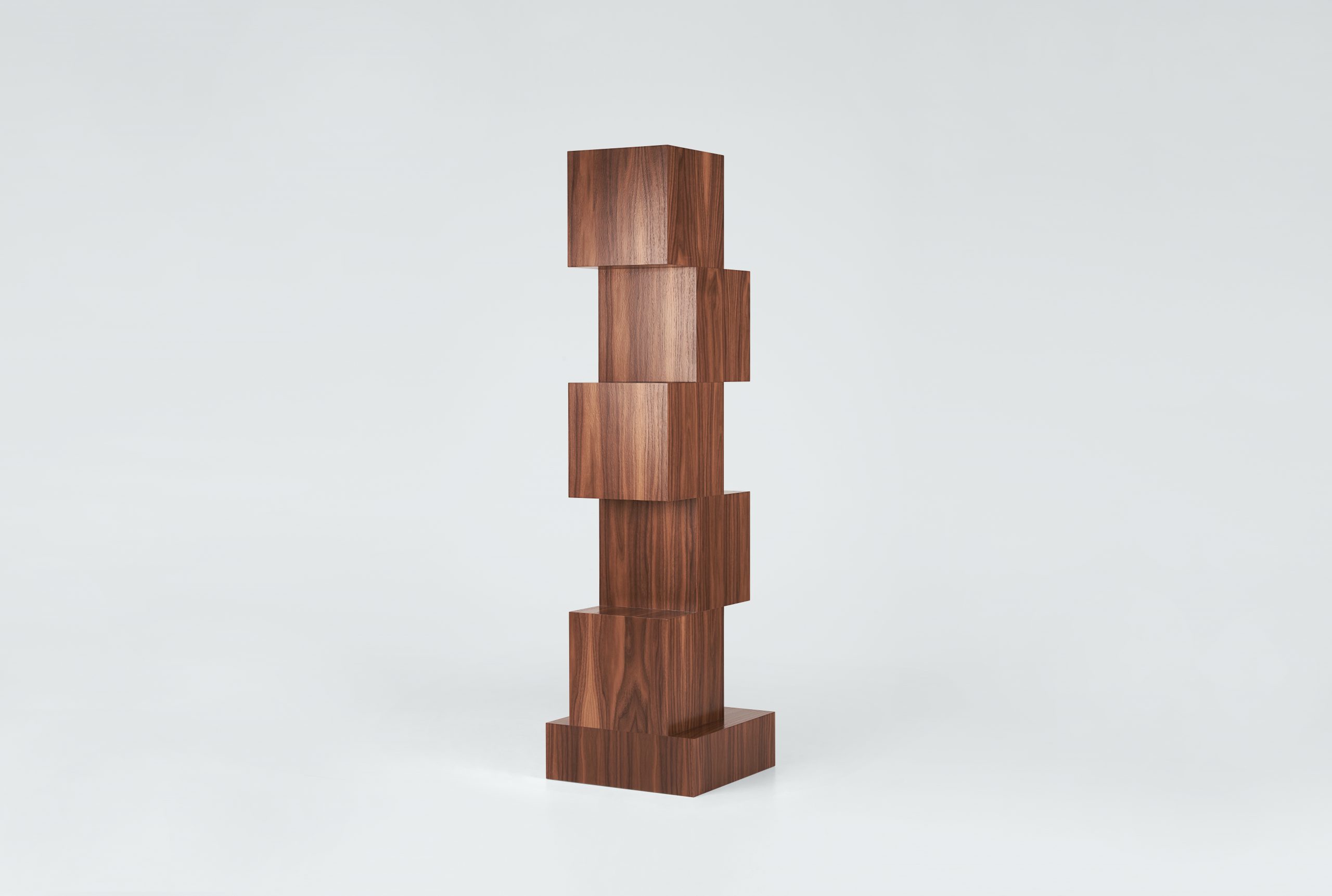
Bookcases in the Petra Madalena catalogue are designed to be modified to your space. The vertical proportions, shelf positions and finishing options can be adjusted, since the studio treats its signature designs as starting points rather than fixed objects. Shelves can be added or repositioned within most pieces, and the depth and height of the bookcase itself can be changed to suit the wall it will live against.
For taller pieces and larger flat surfaces, walnut veneer over a stable core is almost always the right choice. It avoids the cupping that affects tall solid panels and lets you specify the exact figure of walnut for the visible surfaces. For smaller pieces, structural elements and visible edges, solid walnut is the better choice because it can be shaped, profiled and finished without revealing a substrate. The best cabinets use both materials within the same piece.
Quality cabinets are an investment, and like any investment they perform best with proper care. The good news is that walnut, veneer and solid wood pieces are all remarkably forgiving when treated with basic respect.
Walnut surfaces respond well to simple maintenance. Dust regularly with a soft cloth, clean spills immediately with a barely damp cloth, and avoid abrasive cleaners or anything containing silicone. Direct sunlight will lighten walnut over time, so position pieces away from south-facing windows where possible. Finish choice also matters: matte hides minor marks best, semi-matte sits in the middle, and glossy finishes look most striking but show every fingerprint.
Furniture made from quality materials and built with traditional joinery does not depreciate the way mass-produced cabinetry does. Sculptural pieces with sound construction often appreciate over time, and they can raise the perceived value of the rooms they occupy in ways mass-market furniture cannot, which matters for both daily living and resale.
| Finish | Appearance | Daily Care | Best For |
|---|---|---|---|
| Matte | Soft, restrained, contemporary | Forgiving, hides marks | High-traffic rooms |
| Semi-Matte | Subtle warmth, balanced | Moderate care | Living rooms, bedrooms |
| Glossy | Striking, mirror-like depth | Shows fingerprints | Display pieces, formal rooms |
Choosing between walnut, veneer and solid wood is not really the right framing. The better question is how each material is being used within a single piece, and whether the construction is honest about it. Five questions help you tell the difference.
Ask the studio how the piece is built. A confident answer that explains where solid wood is used, where veneer is used, and what the substrate consists of, is a sign of a transparent maker. Ask about the species, since European walnut, American black walnut and walnut burl all have distinct characters and price points. Ask about finishing options, because matte, semi-matte and glossy each change both appearance and care requirements. Ask about modifications, since studios that allow adjustments to dimensions, shelves and finishes treat their designs as living catalogues rather than rigid menus. And ask about lead times: quality cabinetmaking takes time, and a 9-week lead reflects careful sourcing rather than off-the-shelf availability.
The best cabinets are not chosen on material alone. They are chosen on how thoughtfully each material has been used, how the form holds up to daily life, and how the piece feels in the room it is built for. Walnut, veneer and solid wood each contribute something a single material cannot offer on its own, and the studios that understand this difference produce furniture that earns its place across generations.
Petra Madalena designs sculptural cabinets in this tradition, with signature pieces that can be modified to your space and finished to your preference. From the Walnut Veneer Bookcase to the Walnut Burl Storage Cabinet, every piece is treated as an object first and a storage solution second.
Explore the full collection or send an inquiry to discuss modifications, finishes and lead times for your space.
Browse Cabinets