
What This Article Covers: This guide examines whether commissioning bespoke furniture is a sound financial and design decision in 2026. It covers the true cost gap between bespoke and mass-produced alternatives, the lifecycle economics of both, how natural materials hold their value over time, the design advantages that only bespoke can deliver, and a practical framework for deciding when a commission makes sense – and when it does not.
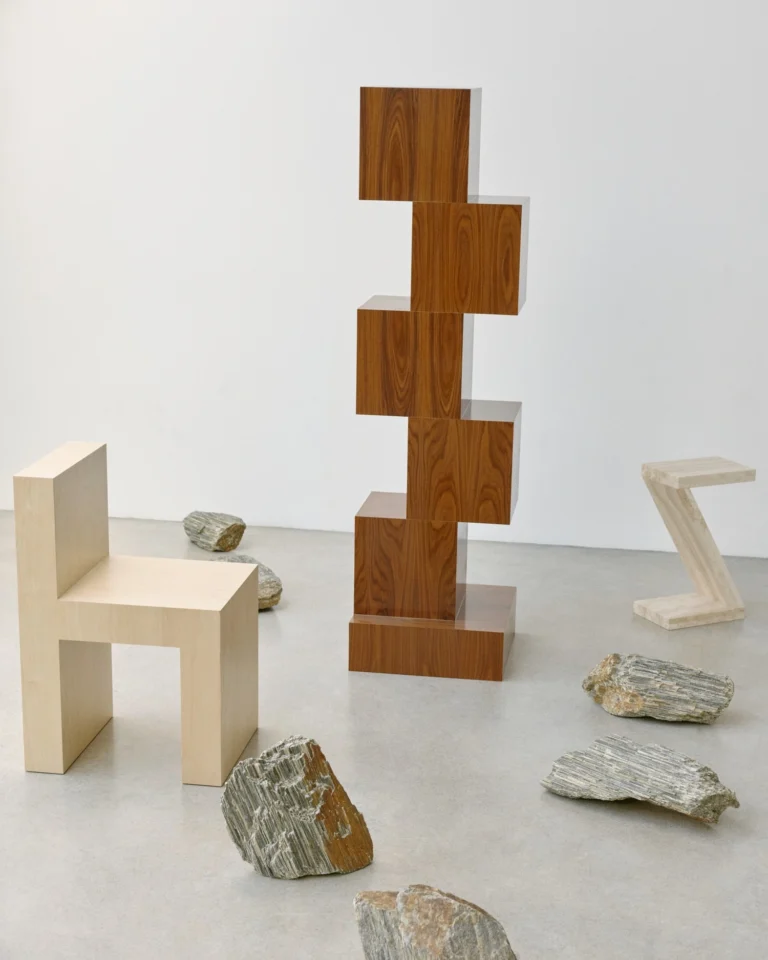
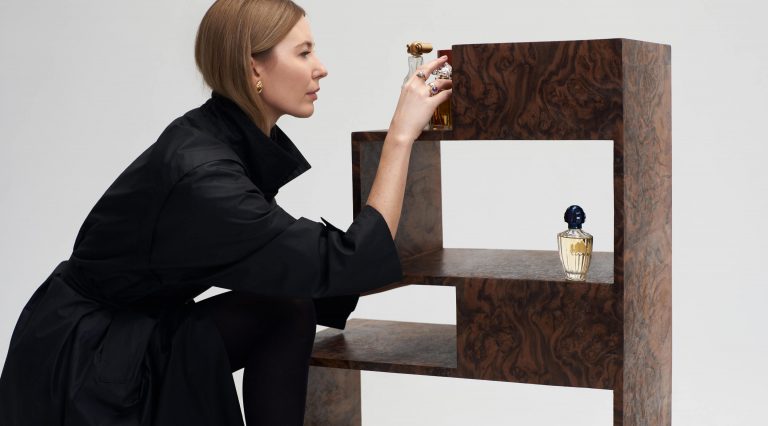
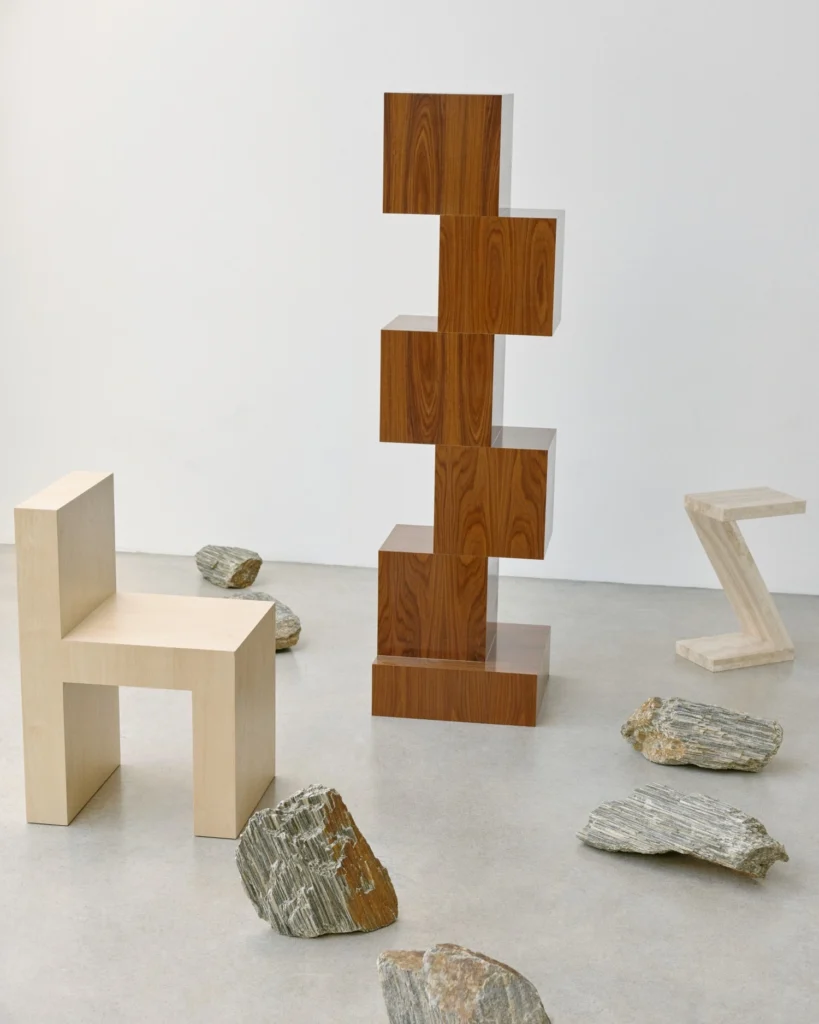
Bespoke furniture means one thing: made once, for one space, to exact specification – with no catalogue equivalent and no repeat production. In 2026, the question is no longer whether bespoke is nicer than mass-produced. It is whether the numbers actually work. According to Straits Research, the global customised furniture market is on track to reach $98.3 billion by 2033, growing at 12% annually – a signal that more buyers are running that calculation and arriving at yes. Petra Madalena works in travertine, walnut, and burl veneer: materials that age with character rather than against it, and that do not depreciate the way flat-pack furniture does.
Bespoke furniture costs between 2x and 5x more than a mass-produced equivalent – the precise gap depending on design complexity, the materials specified, and the studio’s production model. For sculptural pieces in natural stone or hardwood, expect to invest €4,000-€7,000 per statement piece in 2026.
The headline difference is significant. A custom coffee table in travertine or solid walnut, crafted to exact dimension and finish, starts at around €4,500 at studios with established reputations. A comparable mid-range retail piece sits between €400-€900. The gap reflects a fundamentally different production model: one piece, built once, finished by hand.
| Furniture type | Typical price range | Expected lifespan | Repairability |
|---|---|---|---|
| Fast furniture (MDF/laminate) | €200-€900 | 3-5 years | None |
| Mid-market (engineered wood) | €900-€2,800 | 6-10 years | Limited |
| Bespoke (natural stone / hardwood) | €4,500-€7,000+ | 25-50+ years | Full – refinishable |
Materials: Natural travertine, solid walnut, and burl veneer are sourced in smaller quantities without the purchasing leverage of large manufacturers. Each piece of stone or timber is selected by hand, not specified by algorithm.
Labour: Skilled craftspeople charge for genuine expertise, not assembly-line speed. A single bespoke piece may involve weeks of hands-on work across design, shaping, and finishing.
Lead time: Understanding how long bespoke furniture takes to produce is essential context. At Petra Madalena, the process runs to 12 weeks: 3 weeks for design development, 9 weeks of creation.
The visible cost covers materials and labour. What the price tag cannot capture is the exclusivity of form: a bespoke piece will never appear in a neighbour’s home or a hotel lobby. Custom cabinets built to an exact wall recess, or a wooden bookcase scaled to a room’s ceiling height rather than a standard 200cm, solve problems that off-the-shelf solutions simply cannot address.
Over a 10-15 year horizon, bespoke furniture frequently costs less per year than cycling through mid-market replacements. The maths shifts significantly once disposal costs, delivery charges, and replacement frequency are factored in.
Fast furniture has made it easy to furnish a room cheaply. But cheap furniture has a short lifespan. MDF-core pieces with laminate surfaces typically last 3-5 years before visible degradation – warped edges, delaminating surfaces, broken hardware – makes replacement the only practical option. A €500 sideboard replaced three times over 15 years costs €1,500, before disposal fees or delivery charges for the replacements.
Disposal is rarely factored into cost comparisons. Bulky furniture removal across European markets costs €60-€200 per item. Delivery fees for replacements typically add €50-€150 per order.
According to the Ellen MacArthur Foundation, citing European Federation of Furniture Manufacturers data, between 80-90% of all furniture in Europe ends its life in landfill or incineration – a direct consequence of short replacement cycles and low material quality.
Mid-market furniture – pieces in the €900-€2,800 range – fares better on longevity but rarely survives more than 8-10 years with regular use. Once a laminate surface delaminates, it cannot be refinished. Once an MDF panel warps, it cannot be straightened.
A bespoke piece made from natural stone or solid hardwood does not follow the same depreciation curve. Travertine develops a surface patina that most owners consider an improvement over the original. Solid walnut can be sanded and refinished indefinitely. Burl veneer, properly sealed, holds its appearance for decades.
Over a 20-year ownership period, a €5,500 bespoke piece costs approximately €275 per year. Three replacements of a €650 fast-furniture piece over the same period costs €1,950 before any additional fees – and delivers a fraction of the material quality or aesthetic satisfaction of the single bespoke commission.
| Year | Fast furniture (replaced every 4 yrs) | Mid-market (replaced every 8 yrs) | Bespoke – one-time investment |
|---|---|---|---|
| Year 0 | €850 | €2,700 | €5,500 |
| Year 4 | €1,700 | €2,700 | €5,500 |
| Year 8 – crossover | €2,550 | €5,400 | €5,500 |
| Year 12 | €3,400 | €5,400 | €5,500 |
| Year 16 | €4,250 | €8,100 | €5,500 |
| Year 20 | €5,100 | €8,100 | €5,500 |
| Figures are illustrative estimates based on current European market averages, including purchase price, delivery and disposal costs per replacement cycle. Bespoke price based on a single Petra Madalena commission. Individual costs vary by region and specification. | |||
Yes – furniture made from natural materials holds its value significantly better than manufactured alternatives, and in some cases appreciates. The key variable is material integrity, not price point: an expensive piece built from MDF will not hold its value any better than a cheap one.
MDF, chipboard, and laminate are materials that degrade without the possibility of restoration. A scratch on a laminate surface cannot be refinished. A water-damaged chipboard base cannot be repaired. Natural materials behave differently at every stage of their life.
These three materials share a common quality: they respond to age rather than resist it. Travertine – a sedimentary limestone with a distinctive open-pore texture – has been used in architecture for centuries. A peer-reviewed study published in the journal Heritage (MDPI) documents travertine’s structural use across Tuscany from Etruscan times through to the contemporary age – structures intact for over 2,000 years. Walnut is among the densest and most stable of European hardwoods, darkening to a richer tone over the decades. Burl veneer produces grain patterns that are genuinely unrepeatable – no two slabs are the same.
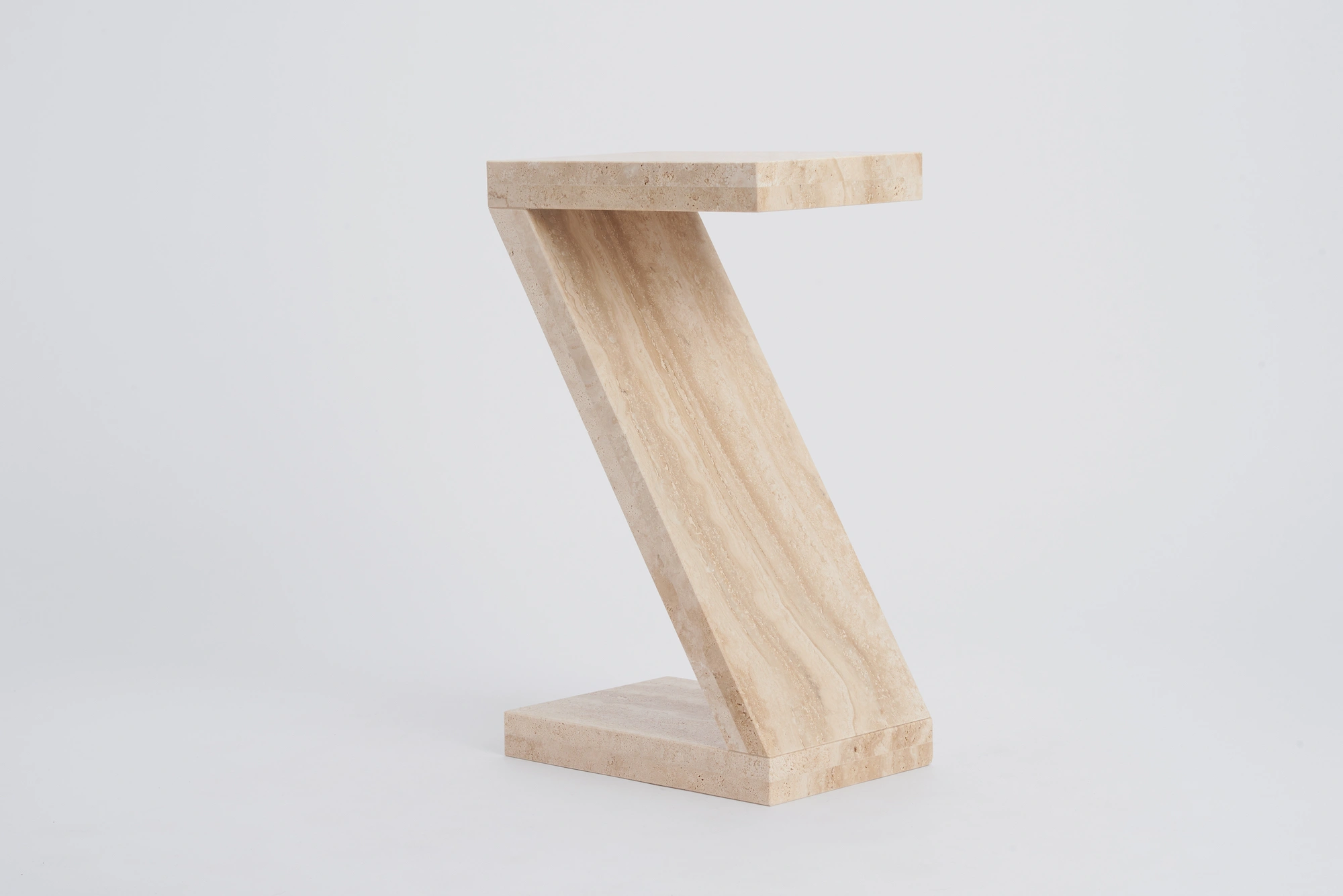
Featured piece: The Travertine Side Table – its Z-shaped monolithic form carved from warm beige stone – functions as a sculptural object that anchors a room’s identity in a way no catalogue piece can replicate. A travertine side table of this construction will look as authoritative in 25 years as it does on the day of delivery. Stone does not trend. View the Travertine Side Table →
Bespoke furniture from recognised studios carries genuine resale value. Pieces in natural materials command premiums over mass-produced alternatives at auction and through specialist dealers. More commonly, bespoke furniture is not resold at all: it is kept, gifted, and inherited. It becomes part of a home’s identity in a way that a catalogue sideboard never does.
Bespoke furniture gives you control over dimension, material, finish, and form that is impossible to achieve through catalogue shopping. The result is a piece that solves a specific design problem rather than approximating a solution.
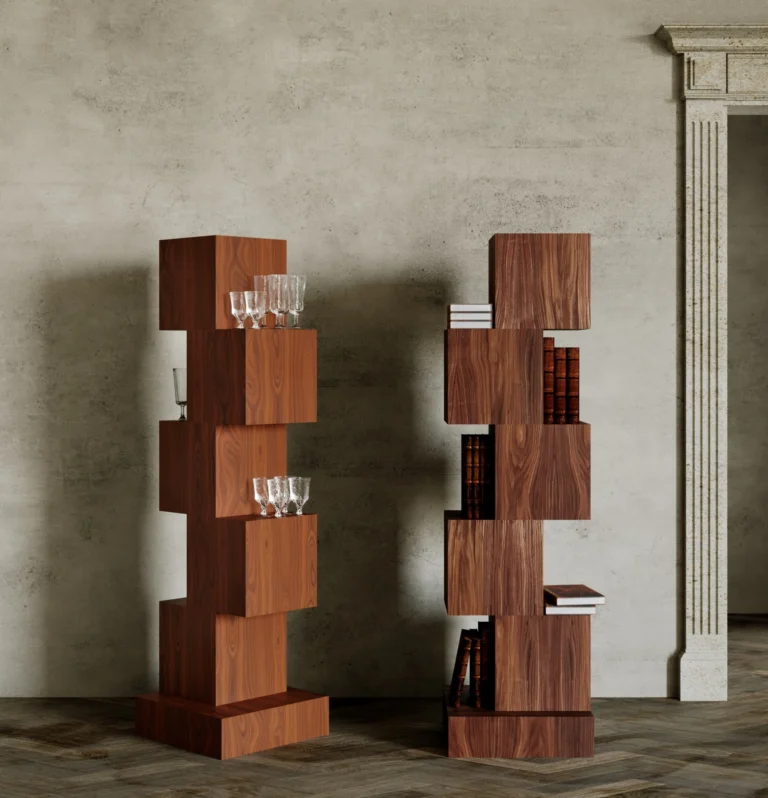
Standard furniture is designed for a notional average room. Bespoke furniture is designed for your room – its proportions, ceiling height, existing palette, and architectural character. A bookcase that reaches a specific cornice line, a coffee table scaled to the exact depth of a sofa, a side table designed to clear the arm of a particular chair – these are functional improvements that no catalogue can deliver.
When commissioning a bespoke piece, the client specifies the material grade, finish treatment, and surface texture in direct consultation with the maker – with material samples, finish tests, and proportional drawings produced before production begins.
A custom coffee table commission allows the client to specify the exact stone slab – choosing for grain direction, tonal warmth, or veining character. A wooden bookcase commission can account for the specific volumes it will hold. The same principle applies to custom cabinets and even a statement accent chair designed within a larger bespoke brief. The real differences between custom and mass-produced furniture are worth understanding in full before beginning a commission.
The most significant design advantage of bespoke is the possibility of form that serves no catalogue category. A piece designed without the constraint of mass-market appeal can make formal decisions that retail furniture cannot afford to make.
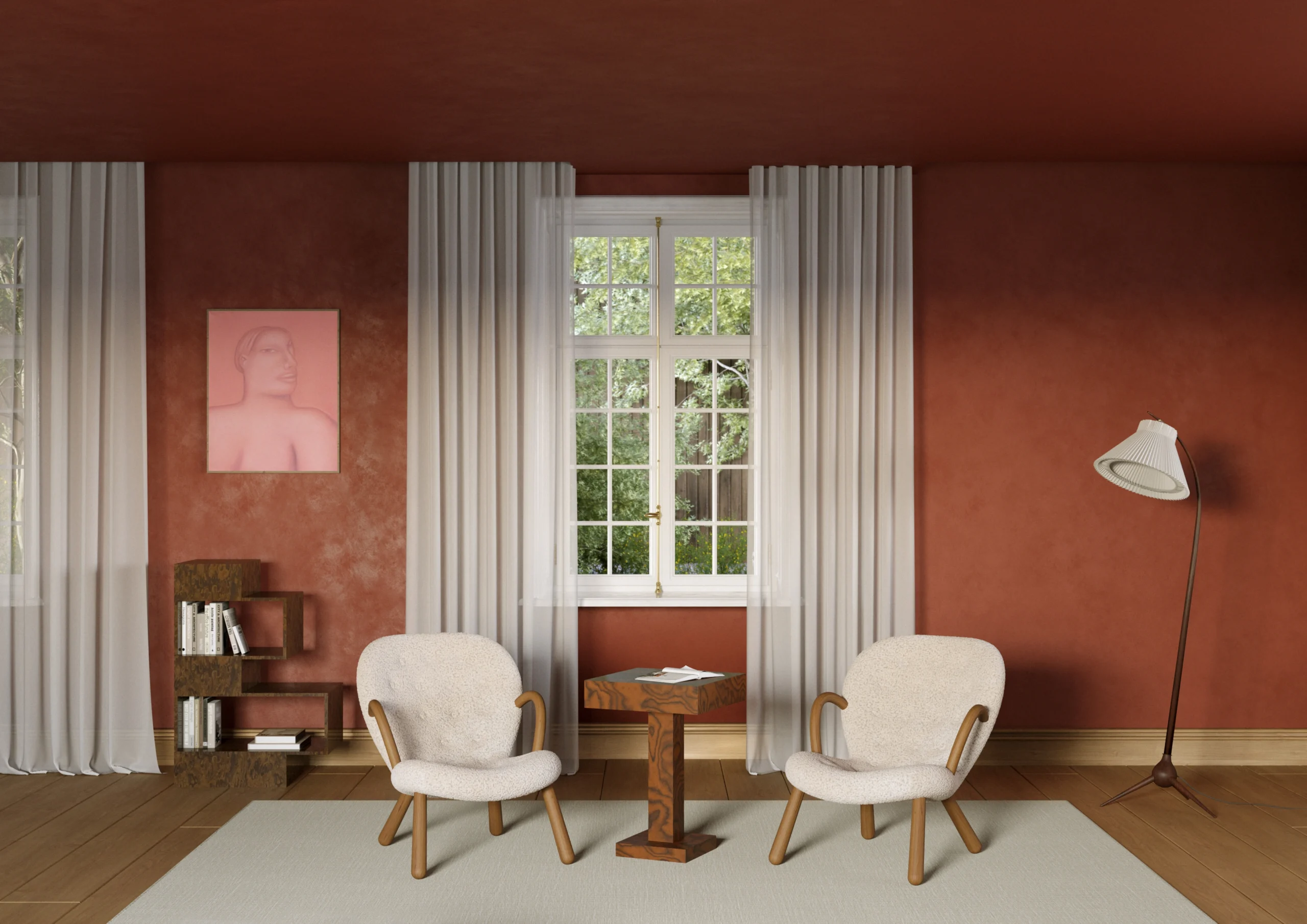
Featured piece: The Ettore Sottsass side table – a T-shaped construction in deep-grained dark walnut – reads as sculpture first, surface second. Its proportions are architecturally bold in a way that would be difficult to justify at retail scale. The walnut grain deepens with each passing decade, not each passing season. View the Ettore Sottsass →
Bespoke furniture is worth the investment when you are furnishing a space you intend to occupy long-term, using materials that improve with age, and solving a design problem that catalogue furniture cannot address. It is not the right choice for every situation.
The case for bespoke is strongest for buyers who own their property and plan to remain for 10 or more years; who are furnishing a space with specific architectural features that standard furniture cannot accommodate; and who understand that a 12-week lead time is part of the process. For these buyers, Petra Madalena designs and builds to a standard intended to outlast the brief – each piece produced once, for one client, with no reproduction of bespoke designs.
Bespoke is a poor fit for rental properties, transitional living situations, or buyers who update their interiors frequently. In these cases, well-made mid-market furniture from a reputable manufacturer is the more rational choice.
Bespoke furniture is not for every buyer or every brief – but for those commissioning it under the right conditions, it remains one of the few interior investments that genuinely holds its value across decades. The combination of natural materials, precise design, and singular craftsmanship produces objects that outlast, outperform, and outclass everything the catalogue can offer. Petra Madalena designs and builds to this standard: each piece a considered object, made once, for one space, with no compromises on material or form.