 Menu
Menu
Menu
Menu

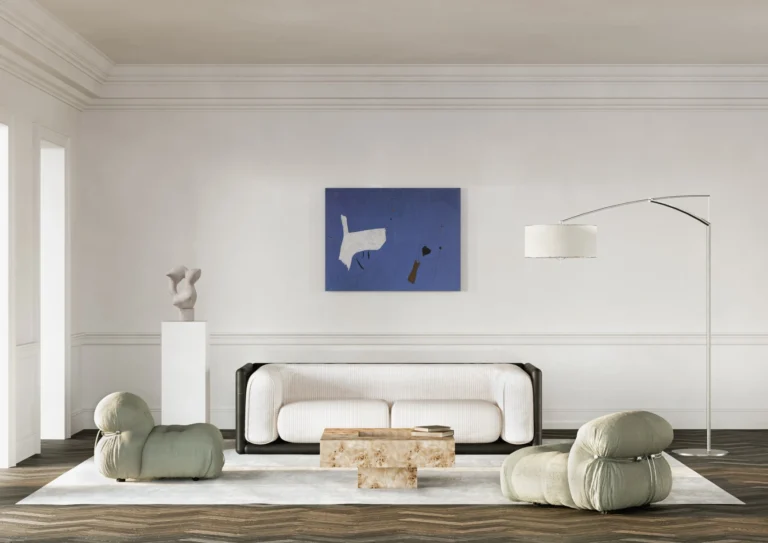
There has never been a more deliberate moment in interior design. In 2026, a growing number of people are moving away from disposable interiors and towards pieces that are genuinely considered – objects chosen not because they were available, but because they were right for a specific space, a specific life, and a specific set of values. This guide covers everything worth knowing about bespoke furniture in 2026: what is driving the cultural shift, what the key material and formal trends look like, why the investment case is stronger than it has ever been, how the process works from first conversation to delivery, and what it means to live with furniture that was made to last. Whether you are furnishing a room for the first time or reconsidering a space that has never quite worked, this is the full picture.
This guide is a comprehensive introduction to custom furniture in 2026. It covers trends, materials, benefits, sustainability, costs, timelines, and the ordering process in full. The goal is to give you everything you need to make a confident, well-informed decision about one of the most significant investments you can make in your home.
Bespoke furniture is furniture made to a specific brief rather than manufactured in advance for general sale. Unlike off-the-shelf pieces, it is not designed to suit the broadest possible market – it is designed, and in most cases made, for a particular person, space, or purpose. The distinction is more significant than it might first appear, because the entire production logic is different: the starting point is what the client needs rather than what is most efficient to manufacture at scale.
Not always, though the terms are often used interchangeably. Bespoke traditionally implies a higher degree of maker involvement – a piece conceived and produced by a skilled craftsperson rather than configured through a digital interface. Custom furniture in the broader sense can mean anything from choosing a fabric colour on a mass-produced frame to commissioning an entirely original sculptural object. The quality, craft, and material standards vary accordingly.
At Petra Madalena, the approach sits in a specific and considered position. Each piece in the collection is a resolved sculptural design – the form, proportion, and silhouette are the designer’s work and remain as designed. What clients personalise is the material (veneer species, finish, lacquer colour) and, where needed, the dimensions. The result is made to measure furniture that carries genuine artistic integrity rather than the output of a configure-your-own tool.
Handmade furniture is produced through direct human skill at every critical stage rather than through automated manufacture. Machines may assist in some processes – cutting, sanding, pressing – but the forming, assembly, finishing, and quality assessment are done by a person with trained judgment, not a programmed sequence. This is not nostalgia. It is the reason handmade pieces achieve surface qualities, proportional refinements, and structural details that factory production cannot replicate at any price point.
Not necessarily. Most skilled furniture makers work within a small studio team. What matters is that each phase of production is overseen by someone with the expertise to make real judgments – about how a veneer is reading across a surface, whether a join is clean, whether the lacquer has built correctly. The Crafts Council has documented extensively that the quality of skilled making is not separable from the human attention applied at each stage – and this is precisely what distinguishes it from even the most sophisticated automated production.
Traditional bespoke furniture tends to be understood as functional pieces made to specification: a dining table at a precise length, a wardrobe fitted to a particular alcove, a sofa in a specific fabric. Sculptural furniture – the territory that Petra Madalena occupies – is furniture conceived first as an object with formal, aesthetic, and spatial ambitions, and second as something that also functions as a table or a shelf.
This distinction changes how the piece is designed, how it is evaluated, and how it sits in a room. A sculptural coffee table is not assessed primarily by how many cups it holds or how easily it can be moved. It is assessed by what it does to the space around it – whether it anchors the room, creates visual interest from multiple angles, and rewards close attention. That is a different brief, and it demands a different kind of making.
The shift is real and measurable. Across European markets, demand for made-to-order and artisan-produced furniture has grown consistently over the past four years. Several forces are converging in 2026 to make this a particularly significant moment for the category.
Three things have changed significantly. First, the visual homogeneity of mass-market interiors – the same shelf unit, the same pendant light, the same sofa configuration appearing across millions of homes – has become visible enough to actively bother people. Bespoke interiors are, at the most basic level, a response to the exhaustion of sameness. When every home looks like a moodboard assembled from the same four retailers, the hunger for something genuinely different intensifies.
Second, sustainability has moved from a marginal concern to a mainstream one. The environmental cost of fast furniture – short-lived, difficult to repair, often destined for landfill within a decade – is now widely understood. A piece made once, well, from responsibly sourced materials, designed to last fifty years, represents a fundamentally different relationship with material goods. That argument resonates differently in 2026 than it did in 2016.
Third, remote and hybrid working has fundamentally changed how people relate to their homes. A space that was once primarily background has become foreground – something to be thought about, invested in, and genuinely proud of. That shift in attention has raised the stakes for interior decisions at every level.
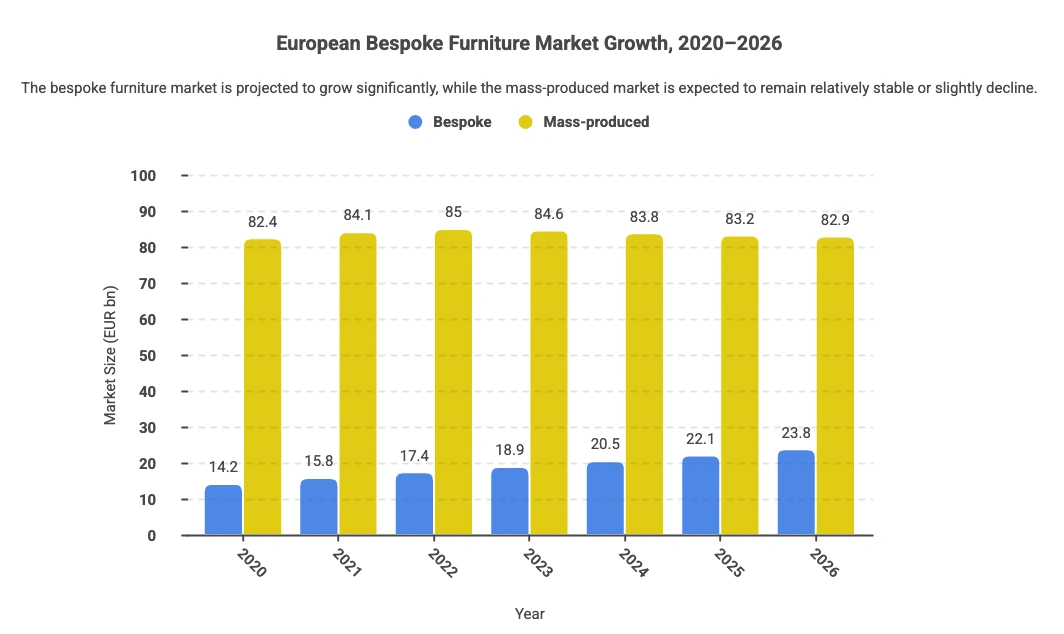
European bespoke furniture has grown approximately 38% since 2020, while the mass-produced segment has remained largely flat. Data sourced from CSIL Centre for Industrial Studies (Milan), Statista Furniture & Interior Market reports, and Grand View Research Custom Furniture Market analysis. Figures for 2025-2026 are projected based on observed CAGR trends and are indicative.
Yes – though the word mainstream requires qualification. Bespoke furniture is not becoming mass-market. It remains a considered purchase at a premium price point. What has changed is the breadth of the audience considering it: clients who would previously have bought high-street furniture without much thought are now spending more time researching, more money on fewer pieces, and more attention on what those pieces actually are and how they are made.
Design media, museum programming, and digital platforms have collectively raised the level of visual literacy in the broader public over the past decade. The Victoria and Albert Museum‘s ongoing programme on design, craft, and making – alongside the work of institutions like the Cooper Hewitt, Smithsonian Design Museum – has helped position furniture as a category of genuine cultural significance rather than mere utility. When people understand what good design involves and what it costs to produce honestly, their purchasing decisions change accordingly.
The most compelling pieces of 2026 share several qualities: material confidence, formal clarity, and a willingness to treat furniture as architectural rather than merely decorative. The trends below are not passing fashions – they reflect a deeper shift in how considered interiors are being approached across European and North American design culture.
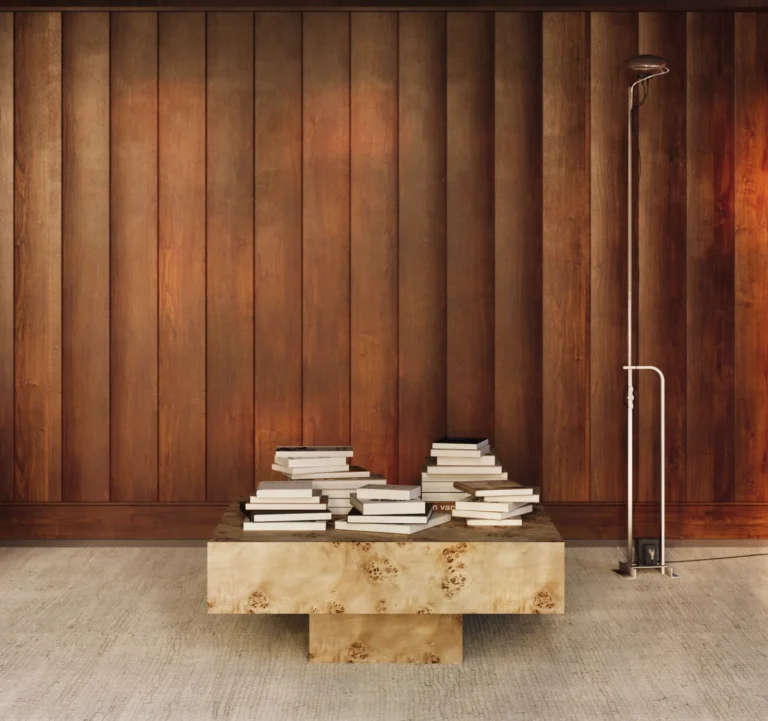
Natural wood veneer is the dominant material story of the year. Specifically, highly characterful species – burl walnut, figured rosewood, ripple sycamore, smoked oak – are being chosen for their grain complexity and visual depth. These are materials that reward close attention: the closer you look, the more you see. That quality is increasingly valued in a visual culture saturated with flat, uniform surfaces. Custom furniture design in 2026 is defined by surfaces that are genuinely interesting at arm’s length, and remain so after years of daily familiarity.
Wood veneer offers something that solid timber often cannot: the ability to produce consistent, stable, large-format surfaces while using significantly less of a rare or slow-grown material. The Forest Stewardship Council certifies veneer production that meets responsible sourcing standards – ensuring the visual richness of a burl or figured grain does not come at the expense of forest health. Veneer is also the technology that enables multilaminar forming: the bending, curving, and sculpting of wood into forms that solid timber could not achieve without splitting. In 2026, that technical possibility is being fully and confidently exploited.
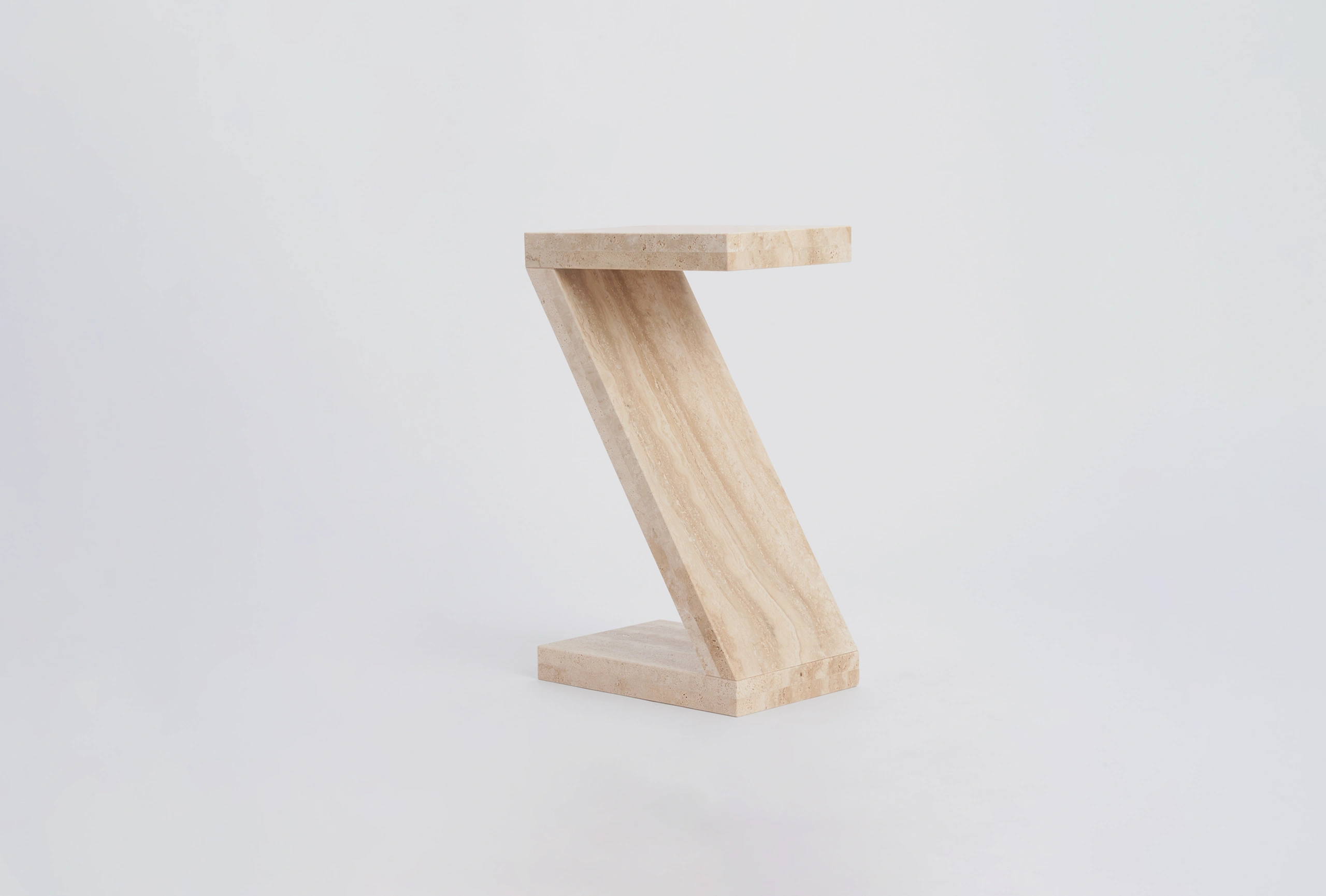
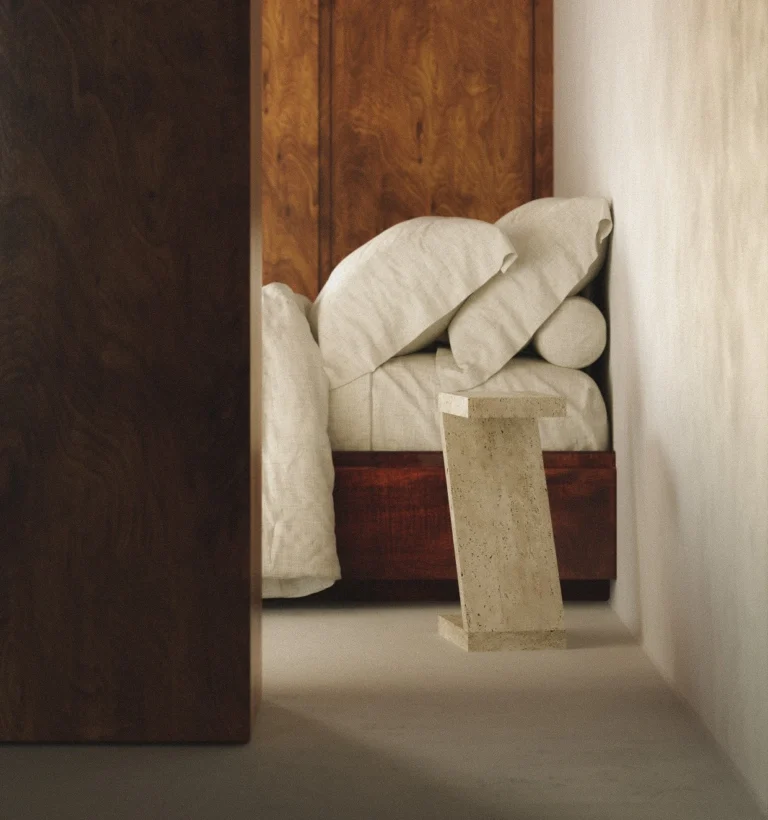
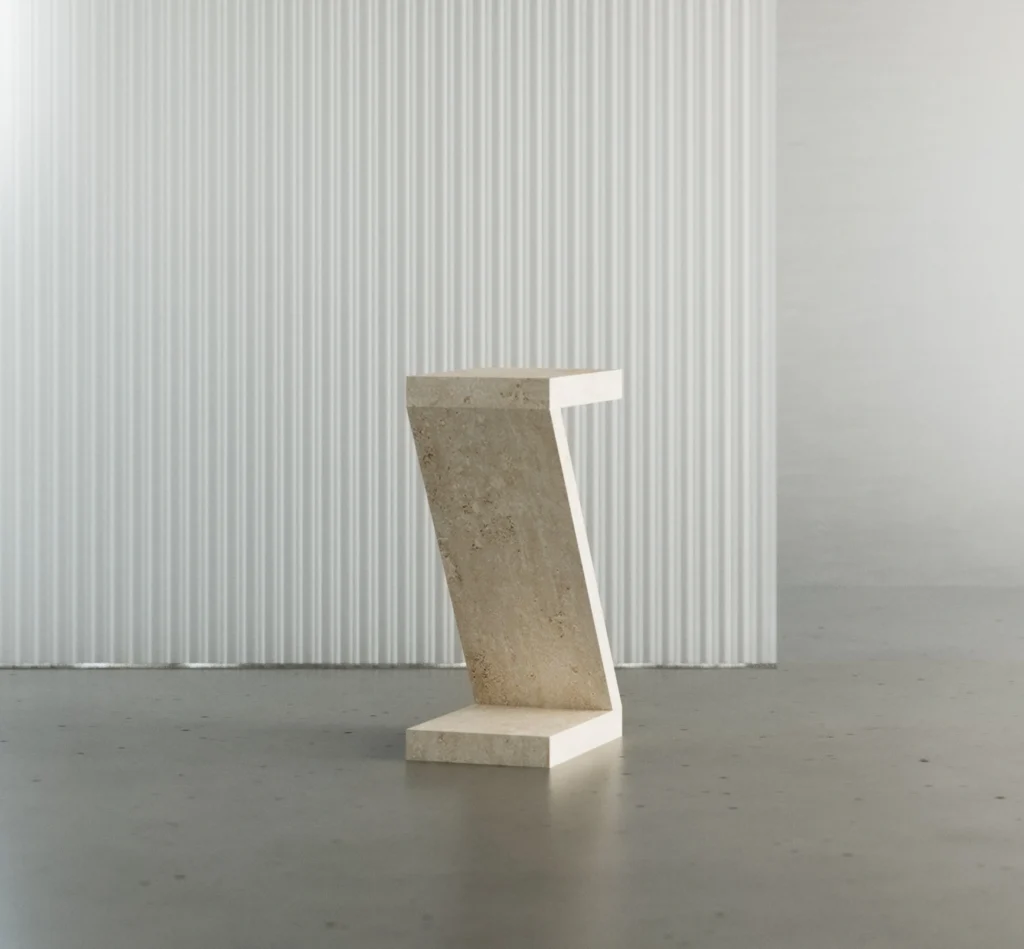
Stone surfaces – particularly travertine, marble, and fluted limestone – are appearing as inlays and tops on veneer-bodied pieces, creating a material tension that adds visual weight and tactile interest. The Travertine Side Table is a precise example of this pairing – stone meeting wood in a form that is quietly architectural.
. Blackened or patinated metal as a structural detail – feet, frames, internal supports – is also prominent across the collection. For a deeper look at how to approach these combinations with confidence, see our guide on mastering stone, wood and metal in interior design. The common thread is that each material is present for a reason: its specific qualities of weight, reflectivity, texture, or warmth contribute something to the object as a whole rather than serving as decoration applied after the fact.
|
Material |
Character |
Why It Is Prominent in 2026 |
Best Combined With |
|
Burl walnut veneer |
Dense, swirling grain – complex and archival |
Highly figured surface rewards close attention; each piece unique |
Dark lacquer, stone inlay |
|
Figured rosewood veneer |
Warm dark bands, directional grain |
Rich mid-tones suit artificial light; one-of-a-kind surface per production |
Natural oak, matte lacquer |
|
Ripple sycamore veneer |
Wave-like figure across pale surface |
Light, contemporary character; striking at scale |
Cream lacquer, stone top |
|
Smoked oak veneer |
Even, warm, slightly darkened grain |
Versatile – works with most interior palettes |
Metal detail, stone base |
|
Travertine / marble |
Cool, quiet regularity; natural variation |
Provides visual counterpoint to figured wood grain |
Warm veneer body or frame |
|
Patinated metal |
Dark, matte, structural presence |
Adds weight and detail without competing with veneer surface |
Any veneer species |
Asymmetry is dominant. Stepped shelving, cantilevered surfaces, off-centre pedestals, and forms that reference architecture more than traditional furniture typologies are all prominent across studios and collections. A custom coffee table in 2026 is as likely to resemble a low architectural plinth or a geometric sculpture as it is a conventional table. Bookcases are conceived as wall compositions – resolved from edge to edge – rather than as storage units that happen to stand against a surface.
The designer furniture conversation has absorbed ideas from minimalist sculpture, brutalist architecture, and traditional Japanese joinery into a visual language that is distinctly contemporary but materially grounded. Pieces are heavier in visual weight, lower in ornamentation, and more confident in their use of negative space than the furniture of the previous decade. Form follows material rather than market research, and the results are correspondingly more resolved.
The move is towards coherence over curation. Rather than assembling a room from many disparate sources and hoping they will coexist, clients are increasingly commissioning key pieces – a side table, a bookcase, a coffee table – that share a material logic and set the tone for everything else in the room. One or two exceptional sculptural pieces can anchor an entire interior more effectively than ten carefully selected decorative objects.
Colour is also shifting in a way that rewards warm, natural materials. Mid-tones – rosewood, amber oak, smoked walnut, warm cream lacquer – are displacing the cooler, greyer palette that dominated interiors for much of the 2010s. These are colours that work well in artificial light, which matters as people spend significantly more time at home in the evenings than previous generations did.
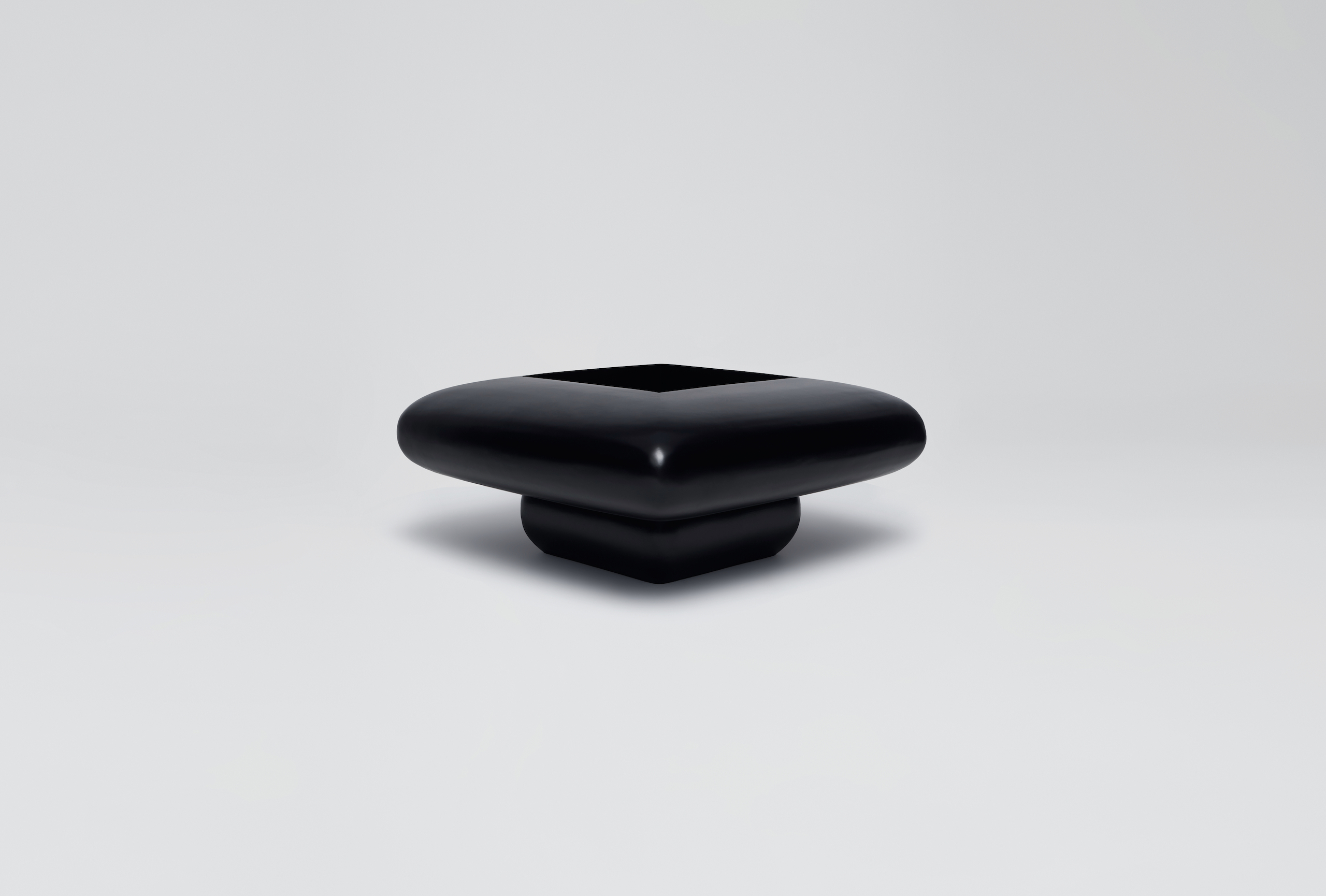
Coffee tables and bookcases are the leading categories in sculptural furniture in 2026. Both share the same quality: they are the pieces in a room that carry the most visual responsibility. A coffee table sits at the centre of the primary living space, seen from every angle – the Solid Birch Coffee Table is a strong illustration of what that means in practice: a clean, confident form in a characterful natural material that anchors a room without demanding attention. A bookcase occupies a wall and defines the vertical character of a room. Getting these pieces right – in material, proportion, and form – has a disproportionate effect on how the entire space reads.
Side tables and accent pieces – small sculptural objects that sit beside a sofa, a bed, or a reading chair – are also growing in prominence as entry points for clients new to bespoke. A custom cabinet commission remains the most architecturally ambitious category: a piece designed to occupy a specific wall, integrate with existing architecture, and resolve a space that previously felt incomplete.
The benefits are substantial and largely practical rather than merely aesthetic. For a full breakdown of every advantage, see our dedicated guide on the benefits of custom furniture. The most important points are summarised here.
Yes – considerably. A mass-produced piece has an average lifespan of five to ten years before structural failure, surface deterioration, or changing tastes make it redundant. A well-made bespoke piece – built from stable materials, with proper joinery, and finished to a specification that does not cut corners – routinely lasts twenty-five to fifty years. Some pieces, passed between generations, last considerably longer.
The structural difference is real and not superficial. Mass-produced furniture uses engineered wood composites – MDF, particleboard – that are vulnerable to moisture, impact, and repeated loading. Bespoke production uses solid substrates, proper joinery (mortise-and-tenon, dovetail, or precision mechanical fastening as appropriate), and materials chosen for performance over the long term rather than ease of assembly. The surface – lacquered or varnished veneer, applied in multiple coats with sanding between each – is both more visually refined and physically more durable than the foil wraps and paper laminates of factory furniture.
Furniture craftsmanship produces details that are simply not achievable in factory production: clean internal corners, grain-matched surfaces, edges that are finished rather than merely covered, proportions that have been considered rather than standardised. These are qualities that read as the difference between a room that feels genuinely right and one that merely looks acceptable in photographs. The camera flattens everything. The room does not.
At the most practical level, craftsmanship involves a series of judgment calls that no machine can make. Does the veneer grain read correctly across the full face of the piece? Is the edge profile consistent from all viewing angles? Has the lacquer built to sufficient depth without losing the clarity of the surface below it? Is the join between two panels clean enough to disappear at normal viewing distance? Each of these decisions is made by a person – repeatedly, at every stage of production – and the cumulative effect of those decisions is visible in the finished piece and remains visible for decades.
For a direct comparison of what this means against factory production, see our detailed guide: custom furniture vs mass-produced – real differences explained.
Yes – because it is designed for the space. A piece made to the exact dimensions of an alcove, a wall, or a room will always sit more naturally than one adjusted to approximate fit. This is particularly significant for larger pieces: a bookcase that is three centimetres too wide, or a coffee table whose height does not relate correctly to the sofa beside it, will subtly compromise a room in ways that are hard to articulate but consistently felt.
Even for smaller pieces, dimensional precision matters. A side table specified to exactly the right height for a particular chair, in a veneer that responds to the light conditions of a specific room, will always read as more resolved than a comparable piece pulled from a catalogue. That specificity is what bespoke actually means, at its most practical.
|
|
Mass-Produced |
Bespoke / Made-to-Order |
|
Typical lifespan |
5-10 years |
25-50+ years |
|
Materials |
MDF, particleboard, foil laminates |
Solid substrates, hardwood veneer, quality lacquer |
|
Joinery |
Adhesive-dependent, clip assembly |
Mortise-and-tenon, dovetail, precision fastening |
|
Dimensions |
Fixed – choose from standard sizes |
Specified to your space |
|
Surface finish |
Foil wrap or paper laminate |
Lacquered veneer, hand-sanded between coats |
|
Design |
Standardised for mass appeal |
Resolved by a designer, specific to a brief |
|
Grain / surface |
Uniform, repeatable |
Unique – no two pieces identical |
|
Environmental footprint |
High (frequent replacement, landfill) |
Low per year of use (longevity, repairability) |
|
Lead time |
Days to 2 weeks |
From 9 weeks |
Custom furniture cost is higher than mass-market equivalents, and the gap is real. A bespoke sculptural piece will cost more than a comparable item from a mid-market retailer. Whether that difference is worth it depends entirely on how the question is framed.
Because more of it is human. Material costs are higher – quality veneers, proper substrates, professional-grade lacquers and finishes – but the larger component of the price is skilled labour. A craftsperson’s time, applied over twenty to forty individual production steps per piece, is not cheap. Nor should it be. The alternative is a piece that costs less to make because less care went into every decision at every stage of production.
There is also the matter of what is not included in the quoted price of a factory piece: the environmental cost of its short lifespan, the cost of disposal, and the cost of replacement in five to eight years. When these are included in the calculation, the gap between bespoke and mass-produced narrows significantly, and in many cases reverses.
Luxury furniture – understood as furniture made to a genuinely high standard from quality materials with proper craft attention – is worth the investment when it is bought with longevity in mind. A piece that costs three times as much but lasts ten times as long is, by any rational calculation, the better value. The difficulty is that this calculation requires thinking across a time horizon longer than most furniture purchasing decisions are made on.
A straightforward framework: divide the purchase price by the expected lifespan in years. A mass-produced coffee table at £400 that lasts eight years costs £50 per year of use. A bespoke sculptural piece at £2,500 that lasts forty-five years costs approximately £56 per year – and is visually and structurally superior throughout that entire period. The numbers are illustrative but the principle is consistent and holds across the full range of piece types and price points.
|
|
Mass-Produced |
Mid-Range |
Bespoke Sculptural |
|
Typical purchase price |
£200-600 |
£600-1,500 |
£1,500-6,000+ |
|
Expected lifespan |
5-8 years |
8-15 years |
25-50+ years |
|
Replacements over 40 years |
5-8 times |
3-5 times |
0-1 times |
|
Total cost over 40 years |
£1,000-4,800 |
£1,800-7,500 |
£1,500-6,000+ |
|
Cost per year of use |
£40-75 |
£45-100 |
£30-60 |
|
Surface quality |
Foil / paper |
Mid lacquer |
Hand-finished lacquer |
|
Design longevity |
Trend-led |
Style-led |
Resolved, timeless |
For a detailed breakdown of how to evaluate the investment case for bespoke furniture in 2026 specifically, see our guide: is bespoke furniture worth the investment in 2026?.
Bespoke furniture timeline varies by piece and complexity. At Petra Madalena, the minimum lead time across all pieces is 9 weeks from order confirmation. Most commissions complete in 9-14 weeks. Larger sculptural pieces – such as a full-height bookcase – take 14-16 weeks. This is not a waiting list: it is the actual time required to produce the piece correctly.
Production divides into five stages: piece selection and brief confirmation, material sourcing, production, finishing and quality control, and delivery. Each stage has a defined purpose and a minimum time requirement that cannot be compressed without affecting the outcome of the stage that follows it.
Material sourcing – bringing in the specific veneer, finish, and substrate materials specified in the brief – typically takes one to two weeks depending on what is in the studio’s standard library and what requires ordering from suppliers. Production itself is the longest phase: a single piece may pass through twenty to forty individual steps, each done by hand and checked before the next begins. Surface finishing – lacquer applied in multiple coats with sanding between each – takes longer than most buyers expect, and that time is directly legible in the depth and quality of the finished surface.
|
Stage |
What Happens |
Typical Duration |
|
1. Selection & Brief |
Piece chosen from collection; material and dimensions confirmed. |
1 week |
|
2. Material Sourcing |
Veneers, substrates, and finishing materials ordered and prepared. |
1-2 weeks |
|
3. Production |
Hand-forming, laminating, shaping, and curing. 20-40 individual steps depending on complexity. |
6-10 weeks |
|
4. Finishing & QC |
Lacquering in multiple coats, sanding between each. Quality inspection against brief. |
1-2 weeks |
|
5. Delivery |
White-glove delivery: transported with full protective packaging and placed in position. |
1 week |
|
Total (typical) |
From order confirmation to delivery in your home. |
9-14 weeks |
|
Total (large pieces) |
Sculptural bookcases and architectural commissions. |
14-16 weeks |
Within limits. Choosing materials from the studio’s standard library rather than requesting rare or specialist veneers can reduce sourcing time by one to two weeks. Ordering outside the peak periods – September to November, and the spring renovation surge from March to May – generally means an earlier production start and a more relaxed overall timeline. The production phase itself cannot be meaningfully shortened without compromising the work, and the studio does not offer expedited production at the expense of quality.
Nine weeks from order confirmation is the floor across all piece types and materials. This accounts for the full sequence of sourcing, production, finishing, and delivery when everything moves without delays. For a detailed breakdown of every stage and what influences the timeline, see: how long does bespoke furniture take – timeline explained.
Sustainable bespoke furniture is not a contradiction in terms or a marketing claim. It is arguably the most defensible form of furniture from an environmental perspective, and the reasoning is straightforward: a piece made once, well, from responsibly sourced materials, that lasts fifty years, has a dramatically lower environmental footprint per year of use than a factory piece that needs replacing every five to ten years.
Generally, yes – particularly when the materials are responsibly sourced and the piece is designed for longevity rather than fashionability. The Ellen MacArthur Foundation‘s research on circular economy principles makes a consistent and well-evidenced case that longevity is one of the highest-impact levers available to reduce the environmental footprint of material goods. A piece of furniture that circulates for forty years – potentially passing between owners, being repaired, and remaining useful and beautiful throughout – is a genuinely circular product in a way that a chipboard unit destined for landfill after eight years is not.
Studio-scale production – small batches, skilled labour, no industrial-scale energy consumption – has a relatively modest carbon footprint compared to large factory manufacture. The most significant environmental variable is material sourcing. Timber from certified sustainable forests, veneers produced from species managed for long-term yield, and finishes that meet modern VOC (volatile organic compound) standards all contribute to a significantly more defensible environmental position than the materials typically used in mass-produced furniture.
FSC-certified timber and veneers are the clearest and most verifiable signal of responsible sourcing. The Forest Stewardship Council certification ensures full chain-of-custody documentation from forest to finished piece – meaning you can trace the material origin rather than relying on unverified claims. Beyond certification, look for materials chosen for longevity: hardwood veneers over paper laminates, oil or lacquer finishes over foil wraps, and solid joinery over adhesive-dependent construction. Each of these choices extends the functional life of the piece and reduces the likelihood of early disposal.
For a full guide to materials, certifications, and the questions worth asking any maker before placing an order, see our detailed piece on sustainable bespoke furniture in 2026.
One of the less obvious qualities of working with natural wood veneer is what it means for the uniqueness of each piece produced. Because every sheet of veneer carries a grain pattern formed by the specific growth conditions of an individual tree – the climate it grew in, the stresses it experienced, the rate at which it laid down each annual ring – no two sheets from the same species will ever look exactly alike.
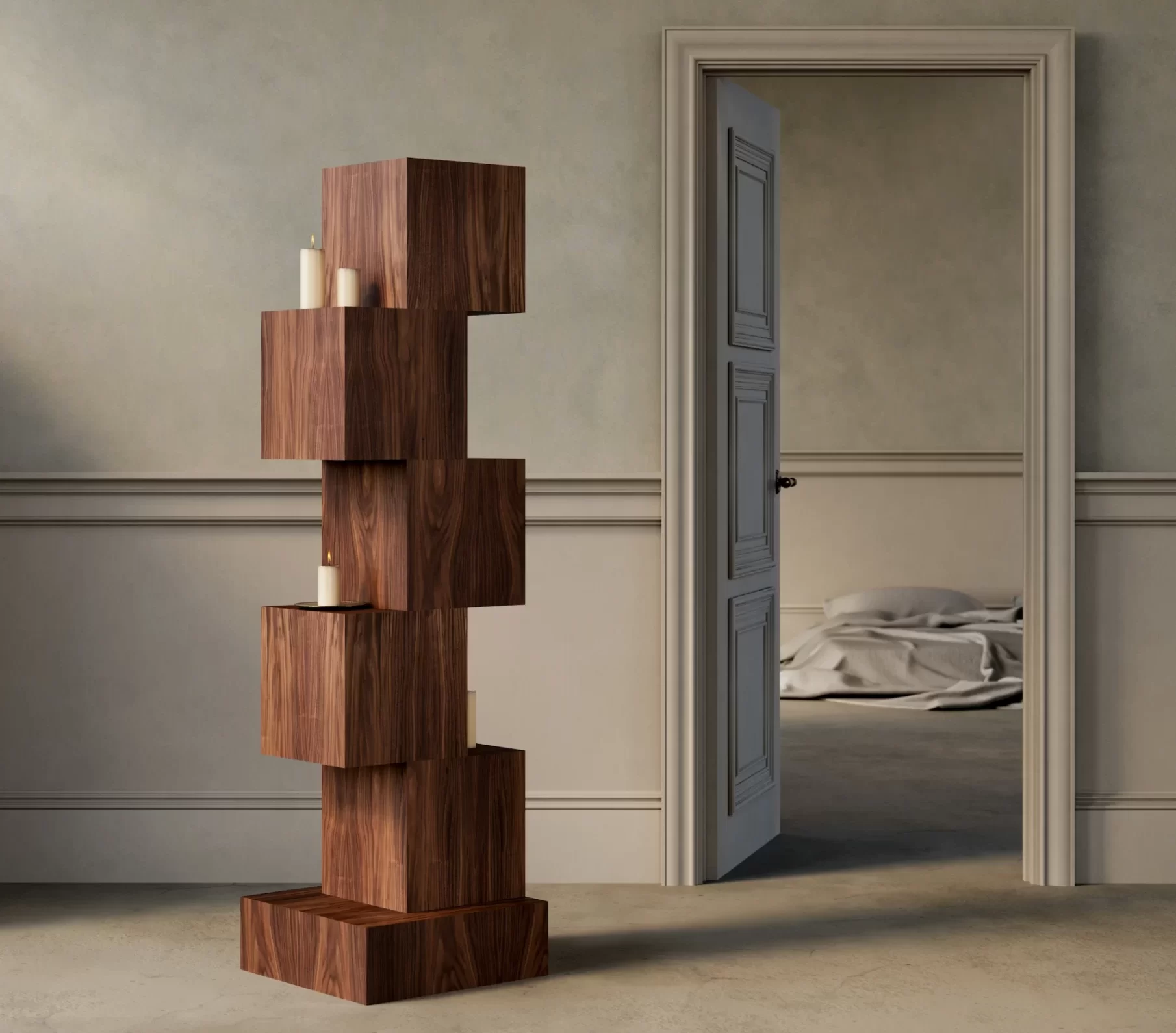
Yes – even within the same design. Two pieces produced from the same Petra Madalena design, in the same veneer species, will share the same form, the same proportions, and the same structural logic. The surface of each will be entirely unique. The Walnut Veneer Bookcase makes this tangible: the walnut grain shifts direction and density across every individual piece produced from this design, meaning the bookcase you receive carries a surface that exists nowhere else. A piece made today and another made six months from now will be visually distinct objects, even though they are produced from the same resolved design.
This is particularly pronounced in highly figured species. Burl walnut, where the grain swirls and pools around knots and growth stress points. Figured rosewood, where dark and light bands shift direction unpredictably across the face of a piece. Ripple sycamore, where the figure runs in waves across the surface in light. These are not flaws to be managed. They are the material’s biography, visible in the finished object, and they are precisely what makes the surface of a veneer piece more interesting to live with than a synthetic or painted surface.
Significantly. The same resolved design in two different veneer species will produce two objects with very different presences. A light, open-grained ash veneer reads as contemporary and clean. A dark, heavily figured burl walnut reads as weighty, complex, and archival. Neither is more correct – but the choice has substantial consequences for how the piece sits in a room and how it relates to the materials around it.
This is why material sampling – receiving physical samples of a veneer before confirming a brief – is a valuable part of the process. Seeing a material in your own light conditions, against your existing flooring and walls, resolves most of the uncertainty that photographs cannot. A decision that feels speculative in front of a screen becomes straightforward when the material is in the room.
The case for bespoke furniture is not simply aesthetic. It is practical, environmental, and – over any reasonable time horizon – financially sound. The pieces you choose to live with for decades are worth thinking about carefully, and the decision to buy well once rather than adequately several times is one that consistently rewards those who make it.
Proportion and spatial fit. Material quality and longevity. Formal uniqueness. Environmental responsibility. The craftsmanship of the process. The artistic integrity of working with resolved designs. The investment value over time. The experience of owning something that was genuinely made with attention. Each of these compounds the others.
For the full breakdown of all ten reasons, see our guide: why choose bespoke furniture – 10 benefits of custom-made pieces.
Designer furniture typically refers to pieces created by named designers and produced in limited or open editions – objects that carry a design authorship and are sold through design retail channels. Bespoke furniture is made specifically for a client rather than produced for general sale. The two can overlap significantly: a bespoke commission from a working designer is both. The distinction matters mainly for how you understand your relationship to the object – as one of an edition or as a singular thing made for your specific space, your specific light, and your specific life.
No. The most consistent quality among clients who commission bespoke furniture is not design knowledge – it is an awareness that the space matters and a willingness to take the decision seriously. Working with a studio whose designs you respond to instinctively is as valid a starting point as arriving with a fully formed brief. Most good commissions begin with a feeling rather than a specification.
Starting is simpler than most people expect. The conversation does not require a precise brief, an architect’s drawing, or a fully formed design idea. It requires knowing roughly what you want to achieve in your space and being willing to have a direct conversation about how to get there.
Each piece in the Petra Madalena collection is a resolved sculptural design. The form, proportion, and silhouette are the designer’s work and do not change per order. What clients personalise is the material: the veneer species, the lacquer colour or surface finish, and where required, the dimensions within the proportional logic of the design. This approach means you are not asked to design from a blank page. You are selecting from a set of considered, tested, resolved objects and specifying how they will sit in your particular space.
The range spans from smaller pieces – a custom coffee table, a side table – through to larger architectural commissions: sculptural bookcases and custom cabinets designed to anchor a wall or define an alcove. All pieces start from a 9-week lead time.
Three things help: the dimensions of the space the piece will occupy, a sense of the existing materials and tones in the room (flooring, wall colour, other furniture), and an idea of which piece or pieces from the collection feel right for the space. Beyond that, the process is a conversation. Material samples can be sent before a brief is confirmed. Dimensions can be discussed and refined. Most decisions that feel uncertain at the outset resolve clearly once samples are in hand and the conversation has begun.
Not necessarily. Most commissions are handled effectively by remote – dimensions shared in writing, samples sent by post, decisions confirmed by email. For larger pieces that will be wall-fixed or architecturally integrated, a site visit is recommended to confirm dimensions and any structural considerations before production begins. The team will advise on this during the initial conversation.
The most useful question is not which piece you want but which part of your room most needs resolving. A room without a strong anchoring piece in the centre – a coffee table with genuine visual presence – will feel unresolved regardless of what else is in it. A room with an unaddressed wall – particularly one opposite the primary seating – will feel incomplete. Identifying the specific problem the piece needs to solve is a more reliable guide than starting with a category.
For clients new to bespoke, a smaller commission – a side table or a sculptural accent piece – is often the most productive starting point. It allows you to experience the process, understand the quality of the finished work, and build confidence in the studio’s approach before committing to a larger commission.
The most honest argument for bespoke furniture is also the simplest: the things you choose to live with every day matter. A piece that was made carefully – from considered materials, by people who understood what they were making – will reward that attention every day for decades. It will look better as it ages. It will carry meaning that a warehouse delivery cannot. It will fit the room it was made for in a way that an adjusted approximation never will.
In 2026, the case for that kind of furniture has never been more clearly made. The alternative – fast, disposable, visually homogenous, environmentally costly – is more visible as a choice than it has ever been. Choosing otherwise is not difficult. It requires deciding that the space matters, and acting on that decision.
The pieces in the Petra Madalena collection are not products. They are objects – resolved, considered, made by hand, and built to last. If you are ready to furnish your space with something that genuinely earns its place in it, the catalogue is the right place to begin.