
Metal and stainless steel coffee tables have become a defining element of contemporary interior design – prized for their sculptural presence, exceptional durability, and ability to pair with virtually any material from marble to solid wood. This guide covers how to choose the right size and finish for your living room, what makes stainless steel so family-friendly, how to style a metal table so it feels warm rather than cold, which material pairings create the strongest visual impact, where to find art-driven designs in the US, and how to care for your piece so it looks flawless for decades.
The right stainless steel coffee table should sit 16-18 inches (40-46 cm) high (level with your sofa cushions), leave 14-18 inches (36-46 cm) of clearance on all sides, and measure roughly half to two-thirds the length of your sofa. According to Homes & Gardens, these proportions create visual balance and comfortable reach from any seated position. Stainless steel is one of the most durable options for busy households – it resists corrosion, scratches, and staining, making it both kid- and pet-friendly. The key to making a metal table feel inviting rather than industrial is pairing it with warm tabletop materials like marble, wood, or textured stone – and choosing a piece whose form is as considered as its function.
Start with three measurements: your sofa seat height, your sofa length, and the distance between your seating and the nearest walkway. A coffee table that nails these proportions will feel like it belongs in the room rather than competing with it.
Standard coffee table heights range from 16 to 18 inches (40-46 cm), which places the tabletop roughly level with most sofa seat cushions. According to Wayfair’s sizing guide, the table surface should sit at the same height as your cushions or 1-2 inches (2.5-5 cm) lower for the most comfortable everyday use. Going much lower forces you to lean awkwardly for your drink; going higher makes the table feel imposing.
Length is equally important. The general rule is that your table should be approximately two-thirds the length of your sofa. For a standard 84-inch (213 cm) three-seater, that means a table around 56 inches (142 cm) long. Sectionals with a chaise benefit from round or oval shapes that soften the angular layout and allow even circulation from every seat.
Clearance between your sofa and the table edge should be 14-18 inches (36-46 cm) – enough room to walk past without shuffling, but close enough to set down a glass without stretching. For open-plan spaces, leave at least 30 inches (76 cm) between the far side of the table and any opposing furniture to maintain comfortable foot traffic.
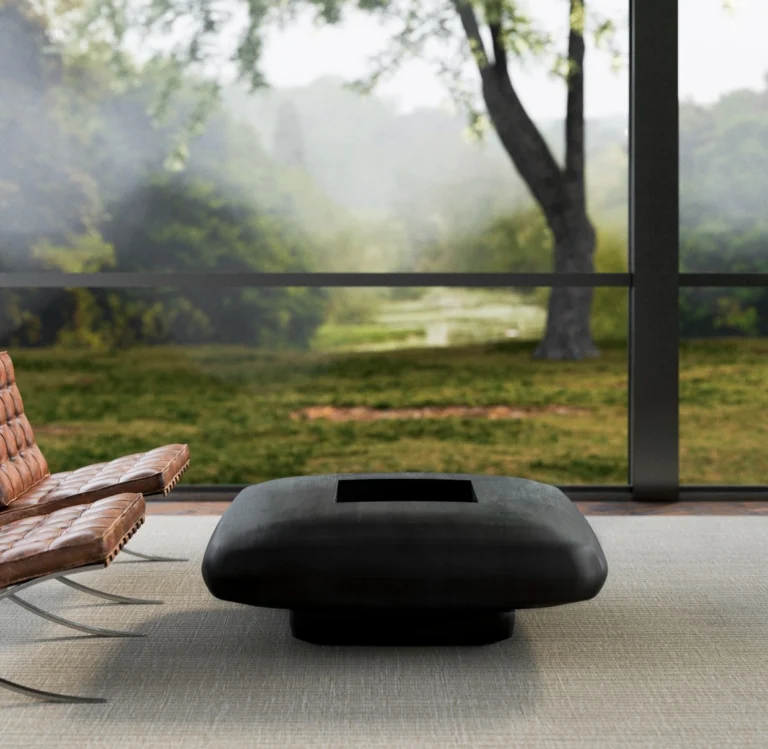
Sculptural pieces from studios like Petra Madalena often feature distinctive silhouettes – asymmetric curves, cantilevered planes, or geometric bases – that naturally draw the eye. Choosing the right scale ensures these pieces command attention as the room’s focal point without overwhelming the space around them.
Getting proportions right is one of the most important decisions in any living room, and it extends well beyond metal tables alone. Our coffee tables for modern living rooms guide covers sizing rules, material comparisons, storage options, and styling formulas across every table type – a useful reference if you are still weighing whether stainless steel is the right material for your space, or simply want to cross-check your measurements before committing.
|
Room / Sofa Size |
Recommended Length |
Recommended Width |
Ideal Shape |
|
Small room / Loveseat (60″) |
36-40 in (91-102 cm) |
18-20 in (46-51 cm) |
Round or oval |
|
Medium room / 3-seater (84″) |
48-56 in (122-142 cm) |
20-24 in (51-61 cm) |
Rectangular or oval |
|
Large room / Sectional (100″+) |
54-60 in (137-152 cm) |
24-30 in (61-76 cm) |
Round, oval, or sculptural |
|
Open-plan living space |
48-60 in (122-152 cm) |
24-30 in (61-76 cm) |
Statement sculptural piece |
Yes – stainless steel is one of the most family-friendly materials available for furniture. It resists corrosion, scratches, and staining, does not produce sharp oxidation like iron or untreated steel, and can be wiped clean in seconds.
The secret is in the alloy’s composition. According to the American Iron and Steel Institute, stainless steel contains a minimum of 10.5% chromium, which reacts with oxygen to form an invisible, self-healing protective layer on the surface. This passive film is what prevents rust and keeps the metal looking pristine even after years of daily use. Grade 304 stainless steel – the most common in furniture – contains approximately 18% chromium and 8% nickel, giving it excellent resistance to household chemicals, food acids, and moisture.
For homes with children and pets, stainless steel offers several practical advantages over other materials. Wooden tables develop ring marks from wet glasses and scratches from toys. Glass shows every fingerprint and risks shattering under impact. Iron and wrought iron can rust when exposed to spills. A stainless steel coffee table, by contrast, shrugs off most of what daily life throws at it – and brushed finishes are particularly forgiving, hiding minor marks and fingerprints far better than polished surfaces.
Stainless steel is also hypoallergenic. Its non-porous surface does not harbor bacteria, mold, or allergens, making it a smart choice for households with allergy sensitivities. It is 100% recyclable at end of life, which adds an environmental benefit for design-conscious buyers who care about sustainability.
|
Material |
Scratch Resistance |
Stain Resistance |
Kid/Pet Friendly |
Maintenance |
|
Stainless steel |
High (brushed hides marks) |
Very high |
Excellent |
Very low |
|
Solid wood |
Moderate (needs sealing) |
Low (ring marks) |
Good |
Moderate |
|
Tempered glass |
High |
High |
Moderate (fingerprints) |
Moderate |
|
Marble |
Low (soft stone) |
Low (porous, etches) |
Fair |
High (needs sealing) |
|
Iron / wrought iron |
High |
Low (rust risk) |
Fair (oxidation) |
High (anti-rust care) |
The secret to styling metal furniture is the warm-plus-cool principle: let the stainless steel provide the clean, reflective structure, then layer organic textures around it to add soul. A metal table surrounded only by glass, chrome, and white walls feels like a showroom. Add a wool throw on the sofa, a wooden tray on the tabletop, and a ceramic vase with dried branches, and the same table suddenly feels like home.
Interior stylists consistently recommend the rule of three for tabletop arrangements: group objects in sets of three at varying heights. One stack of design books, one sculptural object (a hand-thrown bowl, a stone orb, an abstract sculpture), and one organic element (a candle, a small plant, a textured coaster set). This creates visual rhythm without clutter – something that matters even more on a sculptural table where the base itself is part of the composition.
For minimalist spaces, restraint is everything. Let the table’s form speak by keeping the surface nearly bare – a single object and negative space can be more impactful than a fully styled tray. In industrial lofts with exposed brick and concrete, a polished stainless steel table reflects ambient light and softens the rawness of the surroundings. Pairing it with a plush area rug underfoot bridges the gap between hard industrial surfaces and everyday comfort.
If you are working with mixed materials throughout your room, Petra Madalena’s guide to mastering the mix of stone, wood, and metal is worth reading. It covers how to balance contrasting textures so that each material enhances the others rather than competing for attention. The approach applies directly to styling your coffee table within the broader context of the room.
One common mistake is treating a metal accent table or side table as purely functional. When the piece has been designed as a sculptural object – with intentional curves, geometric tension, or a cantilevered silhouette – it deserves the same consideration you would give a work of art. Position it where it catches natural light. Leave breathing room around it. Let the design do the heavy lifting.
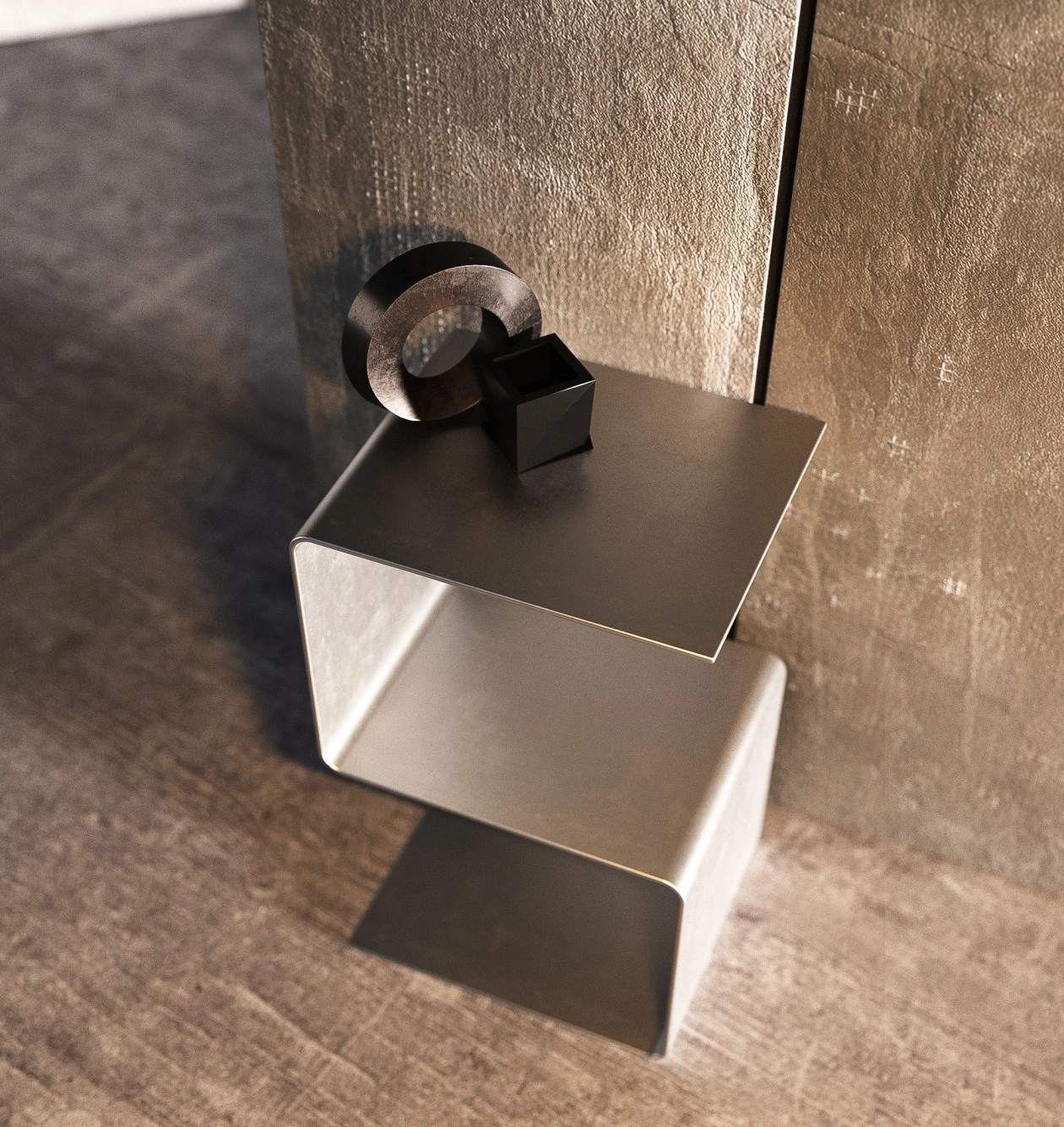
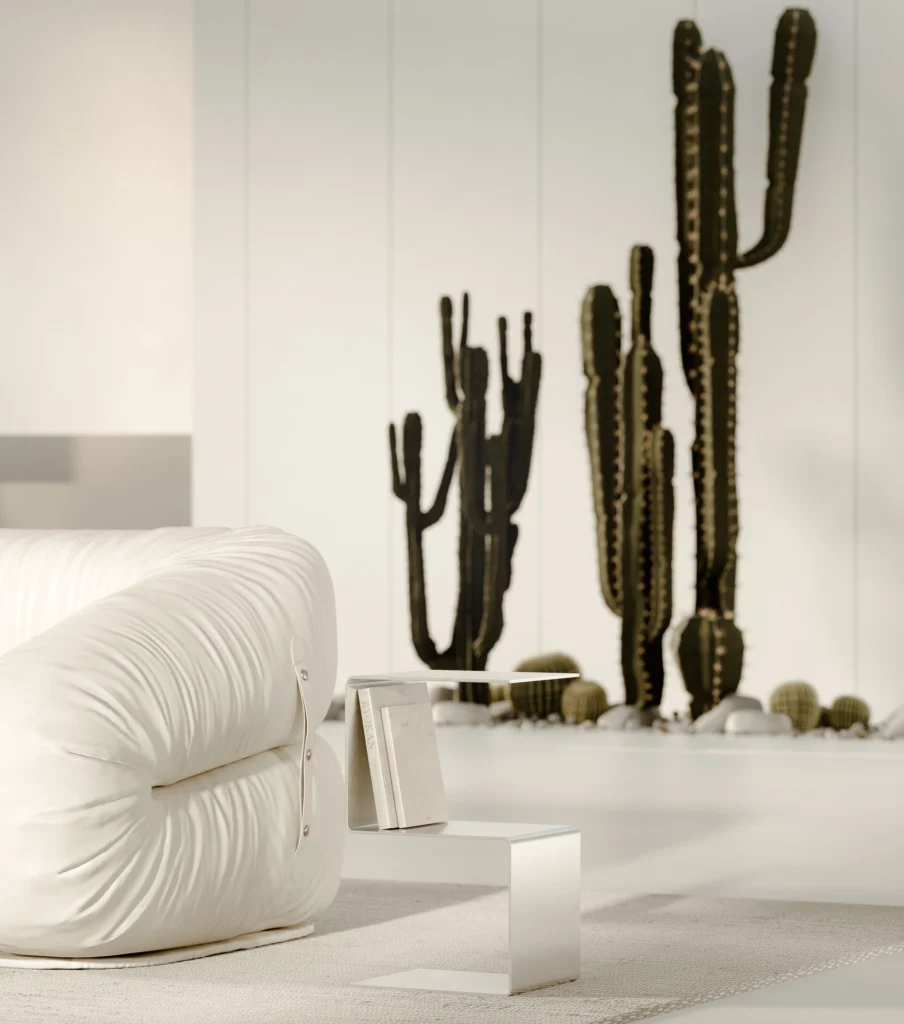
A piece like Petra Madalena’s brushed stainless steel side table illustrates this philosophy well. At 30 x 25 x 50 cm, it is deliberately compact – scaled to sit beside an armchair or at the end of a sofa without competing with a larger coffee table in the center. The brushed finish catches ambient light softly rather than reflecting it sharply, which makes it feel warm in a minimalist setting. Paired with a sculptural vase or a single design book, it becomes a quiet focal point rather than background furniture.
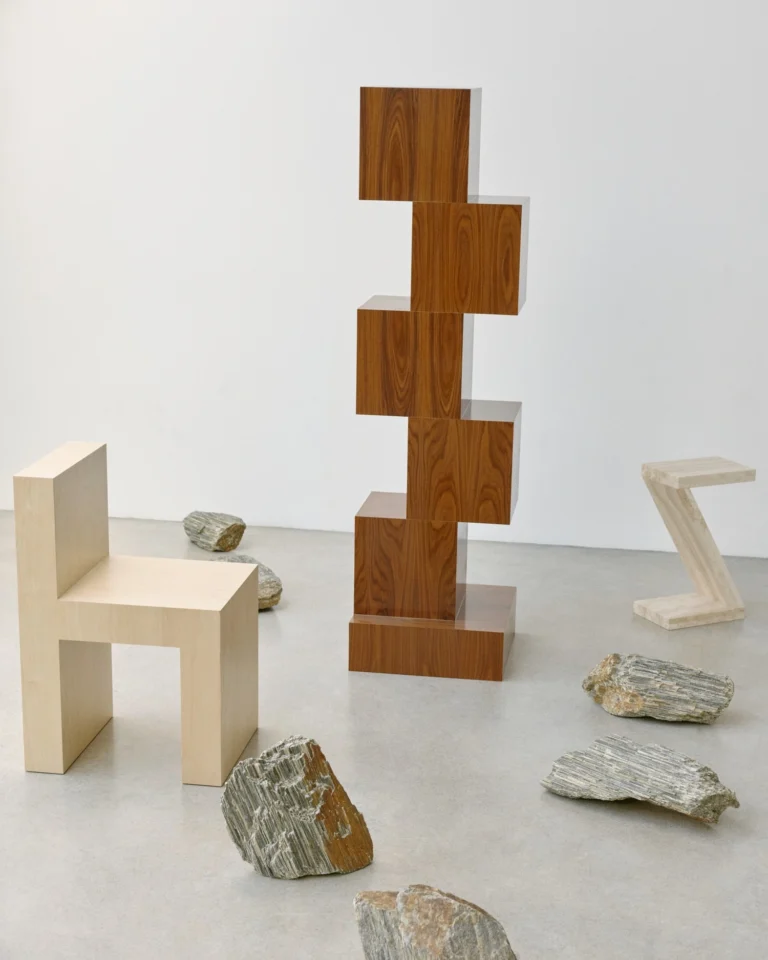
The strongest contemporary interiors pair stainless steel with a contrasting tabletop material that creates visual tension – sleek metal against raw stone, reflective steel beneath warm timber, geometric structure holding organic marble veining. Each combination produces a completely different mood, and choosing the right one depends on the atmosphere you want in the room.
According to Elle Decor’s 2026 furniture trend report, mixed-material furniture is one of the defining directions in contemporary design – pieces that combine two or three contrasting materials to create visual interest and craftsmanship-forward character. The 2026 coffee table trends reinforce this: sculptural curves, artisanal quality, and material combinations that feel grounded rather than glossy-perfect.
Polished (mirror) finish reflects light and surrounding colors, making it ideal for smaller rooms where you want an airy, expansive feel. It pairs beautifully with tempered glass (glass is heat-treated for safety and strength) for an ultra-modern look, or with white marble for high-contrast luxury.
Brushed (satin) finish has a soft, directional texture that hides fingerprints and minor scratches – the most practical option for everyday living. It complements warm wood tabletops (oak, walnut, teak) for a Scandinavian or mid-century modern feel, and looks equally refined with travertine or limestone.
Matte black or dark oxide finish delivers a bold, architectural presence. This works powerfully with concrete or terrazzo tabletops for a gallery-like statement, or with rich, dark-veined marble for dramatic contrast.
Gold or brass PVD-coated finish (PVD stands for Physical Vapor Deposition, a thin coating process that bonds metal tones to stainless steel) adds warmth without sacrificing durability. It pairs well with marble, glass, or light wood, and bridges the gap between contemporary and transitional interiors.
Petra Madalena‘s sculptural coffee tables are designed with this material interplay at their core. The artistic form of each piece stays the same – the client then chooses the tabletop material and metal finish combination that brings the sculpture into their specific space. It is this intersection of artistic vision and material flexibility that distinguishes a designed piece from a mass-produced one.
|
Tabletop Material |
Best Metal Finish |
Interior Style |
Overall Feel |
|
Tempered glass |
Polished / mirror |
Ultra-modern, minimalist |
Airy, light-filled, expansive |
|
Marble / travertine |
Brushed satin or gold PVD |
Luxury contemporary |
Refined, high-contrast, statement |
|
Solid wood (oak, walnut) |
Brushed satin |
Scandinavian, mid-century |
Warm, grounded, inviting |
|
Concrete / terrazzo |
Matte black or dark oxide |
Industrial, architectural |
Bold, gallery-like, dramatic |
Finding a stainless steel coffee table that goes beyond generic catalog design requires looking past the big-box retailers. While stores like West Elm, CB2, and Restoration Hardware carry metal-framed options, most of their pieces are mass-produced in standard configurations – functional, but rarely distinctive enough to serve as a room’s defining object.
For buyers who want something with genuine design intention, three paths stand out. Local design studios and metalworkers in cities like Los Angeles, New York, and Chicago often produce small-batch or one-off pieces with real character. Design-focused online platforms such as 1stDibs, Artemest, and Design Within Reach curate collections from independent designers and offer pieces with a stronger point of view than mainstream retailers.
The third route – and the most compelling for those who see their coffee table as more than just a surface – is working with a European design studio that creates furniture at the intersection of sculpture and function. Petra Madalena is one such studio. Each piece is conceived as a sculptural object first: the form, the proportions, the visual tension are all designed with artistic intent. What makes the process personal is that clients then choose the material combination the sculpture is realized in – their preferred tabletop (marble, glass, wood, stone), metal finish (polished, brushed, matte, PVD-coated), and dimensions.
This is fundamentally different from conventional “custom furniture” where a buyer designs from scratch or picks options from a configurator. With Petra Madalena, the artistic vision is already there – the client’s role is to bring it into their specific interior through material choice. Think of it as acquiring a work of applied art, then selecting the medium it is built in. Every piece is crafted in Europe and shipped directly to the US.
As an example, Petra Madalena’s stainless steel collection includes a brushed stainless steel side table (30 x 25 x 50 cm) priced between €1,706 and €2,057 depending on the material configuration, with a 9-week lead time from order to delivery. That lead time reflects the handcrafted, made-to-order nature of the work – each piece is built only after the client selects their materials, ensuring nothing sits in a warehouse as generic stock. For those building a cohesive living room around stainless steel, pairing this end table with a matching sculptural coffee table from the same collection creates a design language that runs through the entire space.
For readers exploring different price points and styles, visiting local showrooms remains valuable – sitting next to a table, seeing how light plays across its surface, feeling the weight and texture of materials. Many cities also host annual design fairs (ICFF in New York, WestEdge in Los Angeles) where emerging studios show work that never appears in mainstream retail.
Stainless steel requires remarkably little maintenance compared to wood, marble, or iron – which is one of the reasons it has become a preferred material for contemporary furniture. A consistent, simple routine keeps the surface looking factory-new for years.
Daily care is as simple as wiping the surface with a soft, dry microfiber cloth to remove dust and light fingerprints. For polished finishes, wiping in one direction (rather than circular motions) prevents micro-swirl marks that can dull the reflective surface over time.
Weekly cleaning involves warm water with a few drops of mild dish soap, applied with a soft cloth, then dried immediately with a separate clean cloth. Drying promptly prevents water spots – especially important for polished and mirror finishes where mineral deposits become visible. For brushed or satin finishes, always wipe in the direction of the grain to preserve the texture.
Quarterly deep care means applying a stainless steel-specific polish or protectant, which restores shine and adds a thin protective barrier against fingerprints and moisture. Products designed for stainless steel kitchen appliances work well for furniture too.
What to avoid: abrasive cleaners, scouring pads, steel wool, bleach, and chloride-based products (including some glass cleaners). These can damage the chromium oxide layer that gives stainless steel its corrosion resistance. If you notice a minor scratch on a brushed finish, rubbing gently in the grain direction with a non-abrasive pad often blends it into the existing texture.
|
Frequency |
Task |
Products to Use |
Products to Avoid |
|
Daily |
Dry wipe to remove dust and fingerprints |
Soft microfiber cloth |
Paper towels (can micro-scratch) |
|
Weekly |
Damp clean with soap; dry immediately |
Mild dish soap + warm water |
Bleach, ammonia, chloride cleaners |
|
Quarterly |
Polish and protect the surface |
Stainless steel polish/protectant |
Abrasive cleaners, steel wool |
|
As needed |
Address minor scratches |
Non-abrasive pad (with grain) |
Scouring pads, sandpaper |
A stainless steel coffee table is not just a practical purchase – it is a long-term investment in both durability and design. The material resists virtually everything daily life throws at it, from spilled drinks to energetic pets. Its finishes range from mirror-polished to industrial matte, and its pairing possibilities with glass, marble, wood, and stone are nearly limitless.
What separates a truly great coffee table from a forgettable one is design intention. When a piece is conceived as a sculptural object – where form, proportion, and visual tension matter as much as the surface you set your cup on – it becomes the quiet anchor of the entire room. It is the piece guests notice first, the one that makes the space feel considered rather than assembled.
Explore Petra Madalena‘s collection of stainless steel coffee tables – sculptural, art-driven designs crafted in Europe with your choice of materials, shipped to the US. For more inspiration on contemporary furniture and interior styling, read our guides on 2026 coffee table trends and how to master mixing stone, wood, and metal in design.