
Midnight approaches. The clock chimes begin. Somewhere in Madrid, thousands of people frantically stuff grapes into their mouths – one for each toll – while others across the world huddle under tables, hoping twelve tiny fruits will bring love in the year ahead. This peculiar Spanish tradition, known as las doce uvas de la suerte, promises luck for all twelve months to come. Yet there is another ritual equally powerful for welcoming a fresh start: clearing your shelves of everything that no longer serves you.
While you prepare your grapes for the countdown, consider this – a cluttered home creates a cluttered mind. Studies from the Princeton Neuroscience Institute confirm that visual disorder competes for your brain’s attention, draining cognitive resources and increasing stress. Perhaps this New Year calls for a different kind of luck-making: twelve meaningful items removed from your shelves, creating space for what truly matters.
The tradition dates back to 1880s Madrid, when wealthy Spaniards mimicked the French custom of drinking champagne and eating grapes on New Year’s Eve. Working-class citizens, frustrated by the elites’ private celebrations, gathered at the Puerta del Sol clock tower in playful protest. They brought inexpensive grapes and ate one with each chime of midnight – transforming mockery into magic.
By 1909, grape farmers in Alicante cleverly promoted the practice during a bumper harvest, cementing the tradition across Spain and Latin America. Today, families gather around televisions to follow the famous clock tower broadcast, racing to swallow twelve grapes in twelve seconds. Each grape represents one month of the coming year. Finish them all before the final chime, and prosperity awaits.
The newer twist – eating grapes under the table – has spread through social media, with believers claiming it attracts romance. Whether you sit above or below your coffee table, the ritual speaks to our universal desire for fresh beginnings. TikTok users have shared videos showing their grape-eating challenges, with some claiming the under-table variation brought them love within months.
Your grandmother was right about clean spaces and clear thinking – neuroscience has caught up with folk wisdom. Research published in The Journal of Neuroscience demonstrates that multiple stimuli in your visual field compete for neural representation. When your shelves overflow with objects, your brain must work harder to filter relevant information from visual noise.
The consequences extend beyond productivity. A study published in the Personality and Social Psychology Bulletin found that people describing their homes as cluttered had elevated cortisol levels throughout the day compared to those who used positive language about their living spaces. This stress hormone, designed for short-term fight-or-flight responses, wreaks havoc when chronically elevated.
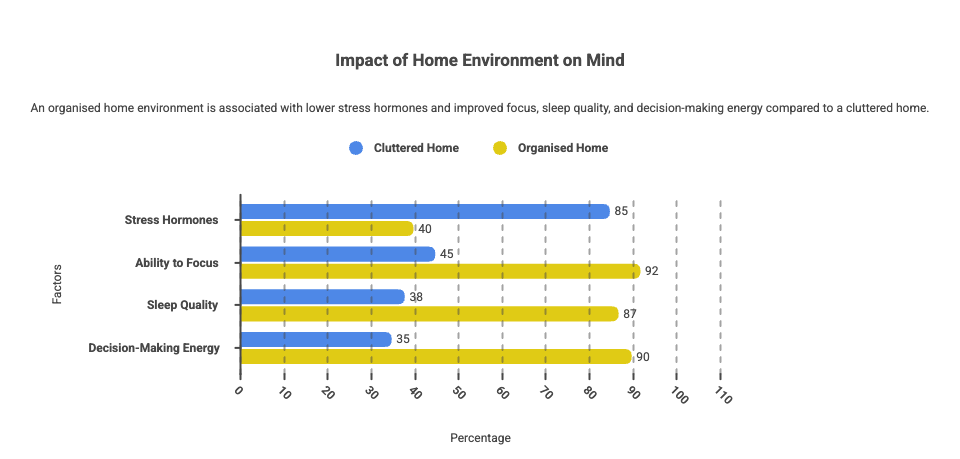
Decluttering offers measurable benefits: improved focus, better sleep, reduced anxiety, and enhanced self-esteem. The act of organising triggers dopamine release – the same reward chemical activated by accomplishing goals. When you clear twelve items from your shelves, you give your brain twelve small victories before the new year even begins.
Just as each grape represents a month of luck, each item you remove represents space for something meaningful. Consider this your decluttering countdown:
|
# |
Item to Remove |
Why It Matters |
|
1 |
Books you will never reread |
Pass them on so someone else can enjoy them |
|
2 |
Decorative items that collect dust |
True beauty requires intention, not accumulation |
|
3 |
Broken photo frames |
Memories deserve worthy display |
|
4 |
Outdated magazines |
Yesterday’s trends cannot inspire tomorrow |
|
5 |
Duplicate vases or containers |
One statement piece outshines a collection |
|
6 |
Gifts kept from obligation |
Gratitude exists in the moment, not the object |
|
7 |
Dead or artificial plants |
Make room for living greenery |
|
8 |
Old electronics and cables |
Technology moves forward – so should your shelves |
|
9 |
Souvenirs that hold no joy |
Travel memories live in your heart |
|
10 |
Inherited items you dislike |
Honour ancestors by living fully, not cluttering |
|
11 |
Collections that overwhelmed |
Curate rather than accumulate |
|
12 |
Anything that makes you sigh |
Your home should energise, not exhaust |
Empty shelves need not remain empty. The goal is not minimalism for its own sake, but intentionality – surrounding yourself with objects that reflect your values and bring genuine pleasure. The Smithsonian American Art Museum’s Renwick Gallery houses one of America’s finest collections of studio furniture, pieces that prove functional objects can be sculptural art. Master craftsman Sam Maloof, whom the Smithsonian described as “America’s most renowned contemporary furniture craftsman,” believed that furniture should have soul – that every chair, table, and shelf deserves the same reverence as fine sculpture.
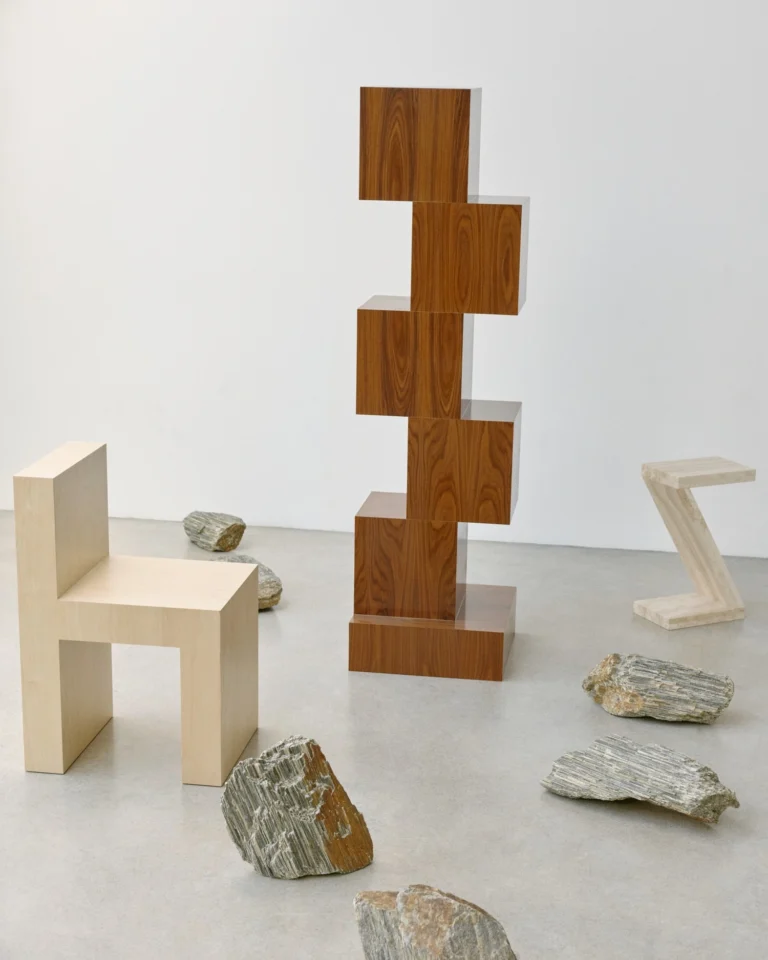
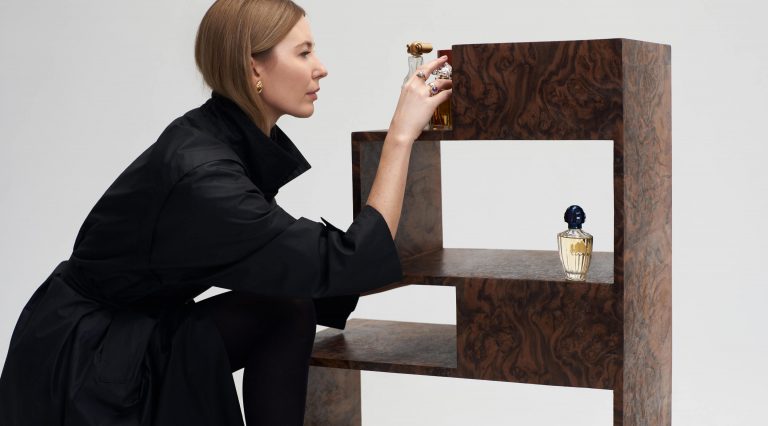
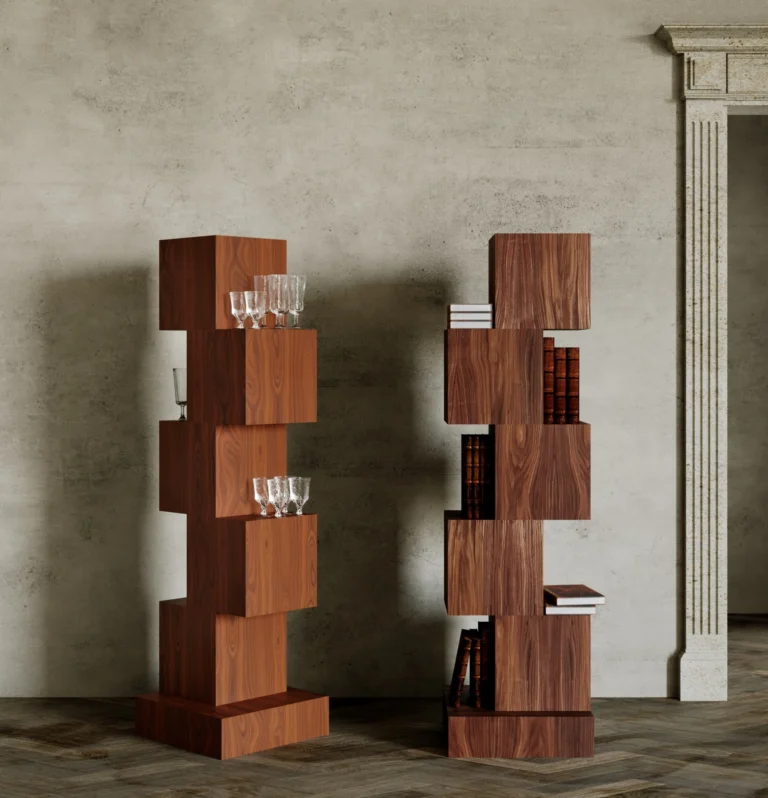
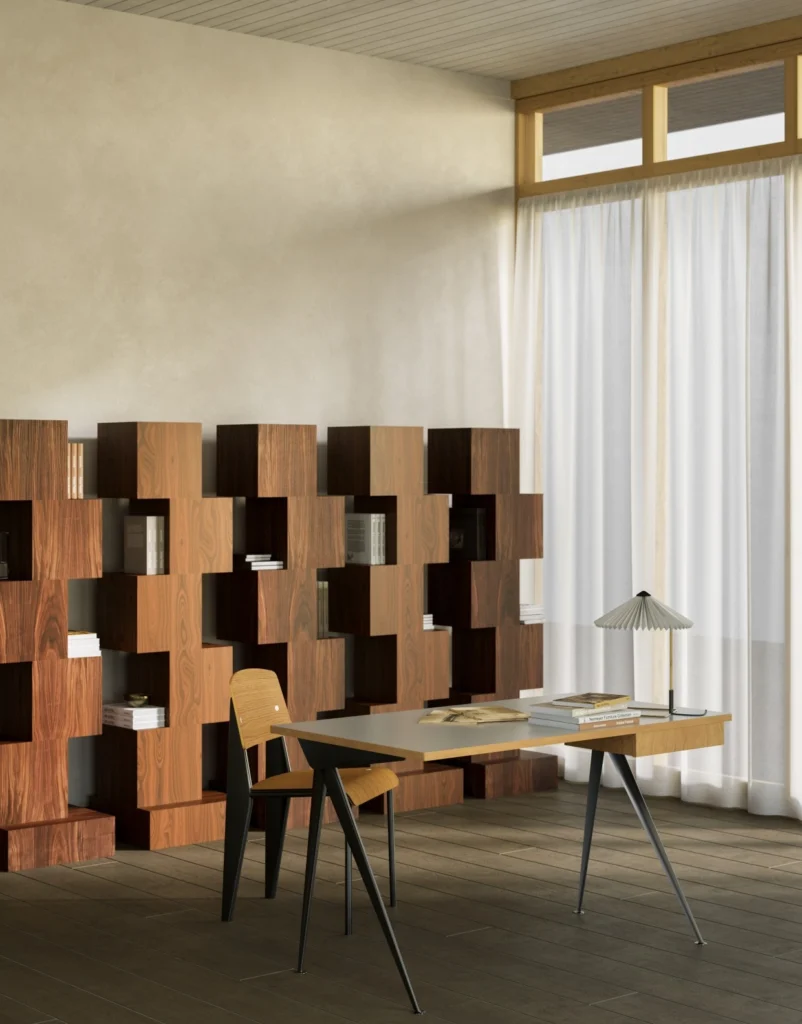
This philosophy guides thoughtful homeowners toward custom furniture that rewards the space it occupies. Bespoke bookcases designed to fit your exact specifications transform storage into statement. Rather than forcing your books and treasured objects into standard dimensions, imagine shelving that celebrates your collection’s unique character. Learn more about how sculptural bookcase design turns storage into art in our comprehensive guide.
Few pieces of furniture command a room’s attention like the coffee table. It anchors conversation areas, displays meaningful objects, and – if you follow the grape tradition – might just become your portal to good luck at midnight. A bespoke coffee table crafted from stunning wood veneers offers warmth and visual interest impossible to replicate with mass-produced alternatives.
At Petra Madalena, artisans work with materials like Poplar Burl and Walnut Burl to create tables that function as both furniture and art. Each veneer pattern tells its own story – the result of centuries of growth, the interplay of light and grain. When you choose a bespoke piece, you are not merely furnishing a room. You are making a statement about what you value: craftsmanship over convenience, beauty over banality.
The twelve grapes tradition endures because it combines intention with action – a physical ritual marking an emotional transition. Your decluttering practice can follow the same principle. Instead of overwhelming yourself with a complete home overhaul, adopt the “twelve things” ritual monthly or seasonally. Each session becomes its own small ceremony, a moment of reflection on what you truly need versus what merely occupies space.
This approach aligns with what mental health researchers recommend. The Journal of Environmental Psychology published findings showing that home self-extension variables – particularly how we perceive our living spaces – significantly impact overall wellbeing. Your home is an extension of your identity. When it reflects intention rather than accident, you thrive.
Perhaps this New Year marks the moment you stop accumulating and start curating. The cleared shelves in your living room might call for bespoke bookcases, handcrafted to house your most treasured volumes. The dated coffee table could give way to something extraordinary – a piece that makes visitors pause and admire before sitting down.
If you are considering bespoke furniture, explore our step-by-step guide to designing your perfect bespoke coffee table. From selecting veneers to determining dimensions, the process transforms furniture shopping into an act of self-expression.
As midnight approaches and you gather your twelve grapes, take a moment to look around your home. What will you clear from your shelves to welcome the new year? What will you invite in to take its place? The Spanish believe that finishing your grapes before the final chime brings luck. We believe that surrounding yourself with meaningful, beautifully crafted objects brings something even better: a home that truly feels like yours.
Feliz Año Nuevo – and happy decluttering.